
Toyota's Quiet Revolution: How the Mirai is Steering Away from a Battery-Only Future
Toyota's innovative Mirai sedan challenges the lithium-ion utopia with its revolutionary hydrogen fuel cell technology, offering a compelling alternative to battery-electric vehicles. This understated rebel provides a practical, zero-emission driving experience with an impressive 400-mile range and rapid refueling, redefining the future of automotive sustainability.
The automotive world thought it had its roadmap to the future all plotted out, a neat little path leading straight to a lithium-ion utopia. But then, Toyota, ever the contrarian, rolled out the Mirai—a sleek sedan that whispers a different tune. On the surface, it’s just another handsome luxury car, but under the skin, it’s busy turning the whole battery-electric script upside down. If you thought the future was destined to be a silent parade of plug-in cars, well, you might want to hold that thought. Toyota seems to be on a mission to prove there’s more than one way to skin a carbon-neutral cat, and the Mirai is their not-so-secret weapon.
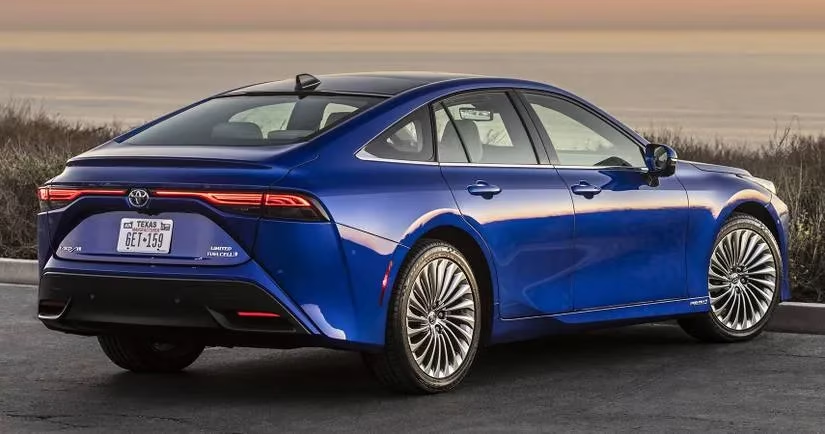
The Understated Rebel
Let's get one thing straight: the Mirai isn't here to shout. In a world where many electric vehicles scream for attention with futuristic doors and spaceship dashboards, the Mirai plays it cool. Its biggest strength, oddly enough, is that it looks and drives like, well, a normal car. You know, the kind you'd take to the grocery store without causing a scene. For folks who love the idea of ditching gasoline but aren't sold on becoming a rolling tech demo, the Mirai is a breath of fresh air. It’s a full-sized family sedan that just happens to run on hydrogen—no flash, no fuss, just getting the job done.
Heart of the Matter: The Fuel Cell
So, what's the magic under the hood? Forget a big battery pack. The Mirai's party trick is its fuel cell stack. Think of it as a mini power plant on wheels. It combines hydrogen from the tank with oxygen from the air to create electricity, with the only tailpipe emission being pure water vapor. Pretty neat, huh?
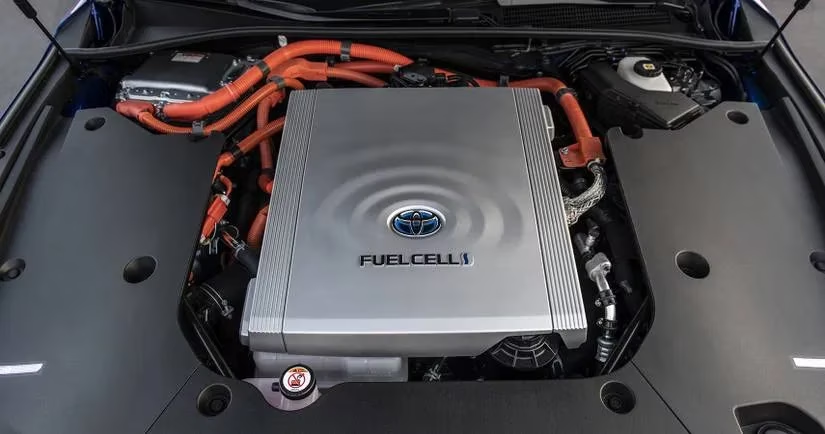
This isn't some wild, untested science project. Toyota has been tinkering with alternative powertrains for over a quarter-century. They've done hybrids, plug-ins, and battery EVs. The Mirai represents the culmination of that deep R&D investment, offering a different kind of zero-emission freedom. Performance-wise, it's no drag strip hero, but with around 180 horsepower and a healthy dose of instant electric torque, it gets around town just fine—and it does so by sending power to the rear wheels, which is a nice little throwback in today's world of front- or all-wheel-drive EVs.
The Real Game-Changer: Range and Refueling
Here's where things get interesting. While your average EV owner is nervously watching their range meter dip, Mirai drivers can cruise with more confidence. We're talking about an estimated range of around 400 miles on a full tank of hydrogen. And refueling? It takes about as long as filling up a conventional gas car—just a few minutes. For someone who needs to purge petroleum from their life but can't stand the idea of long charging stops, that's a massive deal. It’s the kind of convenience that makes you go, "Hmm, maybe this hydrogen thing has legs."
The Elephant in the Room: Finding Fuel
Of course, there's a catch. For the longest time, owning a hydrogen car in America felt like being part of an exclusive California-only club. The infrastructure was, to put it mildly, a bit sparse. But the landscape is shifting. Stations are now popping up beyond the Golden State, in places like Massachusetts, Rhode Island, and New York. Progress might feel slow—and let's be real, it still is for most of the country—but the network is growing. The success of the Mirai won't ultimately be judged by its sleek looks or quiet ride, but by whether you can actually find a place to fill it up on a road trip. That’s the real challenge.
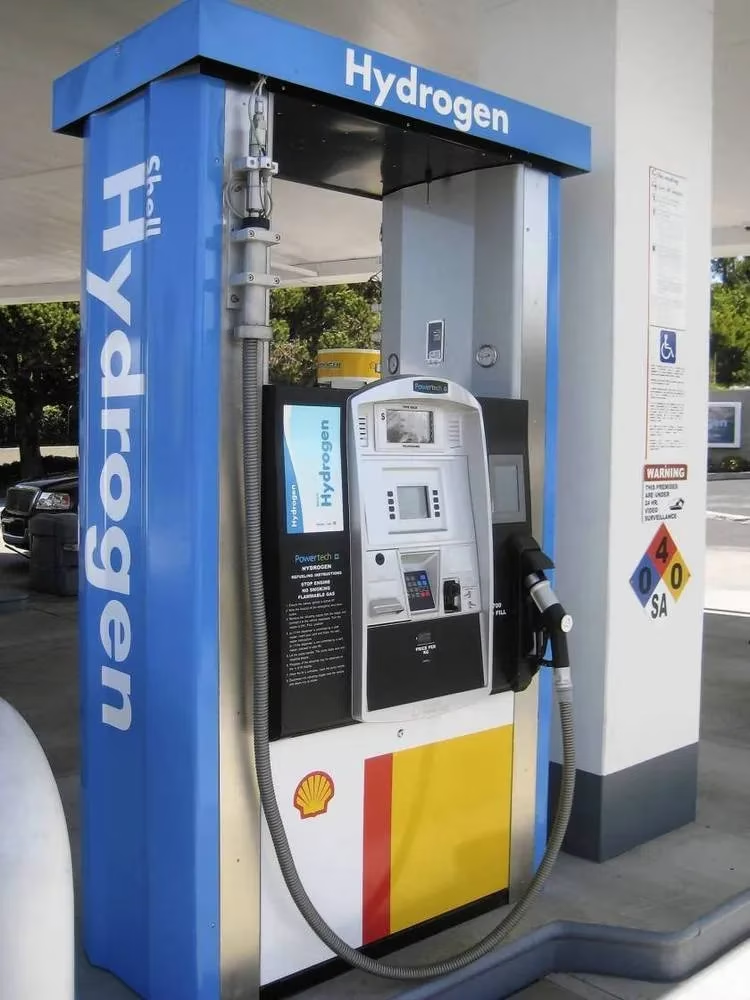
A Nod to Quality and Choice
Stepping inside the Mirai, you're greeted with an aura of quality that makes you forget it's "just" a Toyota. With prominent LED lighting, polished alloy wheels, and a refined interior, it carries itself with a Lexus-like dignity. Toyota is betting that this understated luxury, combined with its unique powertrain, can lure buyers away from the flashier alternatives. It’s a quiet proposition: you don't have to sacrifice comfort or style to be an early adopter.
The Bigger Picture: Don't Put All Your Eggs in One Basket
The auto industry was so sure it had the future all figured out—a one-size-fits-all battery-electric solution. The Toyota Mirai serves as a crucial reminder: it's risky to bet everything on a single technology. What if the battery supply chain hits a snag? What if charging infrastructure can't keep up? By championing hydrogen, Toyota is ensuring there's a Plan B. It’s like they’re saying, "Hey, let's not have all our eggs in one basket, just in case the basket... you know, has a hole in it."
Looking ahead to 2026, the conversation is no longer just about batteries versus hydrogen. It's about creating a robust, multi-faceted ecosystem for clean transportation. The Mirai might not be for everyone today, but its very existence challenges the status quo and offers a glimpse of a more diverse and resilient automotive future. One where choice, not dogma, drives innovation. The road to zero emissions has many lanes, and Toyota is quietly cruising in one that's all its own. 🚗💨
Leave a Comment