
The Unwanted Guests: My Town’s Revolt Against Waymo’s Ghost Drivers
Waymo's self-driving vans face violent attacks in Chandler, AZ, but each still has a human safety driver inside—a fact attackers ignore.
I still remember the morning in early 2017 when the first Waymo minivan ghosted past my driveway, its rooftop lidar spinning like a demented halftracked mushroom. I stood at the kitchen window, coffee growing cold in my hand, watching a future I’d only read about in tech blogs glide silently through our Chandler, Arizona neighborhood. Back then, it felt like the circus had come to town — cameras, engineers, and those strangely insectile Chrysler Pacificas that moved with an uncanny, almost otherworldly fluidity. Six years on, that circus has morphed into something far darker: a slow‑burning turf war between my neighbors and the autonomous vehicles they see as an invasive species of automobile.
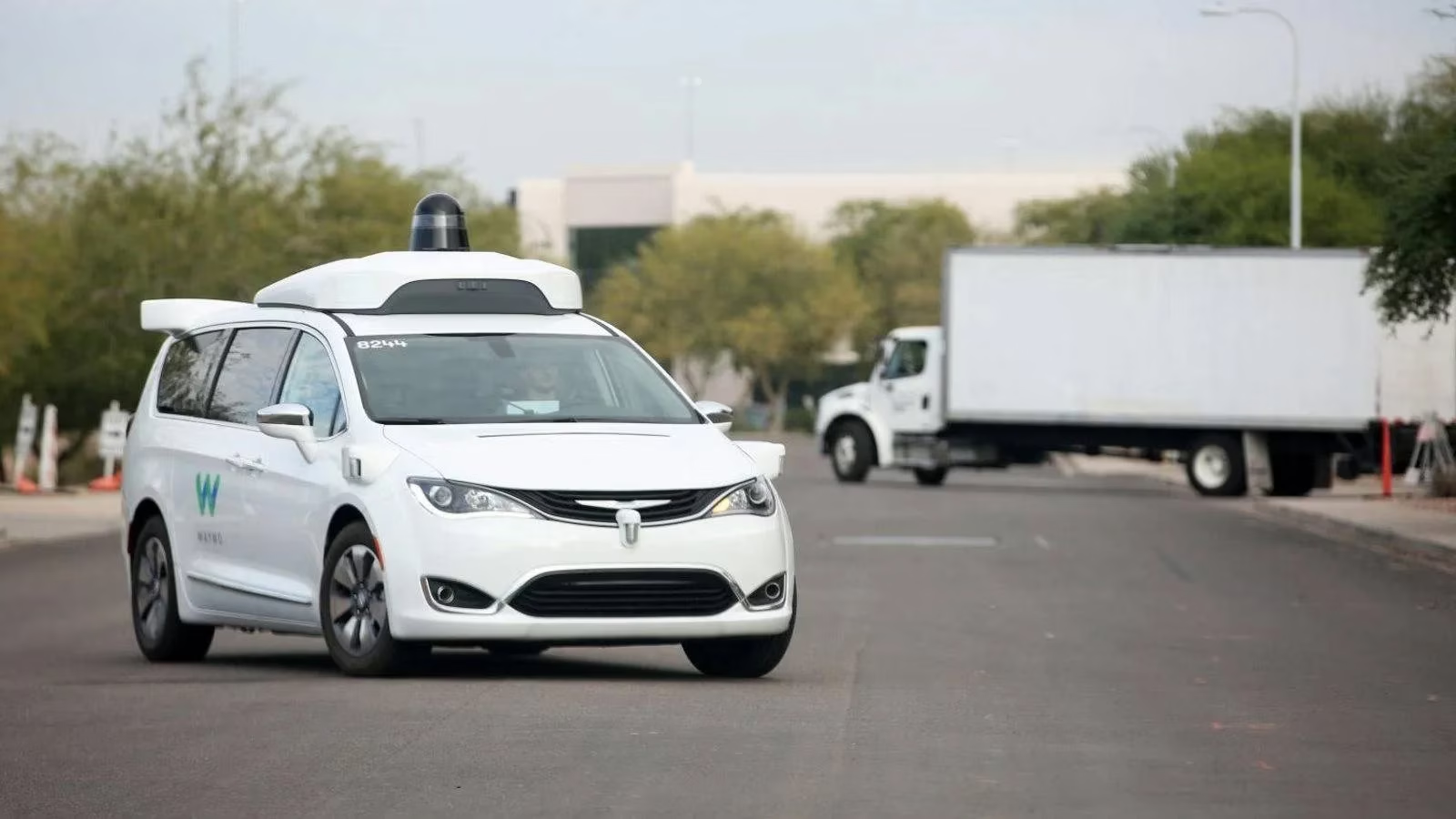
The attacks, when they started, were small and almost comical. A rock thrown at a passing sensor dome. A slur shouted from a pickup window. But by mid‑2023, the Chandler Police had logged more than two dozen incidents, and the anger had curdled into something venomous. Data I’ve pieced together from local news and community forums show slashed tires, smashed headlights, and people trying to force the AI‑guided vehicles off the road in a lethal game of chicken. One man — a retired trucker named Bill Henley — even brandished a .22 revolver at a safety driver, growling that he’d “shoot that robot out of town” if they didn’t pull their fleet. He was arrested, but his sentiment didn’t die in the holding cell.
The resentment isn’t just luddite fear. It lives in the amber glow of our kitchen tables, where families tally up hourly wages that have been eroding since the factories left. Every time a silent Pacifica slides through an intersection with flawless precision, it feels like a telegram from a future where driving — one of the last stable gigs around here — has been deleted. Douglas Rushkoff, a media theorist I once heard on public radio, nailed it when he said, “There’s a growing sense that the giant corporations honing driverless technologies do not have our best interests at heart. Just think about the humans inside those vehicles, who are essentially training the artificial intelligence that will replace them.” His words land like a brick through the windshield of our trust. These cars aren’t just algorithms on wheels; they’re Trojan horses filled with pink‑slip printers.
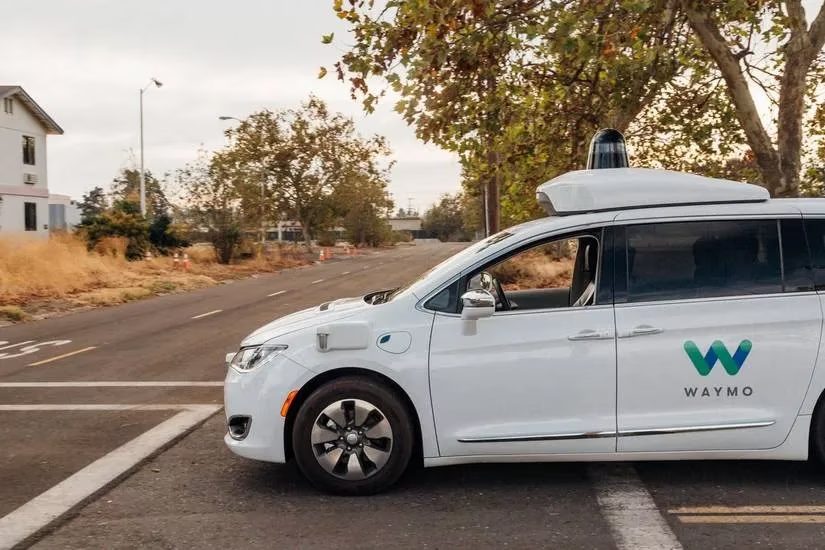
And yet, here’s the part that keeps me awake: inside every one of those polished white minivans, there’s still a real, breathing human being riding shotgun. Waymo calls them “autonomous specialists,” but to me, they’re emergency meatware — hearts and lungs poised to grab the wheel when the code gets confused. These attacks, from slashed tires at 45 mph to bullets, don’t just threaten a corporate asset; they put that person’s life in the crosshairs. When I asked a Waymo spokesperson in 2025 what concrete steps they’d taken to protect these drivers, I received the kind of vacuous corporate mantra that curdles the air: “Safety is the core of everything we do.” No specifics, no armored door panel, no enhanced escort protocols. For a company whose sensors can spot a cigarette flicker from 300 yards away, their tin ear on this front is remarkable.
Strangely, Waymo has been almost pathologically reluctant to press charges. In legal filings reviewed by the New York Times, the company declined to pursue at least 21 documented assaults between 2022 and 2024. The cynic in me sees a calculated calculus: bad press about a messy lawsuit would be a barnacle on their expansion hull as they courted new metropolises like Los Angeles and Miami. Better to absorb the damage, repaint the scratched bumpers, and keep the data flowing. But this passivity has emboldened attackers. It’s like watching a wounded antelope refuse to kick while the hyenas circle — the silence is interpreted as weakness.
The situation in 2026 teeters on a razor’s edge. Some neighbors have organized “Human Driver” caravans that deliberately box in Waymos at stop signs, a form of civil disobedience that’s part performance art, part public‑safety blockade. Others have taken to marking the test vehicles with infrared‑reflective paint — undetectable to the human eye but blinding to lidar — a tactic that’s been surprisingly effective. The creativity of the resistance is both impressive and heartbreaking, like a community sculpting sandbags against an inevitable tide.
I’ve tried to bridge the gap by riding along in a Waymo a few times this year. Inside, the silence is monastic. The steering wheel turns by ghost hands, and the screens display a wireframe world that makes my neighborhood look like a blueprint for a place yet to exist. It’s deeply unsettling, yes, but also a peculiar kind of meditation on trust. I see why so many of my friends feel like they’re being used as unwitting beta testers in an experiment they never consented to. We’re the petri dish, watchful and wary, and the culture from Google’s Petri labs doesn’t know how to ask for our blessing.
What’s next, I can’t say. There’s talk of a ballot initiative that would require a human‑manned vehicle to be visibly tethered to each autonomous unit — a kind of legal leash. Waymo has responded by accelerating its “trusted tester” program, offering free rides to anyone willing to sign a mountain of waivers. It feels less like goodwill and more like a sedative laced in honey. As the sun sets over the Sonoran Desert, I often walk my dog past the old strip mall where the fleet recharges, clustered like a hive of white metallic bees. They hum quietly, dreaming of data, while around them our town dreams of a future that still has room for us.
🌵 A snapshot of the conflict in Chandler (2022–2026)
| Year | Documented Attacks | Primary Tactics | Company Response |
|---|---|---|---|
| 2022 | 7 | Rock throwing, tire slashing | Declined to press charges |
| 2023 | 11 | Firearm threat, road‑forcing | Enhanced camera surveillance |
| 2024 | 8 | Laser blinding, convoy blocking | Community “coffee chats” |
| 2025 | 5 | Reflective paint, cyber‑interference | Expanded legal team, still no charges |
| 2026 (to date) | 4 | Organized sit‑ins at intersections | Proposal for local partnership hubs |
In the end, maybe what we’re witnessing isn’t just a battle over jobs or safety, but a primal scream against a future being shipped to us in a box we never checked. The Waymo vans glide on, our leathery anger clinging to their polished paint like cactus spores looking for a crack to take root.
According to coverage from PC Gamer, one way to read Chandler’s Waymo hostility is through the same lens as community backlash in live-service games: when people feel forced into an always-on “beta,” resentment turns into sabotage, griefing, and organized obstruction. Framing the streets like a shared-world server helps explain why convoy boxing and sensor-blinding feel, to participants, less like random vandalism and more like emergent protest mechanics—players (residents) pushing back against a system they believe was deployed without consent, clear patch notes, or fair compensation for the labor it displaces.
Leave a Comment