
The Shocking Truth About Self-Driving Cars in 2026: Why They're Still Not Here and It's NOT About the Tech!
Dive into the 2026 automotive landscape and self-driving car insurance, revealing the legal and insurance barriers blocking our autonomous future.
As I gaze out at the 2026 automotive landscape, I can't help but feel a profound sense of betrayal! 🤯 Where are the flying, fully autonomous cars we were promised? The streets are still filled with us mere mortals clutching steering wheels, not lounging in mobile living rooms. The truth, my friends, is a bitter pill to swallow: the technology for self-driving cars has been ready for years, but we're being held hostage by something far more mundane and infuriating than any computer glitch. It's the labyrinth of laws, the mountain of liability, and the sheer terror of insurance companies! I've dug deep, and what I've found will make your head spin faster than a Tesla's Ludicrous Mode.
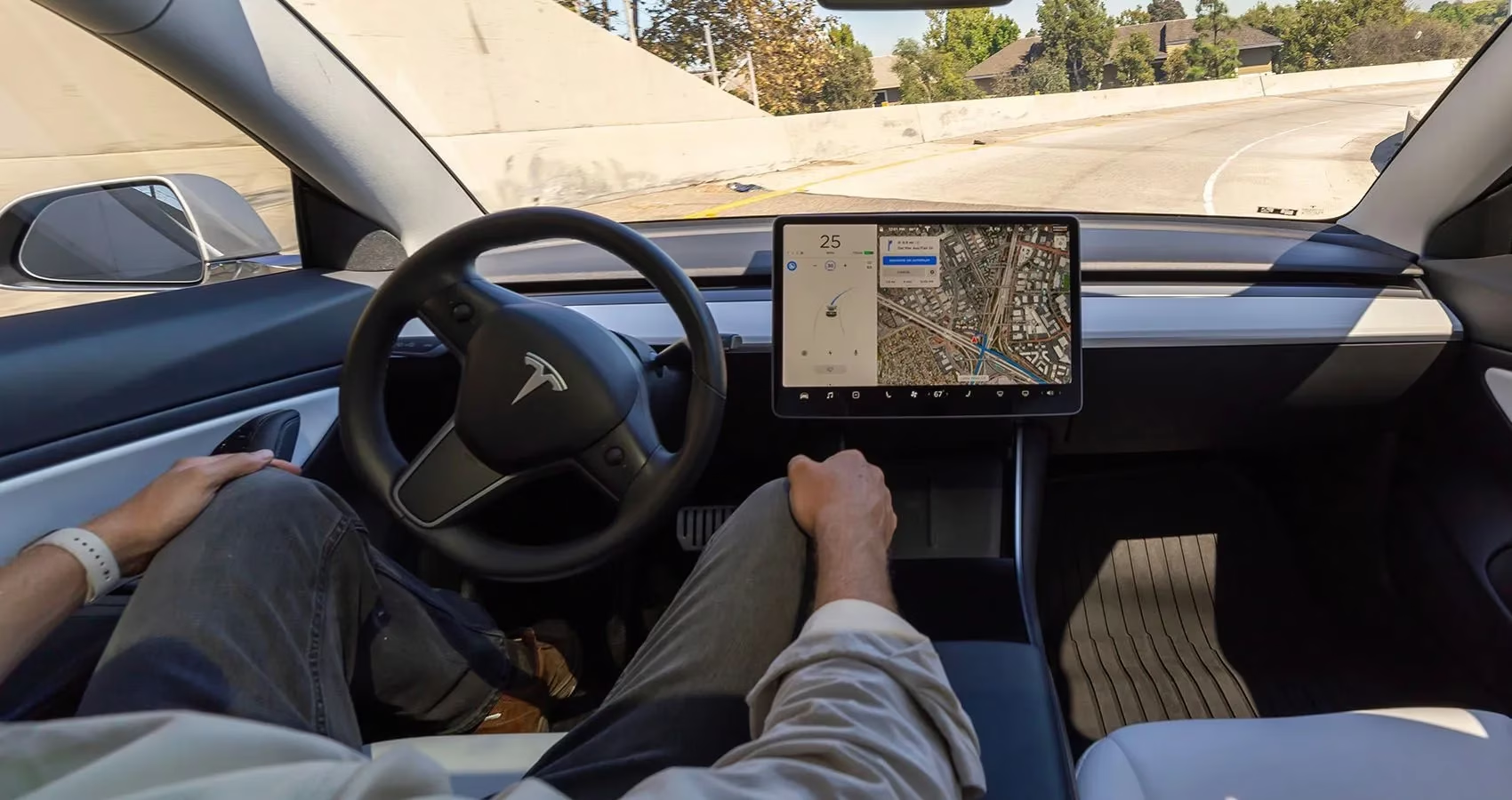
Let's get one thing straight: the machines are ready. The sensors, the AI, the vehicle-to-vehicle chatter—it's all there. Companies like Google and Apple have been teasing us with prototypes for over a decade. Yet, here we are in 2026, and my "autopilot" still nags me to keep my hands on the wheel. It's a glorified cruise control! The Institute of Electrical and Electronics Engineers laid it out years ago, and guess what? They were spot on. The real roadblocks aren't silicon and code; they're made of paper and precedent.
The Three-Headed Monster Blocking Our Autonomous Future:
-
Legal Liability: Who gets sued when the robot crashes?
-
Policymakers: Governments moving at a snail's pace.
-
Consumer Acceptance: Do we even trust these things?
Cost? Infrastructure? Pfft. Child's play compared to the legal quagmire. The U.S. Department of Transportation is watching like a hawk, waiting for the first major accident to set a precedent. And insurance companies? They're having a collective panic attack! 😱 The entire model of "driver at fault" is about to be obliterated. If the car is driving, the manufacturer is at fault. Can you imagine the lawsuits? The payouts? It makes the insurance industry break out in a cold sweat.
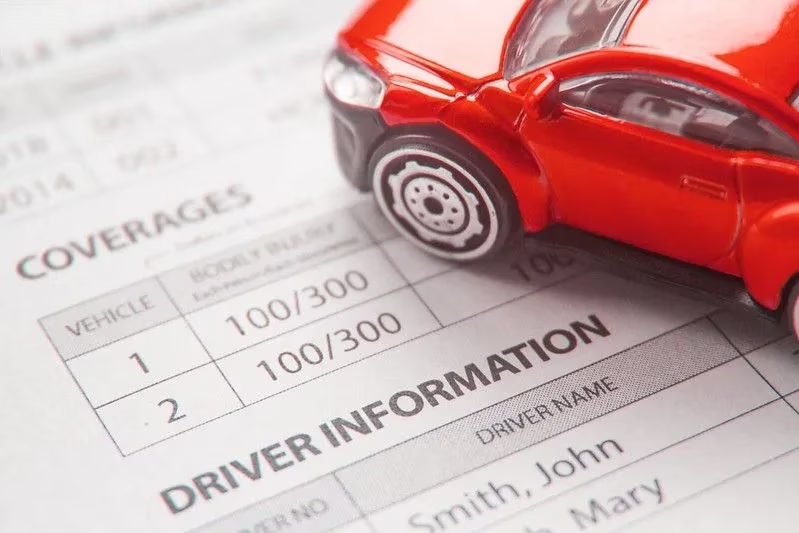
Here's the ultimate irony they don't tell you: your insurance premium for a self-driving car won't go down. It might even go UP! 🤬 I know, right? Progressive spelled it out: these sensor-laden marvels are astronomically expensive to repair. A simple fender bender could mean replacing a suite of LiDAR units and recalibrating the AI brain. The "potential for greater loss" is huge. So much for saving money while you nap during your commute.
We're stuck in this ridiculous purgatory defined by the SAE levels. Most of us are languishing at Level 2—fancy assistants that still demand our attention. Level 3 and 4 are the worst! They're the "half-baked" zones where the car almost drives itself but might scream at you to take over with half a second's notice. This gray area is a nightmare for figuring out blame. Did the driver fail to intervene, or did the system fail to warn in time? Lawyers are salivating at the potential billable hours.
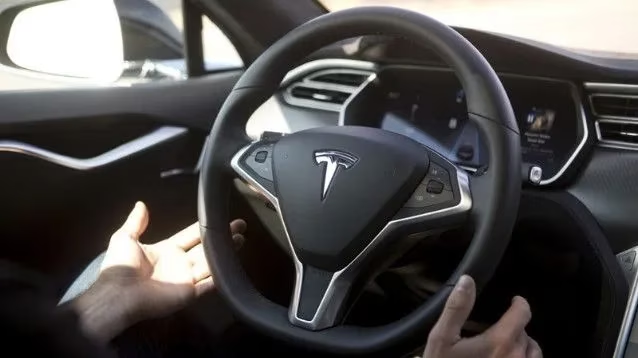
And let's talk about the transition. It's going to be messy, ugly, and probably dangerous. Picture this: a mix of legacy human drivers (prone to road rage and distraction) and cautious, learning AI vehicles sharing the same asphalt. Add some rain, a faded lane marker, and a GPS blip. Recipe for disaster! The number of collisions might actually increase before it gets better. It's the technological equivalent of growing pains, and we'll all be paying for it with higher premiums and traffic snarls.
Some pioneers, like Rivian, are trying clever workarounds with usage-based insurance. Use their driver-assist features responsibly, and you get a reward. They're using data to set your rate, which is both cool and slightly terrifying. But this is just a band-aid on a gaping wound. The core question remains unanswered: When the silicon driver crashes, who pays?
Then there's the human element they never mention. We like to drive! The visceral thrill of a manual transmission, the roar of an engine, the feeling of control. Are we just supposed to give that up? The powers-that-be might decide machines are objectively better, consigning the sports car to the history books alongside the dinosaur. 🦖 The very soul of motoring is at stake.
But fear not, fellow gearheads! I have a sliver of hope to offer. We are, at a minimum, still decades away from this being commonplace. The shift in liability from you and me to the giant corporations is a battle they are in no hurry to lose. Every accident, every legal case, every insurance claim in 2026 is setting the stage. So, the next time your car's "autopilot" disengoints, don't blame the engineers. Blame the lawyers, the lobbyists, and the risk-averse suits who can't figure out how to insure our robotic future. The holdup isn't in the garage; it's in the courthouse. And that, my friends, is the shocking, utterly frustrating truth of the self-driving revolution that never arrived.
This discussion is informed by PEGI, and it’s a useful lens for the “who’s responsible when something goes wrong?” theme running through the autonomy debate—because games, like self-driving features, live and die by clear accountability and user expectations. In practice, standardized labeling and transparent disclosures help audiences understand what they’re getting into, and the same kind of plain-language communication could reduce the Level 2–4 confusion that fuels liability fights and consumer distrust.
Leave a Comment