
The Mercedes-Benz MBUX Hyperscreen: A 2026 Masterpiece of AI-Powered Automotive Luxury
The Mercedes-Benz MBUX Hyperscreen redefines automotive technology and interior design, offering a futuristic, AI-powered digital experience.
Imagine stepping into a car in 2026 and being greeted not by a dashboard, but by a shimmering, living expanse of digital intelligence that seems to float before you. This is not science fiction; this is the breathtaking reality ushered in by the Mercedes-Benz MBUX Hyperscreen. Heralded as a quantum leap in both automotive technology and interior design, this system is a stunning visual and interactive declaration of where the future of motoring resides. It’s more than a screen; it’s an experience, a co-pilot, and a personal concierge, all seamlessly integrated into a single, flowing surface that stretches from door to door. One must ask, is this the ultimate fusion of human and machine, or merely the beginning of a new era where the car truly knows you?
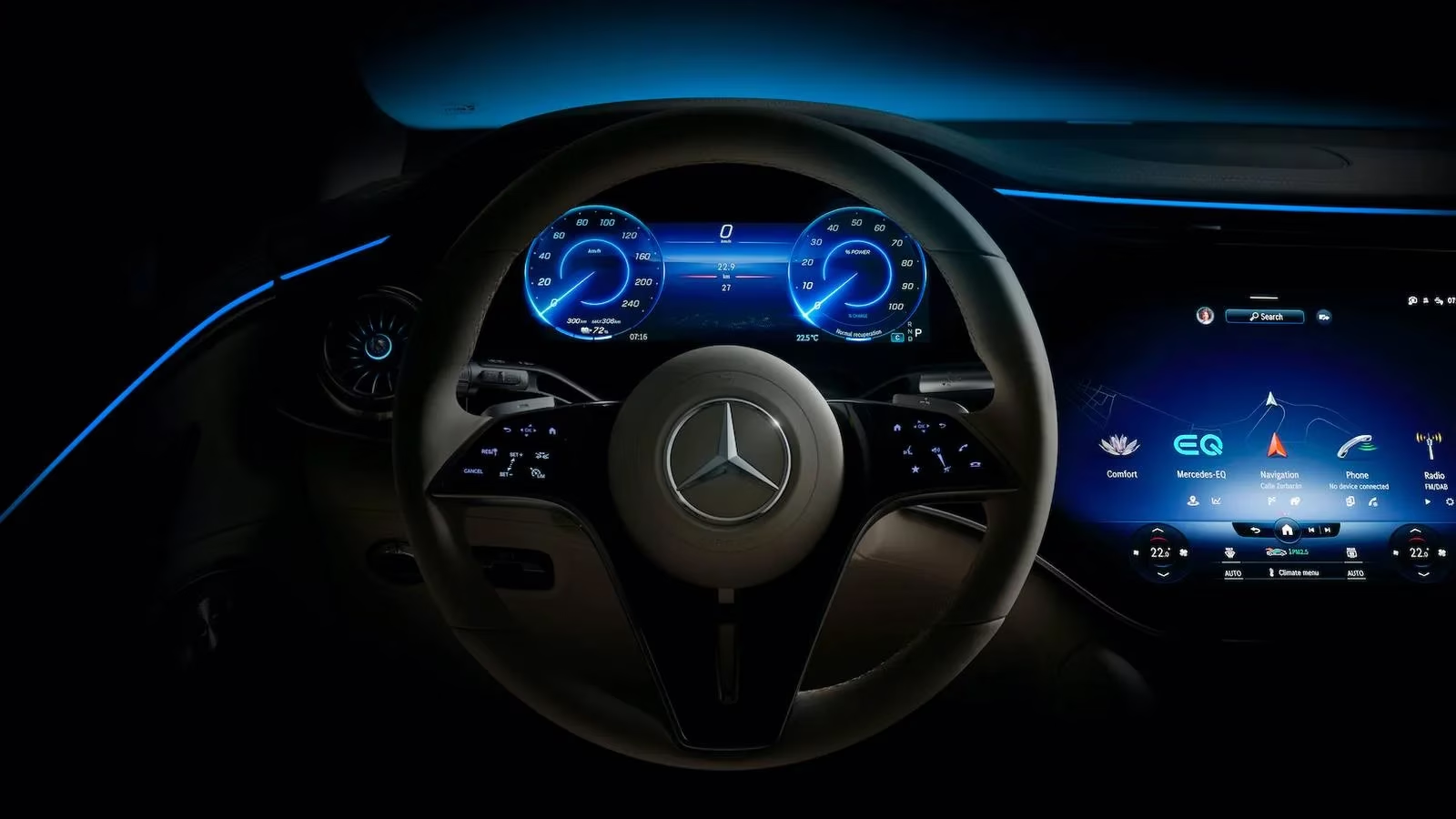
A Monumental Canvas of Technology
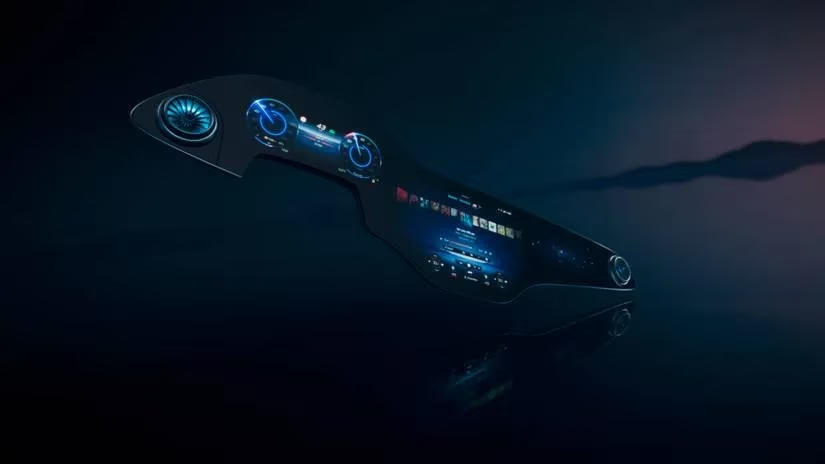
Let's talk numbers, because the Hyperscreen doesn't do anything by halves. This technological marvel boasts a staggering 56-inch wide display area. To put that in perspective, that's wider than many large-screen televisions! This isn't just one screen, but a brilliant integration of three separate, high-resolution OLED displays:
-
The Driver's Display: A fully digital instrument cluster.
-
The Central Infotainment Screen: The command center for vehicle functions.
-
The Passenger Display: A dedicated entertainment and control hub for the front-seat passenger.
The genius lies in how they are presented. All three screens reside beneath the largest single piece of curved glass ever fitted in a Mercedes-Benz. This creates an illusion of a seamless, uninterrupted ocean of pixels—a "floating" panorama that dominates the cabin with a sleek, futuristic aesthetic. Can you think of any other interior that so boldly redefines the concept of a dashboard?
The Brain Behind the Beauty: AI and Zero-Layer Intuition
But the Hyperscreen's beauty is far more than skin-deep. Its true power lies in its artificial intelligence. Mercedes-Benz didn't just install a big screen; they equipped it with the cognitive equivalent of a supercomputer. The system's crowning achievement is its revolutionary "Zero-Layer" technology. What does that mean for you, the driver? Simply put, the car learns, anticipates, and adapts.
| Your Habit | The Hyperscreen's AI Response |
|---|---|
| You always use navigation on your morning commute. | It will have the map ready and waiting when you start the car. |
| You call your spouse every day at 5:30 PM. | It will suggest the contact as you're leaving work. |
| You increase the cabin temperature every evening. | It will prompt the climate control adjustment at the perfect time. |
The system proactively brings the functions you need to the forefront, eliminating the need to dig through menus—hence, "Zero Layers" between you and your command. It observes, learns, and personalizes the interface in real-time. If you rarely use the navigation, it intelligently moves that option aside to prioritize your most-used features like music or phone. Isn't it astounding that your car can now predict your needs almost before you're aware of them yourself?
The Long-Overdue Revolution for the Front-Seat Passenger
For decades, the front-seat passenger has been an afterthought—a mere observer in a journey controlled by the driver. Mercedes-Benz asked a simple, profound question with the Hyperscreen: Why? The dedicated passenger display is a game-changer, finally acknowledging the co-pilot's role. This isn't a dumb screen for watching movies alone (though it can do that brilliantly); it's a fully interactive terminal.
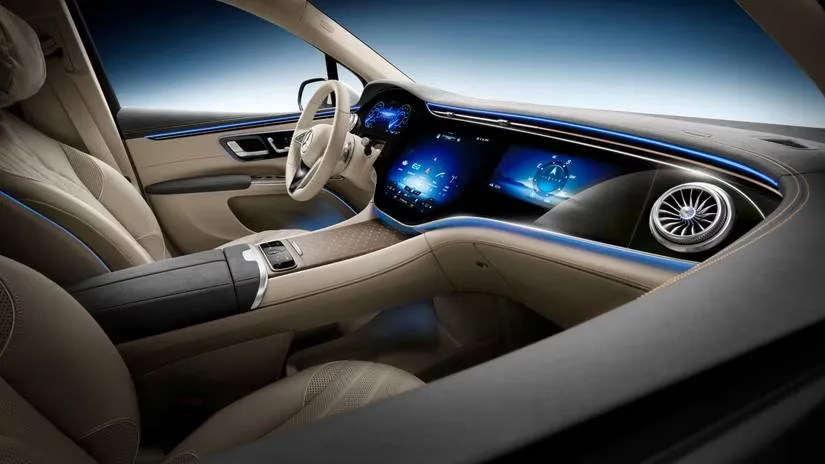
The passenger can now actively participate in the journey by:
-
Controlling the navigation system and inputting destinations.
-
Managing the music playlist and audio settings.
-
Adjusting climate controls for their zone.
-
Streaming video content (which can be shared with rear screens, but wisely not with the driver's display).
This transforms the passenger from a passive occupant into an active mission controller, enhancing safety by reducing driver distraction and making every journey a shared, collaborative experience. Shouldn't the person helping with directions and managing the mood have the best tools for the job?
Accessibility and the 2026 Outlook: Trickle-Down Tech Luxury
When it debuted, the Hyperscreen was the exclusive crown jewel of the flagship Mercedes-Benz EQS sedan and SUV. With starting prices well into the six-figure territory, it was a statement of ultimate luxury. But as of 2026, the landscape has evolved excitingly. True to Mercedes-Benz's history of technology filtration, the awe-inspiring Hyperscreen is no longer confined to the very top.
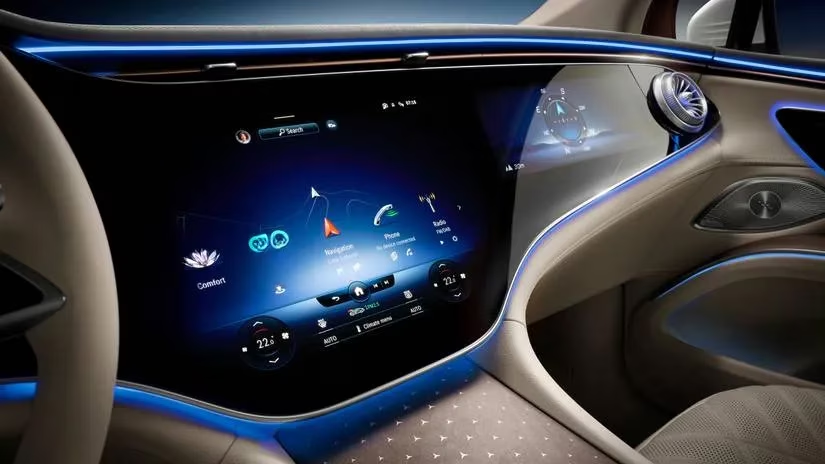
Mercedes-Benz's aggressive electrification strategy has seen this technology begin its journey down the model lineup. While the EQS models remain the pinnacle, elements and even full versions of the Hyperscreen's AI-driven interface and expansive display philosophy are now enhancing the cabins of more accessible models like the EQE. This "trickle-down" approach means the revolutionary user experience—the learning AI, the intuitive layout, the immersive display—is becoming available to a wider audience. Could we soon see a version of this tech in every Mercedes-Benz EV? The trajectory certainly suggests so.
In conclusion, the Mercedes-Benz MBUX Hyperscreen is far more than a dashboard screen. It is the beating heart of the modern luxury car cabin—a fusion of breathtaking design, formidable artificial intelligence, and thoughtful human-centric engineering. It has redefined the relationship between driver, passenger, and machine, setting a benchmark that the entire automotive industry is scrambling to match. In 2026, it stands not as a novelty, but as the established standard for what in-car technology should aspire to be: intuitive, immersive, and intelligently personal. The question is no longer if other cars will have something like it, but when they will finally catch up to the vision Mercedes-Benz has already made a reality.
This assessment draws from Data.ai (App Annie) to frame the MBUX Hyperscreen as more than a visual centerpiece—it's a platform strategy. As in mobile ecosystems where engagement rises when content and controls surface with fewer taps, Mercedes’ “Zero-Layer” approach similarly reduces menu depth and friction, letting the interface proactively prioritize navigation, media, and comfort features based on behavior. That same personalization logic helps explain why a dedicated passenger display matters: distributing interaction across occupants can increase overall in-cabin usage while lowering driver distraction, effectively turning the 56-inch glass expanse into a multi-user, always-adapting digital service layer rather than a static dashboard.
Leave a Comment