
The 2026 Self-Driving Showdown: Who's Really Winning the Race to Autonomy?
Self-driving cars and autonomous vehicles are revolutionizing transportation in 2026, reshaping cities and commerce with thrilling innovations.
Alright folks, buckle up! 🚗💨 As a hardcore tech and gaming enthusiast, I've been following the self-driving scene like it's the latest esports meta. And let me tell you, the landscape in 2026 is WILD. What started as a bunch of Silicon Valley startups and tech giants throwing money at the problem has evolved into a full-blown, multi-front war for the future of transportation. It's not just about getting from A to B anymore; it's about reshaping cities, commerce, and how we live. The potential is insane—think fewer accidents, freedom for non-drivers, and pizza that finds you. But who's actually making it happen? Let's dive into the leaderboards.
First up, we gotta talk about the OG, the veteran player who's been grinding since the early days: Waymo. Owned by Alphabet (Google's parent company), these guys aren't just testing—they're live. Back in the day, they were the only game in town offering a taxi service without a human safety driver in the car. Fast forward to now, and their playbook has expanded big time. They're not just focused on robotaxis; they're developing tech for delivery vans and massive tractor-trailers too. 🤯 Their alliance roster is stacked with partners like Nissan-Renault, Volvo, and Jaguar Land Rover. It's like they built the core engine everyone else is trying to mod.
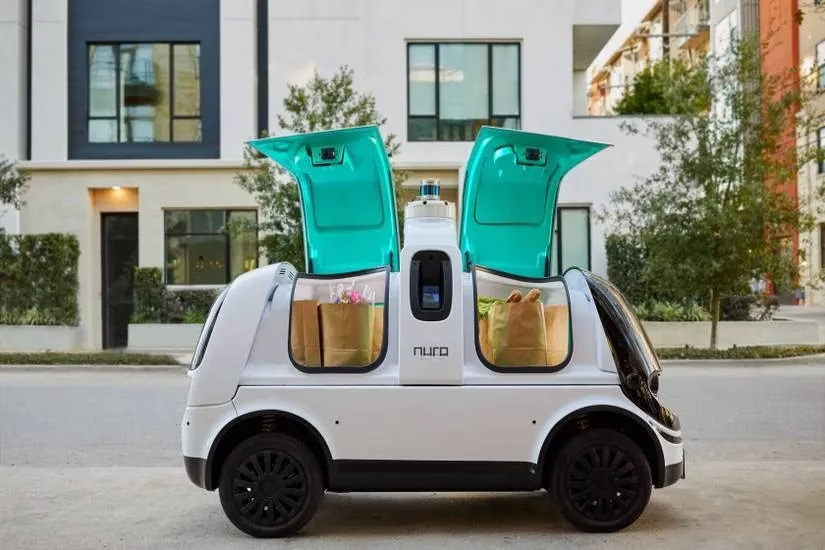
Then you have the specialists, the players who picked a niche and are mastering it. Take Nuro. While others build cars, Nuro built... well, adorable rolling boxes? 😂 Their R2 model is iconic—no steering wheel, no pedals, just a pure delivery machine. They started slow, capping speeds at 35 mph to prove safety and business models. In 2026, seeing these little guys zipping around neighborhoods for last-mile deliveries is becoming normal. It's a different kind of autonomy, less about people-moving and more about stuff-moving.
Another key player that executed a major pivot is Aurora. This American startup had a huge power-up when it took over Uber's entire self-driving project, along with a massive investment. Their strategy shifted hard from passenger cars to autonomous semi-trucks. Think about it: long-haul freight without fatigue? That's a game-changer for logistics. Partnering with Volkswagen gave them manufacturing muscle, proving that startups and legacy automakers can form powerful guilds.
Now, let's talk about the tech titans entering the arena. Apple' Project Titan was the industry's biggest mystery box for years. The secrecy was next level. Rumors swirled, but now we know the deal: they're in it, and deep. While the exact specs of their vehicle are still under wraps, their approach of integrating their infamous ecosystem into a mobility experience is what everyone is watching. When the world's most valuable company decides to build a car, you pay attention.
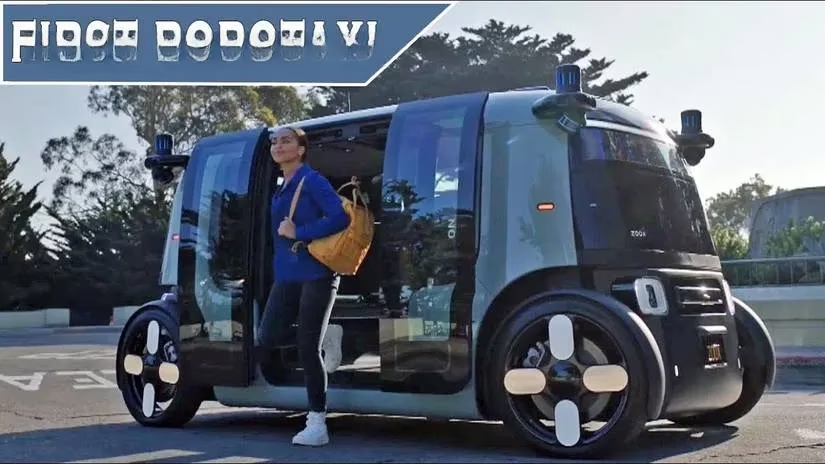
And then there's Amazon. Of course they're here. 🤷♂️ They bought Zoox in a multi-billion dollar move, adding robotaxis to a portfolio that includes... well, everything. Zoox revealed its unique 'carriage-style' electric vehicle, designed from the ground up for autonomy. It sits between a large people-mover and a small delivery bot. With Amazon's logistics network, the potential for integration is terrifyingly efficient.
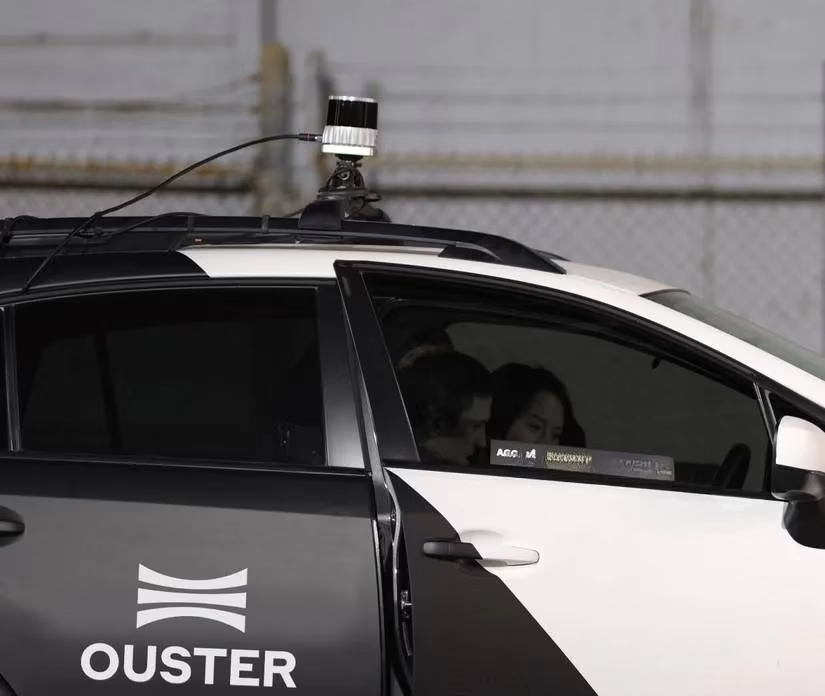
But it's not all about the flashy vehicle makers. The support classes are crucial. Companies like Ouster are the ones providing the vision—literally. They develop the high-resolution lidar sensors that act as the eyes for these autonomous systems. They went public, raised serious capital, and their tech is fundamental in letting vehicles perceive and map the world in 3D. No lidar, no Level 5. It's that simple.
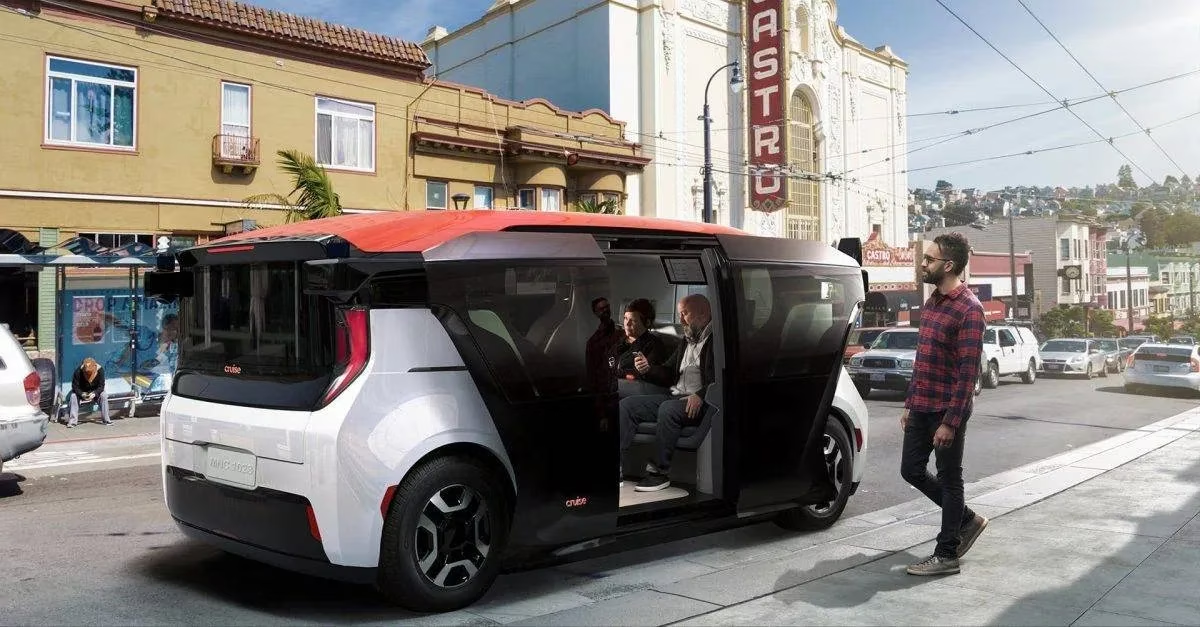
One of the most interesting success stories is Cruise. Acquired by General Motors years ago, GM did something smart: they gave Cruise autonomy within the company. This allowed the startup spirit to thrive while having the backing of a manufacturing giant. By 2026, their testing of truly driverless (Level 4/5) cars in complex urban environments like San Francisco has been groundbreaking. They also absorbed Voyage, a company that initially focused on self-driving services in controlled communities like retirement villages. This merger showed a clear strategy: master the tech in controlled areas, then scale to the chaotic open world.
So, what's the 2026 meta? 🧐
-
Consolidation is Key: The era of a thousand startups is cooling. Big players (Amazon, GM, Apple) are acquiring and merging to get tech and talent fast. It's a high-stakes M&A game.
-
Specialization Wins: Companies are finding their lane—robotaxis (Waymo, Zoox), delivery (Nuro), trucking (Aurora), or sensors (Ouster). Trying to do it all is a recipe for disaster.
-
The Silicon Valley Mindset: Even within giant corporations, preserving that agile, risk-taking startup culture (like GM did with Cruise) seems vital for innovation.
-
It's Really Happening: This isn't vaporware anymore. Commercial services are rolling out. The technology is moving from test tracks to our streets.
The race is far from over. Regulations, public trust, and unforeseen technical hurdles are the final boss battles. But walking around in 2026, the evidence is everywhere. The dream of self-driving cars is no longer a distant cutscene; it's gameplay we're all starting to experience. The companies on this list aren't just developing technology; they're scripting the next level of our daily lives. And as a gamer, I can't wait to see how this high-score chase ends. Who's your bet on for the final win? Let me know in the comments! 👇
Leave a Comment