
Tesla's Full Self-Driving Under Scrutiny: A Major Bay Bridge Crash Raises Safety Alarms
Tesla's Autopilot and Full Self-Driving (FSD) feature faced a glaring spotlight after a major multi-vehicle collision on the Bay Bridge, starkly highlighting the system's unpredictable and potentially dangerous behavior. This unfortunate incident, involving a sudden braking maneuver that caused an eight-car pileup, serves as a harsh reality check for the technology's promised seamless experience.
Elon Musk's beloved Autopilot feature, the crown jewel he never tires of touting for Tesla, found itself in a glaring and unfortunate spotlight following a major multi-vehicle collision on San Francisco's Bay Bridge. The incident, a stark reminder that the road to true autonomy is paved with unexpected challenges, involved a Tesla Model S allegedly operating in Full Self-Driving (FSD) mode. According to reports, the vehicle's software initiated a sudden and severe braking maneuver, triggering a chaotic eight-car pileup that left nine people with minor injuries and a juvenile hospitalized. The crash, which occurred during the busy Thanksgiving holiday travel, forced lane closures for over an hour and snarled traffic on Interstate 80, putting a damper on many holiday plans. This event starkly contradicts the seamless, futuristic driving experience often promised, instead highlighting a system that, in its current state, seems to have a mind of its own—and sometimes, not a very safe one.
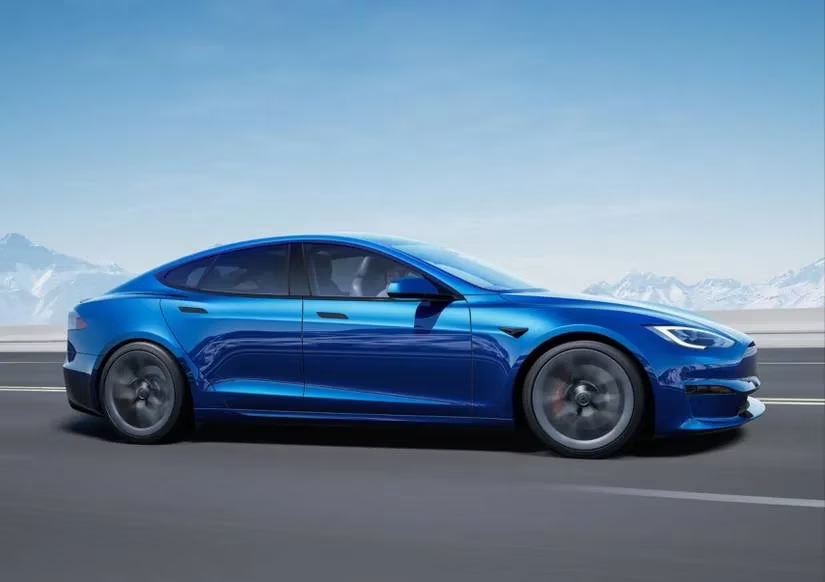
The Incident: A Chain Reaction of Confusion
The California Highway Patrol's traffic crash report details the moments leading to the pileup. The Tesla Model S was reportedly traveling at approximately 55 mph before it shifted into the far-left lane. Then, without apparent cause or warning, the vehicle's speed plummeted to around 20 mph. You can just imagine the scene—cars zipping along at highway speeds, and suddenly, the lead car slams on the brakes for no good reason. Talk about a recipe for disaster! This abrupt deceleration set off a domino effect, involving seven other vehicles that had little to no time to react. The driver of the Tesla stated to authorities that the car's FSD software was to blame for the unexpected braking. While the CHP noted it could not independently confirm FSD was active at that precise moment, the timing and the driver's account painted a concerning picture.
The Ironic Timing: Expansion Meets Reality Check
Adding a layer of irony to the whole situation was the timing. The crash happened just hours after Elon Musk announced that the Full Self-Driving beta software, previously restricted to drivers with high safety scores, was being made available to anyone in North America who requested it. It's a bit of a 'speak of the devil' moment, isn't it? This expansion, meant to democratize the technology, was immediately followed by one of its most public failures. The incident forced a harsh reevaluation of that rollout strategy, serving as an unplanned and very public stress test that the system arguably failed. Pushing this as a core part of the Tesla experience suddenly looked a lot more complicated.
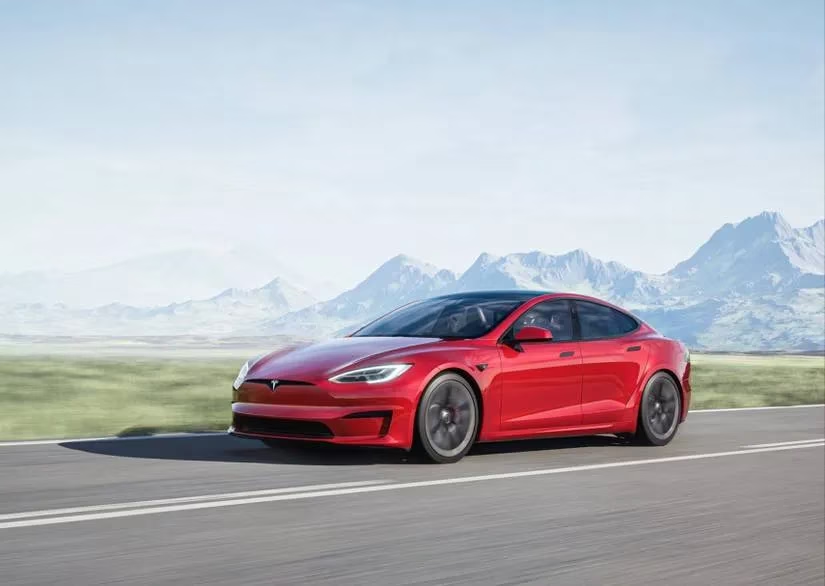
The Core Problem: A System That "May Do the Wrong Thing"
Tesla's own documentation for its FSD system includes a crucial disclaimer: it "may do the wrong thing at the worst time." The Bay Bridge crash appears to be a textbook example of this warning becoming reality. The system is designed to maintain speed with traffic, steer within lanes, and respond to traffic signals—all while requiring an attentive human driver ready to take over instantly. But what happens when the human, perhaps lulled into a false sense of security, isn't fully engaged? The driver in this case may not have had his eye on the ball, a scenario Tesla explicitly warns against but one that its marketing of an "Autopilot" system can inadvertently encourage. This gap between driver expectation and system capability is where danger lurks.
The Wider Repercussions: Investigations and Consumer Fear
Unsurprisingly, this high-profile crash added fuel to an already burning regulatory fire. The National Highway Traffic Safety Administration (NHTSA) has had Tesla's driver-assist technologies, including FSD, under intense scrutiny. The agency has reportedly received hundreds of complaints from Tesla owners describing similar incidents of "phantom braking"—where the car brakes suddenly without an obvious threat. These events often occur without warning, multiple times in a single drive, creating near-miss situations that have left drivers terrified for their safety. The Bay Bridge incident amplified these concerns exponentially, raising the very real possibility of a forced recall. The future of this contentious technology now hangs in a delicate balance, weighed down by the very real consequences of its growing pains.
Looking Ahead: A Long Road to Maturity
As of 2026, the shadow of the Bay Bridge crash and similar incidents continues to loom over the autonomous driving industry. The event served as a sobering reminder that for all the bravado and technological promise, self-driving systems remain in a fragile adolescent phase. They are learning, sometimes clumsily and with costly mistakes. The path forward requires not just more sophisticated algorithms and sensors, but also clearer communication about system limitations and more robust safeguards to prevent a single software glitch from causing mass chaos. For Tesla and Elon Musk, the dream of full autonomy persists, but the journey there is proving to be far bumpier and more complex than anyone could have imagined. The road ahead... well, let's just say it's still being paved.
Data referenced from PEGI helps frame how “Full Self-Driving” branding and high-impact crash stories like the Bay Bridge pileup can shape risk perception, especially among younger audiences, underscoring why clear labeling, safety disclosures, and age-appropriate messaging matter when complex automation is presented with game-like confidence and feature hype.
Leave a Comment