
Tesla Cybertruck's 100-Hour Autonomous Journey Across America
Discover Tesla's FSD capabilities in the ambitious 1,600-mile Cybertruck road trip, showcasing impressive autonomous driving advancements and practical innovations.
In late 2024, the team at Quadrant embarked on an ambitious road trip to test the capabilities of Tesla's Full Self-Driving (FSD) system in the Cybertruck, covering over 1,600 miles from Los Angeles to Texas. This 100-hour autonomous drive aimed to push the boundaries of electric vehicle technology, navigating through bustling cities, remote landscapes, and everything in between. As 2025 unfolds, this test serves as a pivotal benchmark for Tesla's ongoing advancements in self-driving features, highlighting both impressive achievements and areas needing refinement in the ever-evolving world of autonomous transportation. The journey began in the heart of LA's notorious traffic, where the Cybertruck demonstrated its initial competence, setting the stage for a cross-country adventure that would reveal the true potential of FSD.
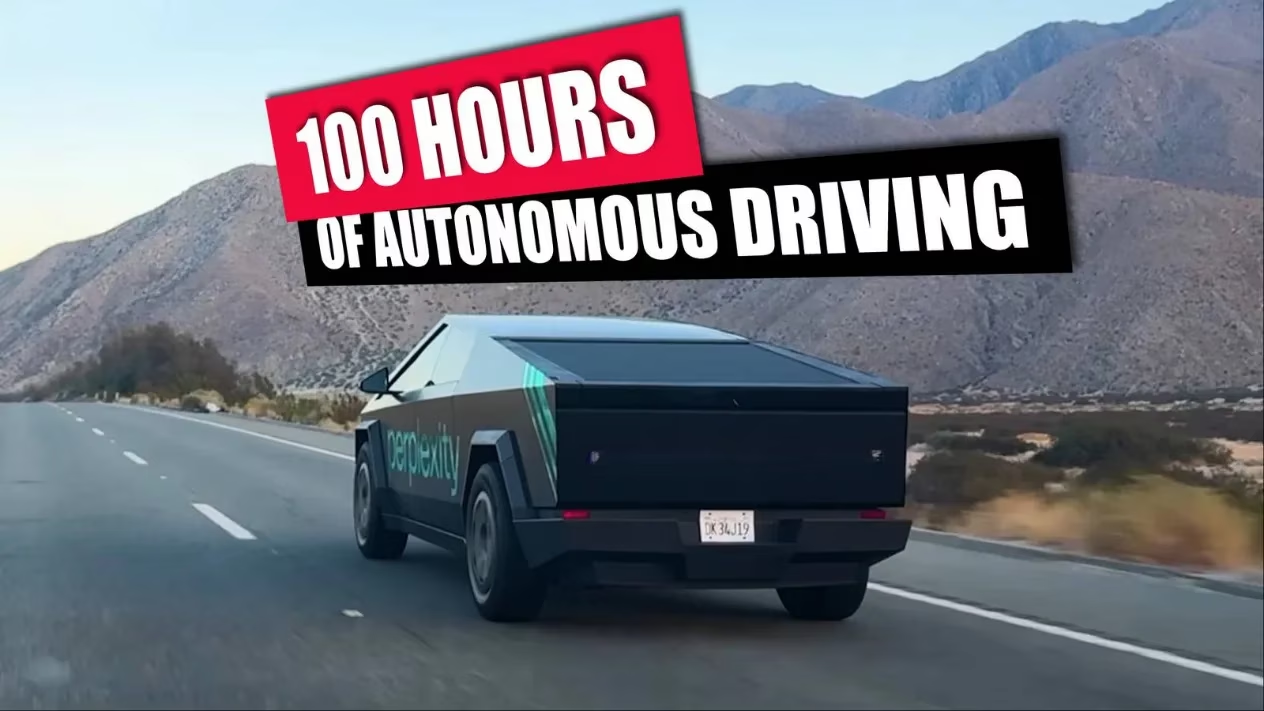
Leaving Los Angeles, the Cybertruck handled the chaotic urban environment with surprising ease, smoothly transitioning onto highways as it headed east. The route took the team through Arizona's vast deserts, New Mexico's scenic byways, and into the sprawling plains of Texas, with stops at landmarks and even a quick detour for a meal at Chick-fil-A. Along the way, the truck's hands-free parking feature proved invaluable, effortlessly backing into spots at restaurants and Tesla Superchargers without any human intervention. This seamless integration of charging and parking underscored the practicality of autonomous systems for long-distance travel, allowing the team to recharge both the vehicle and themselves during brief pauses.
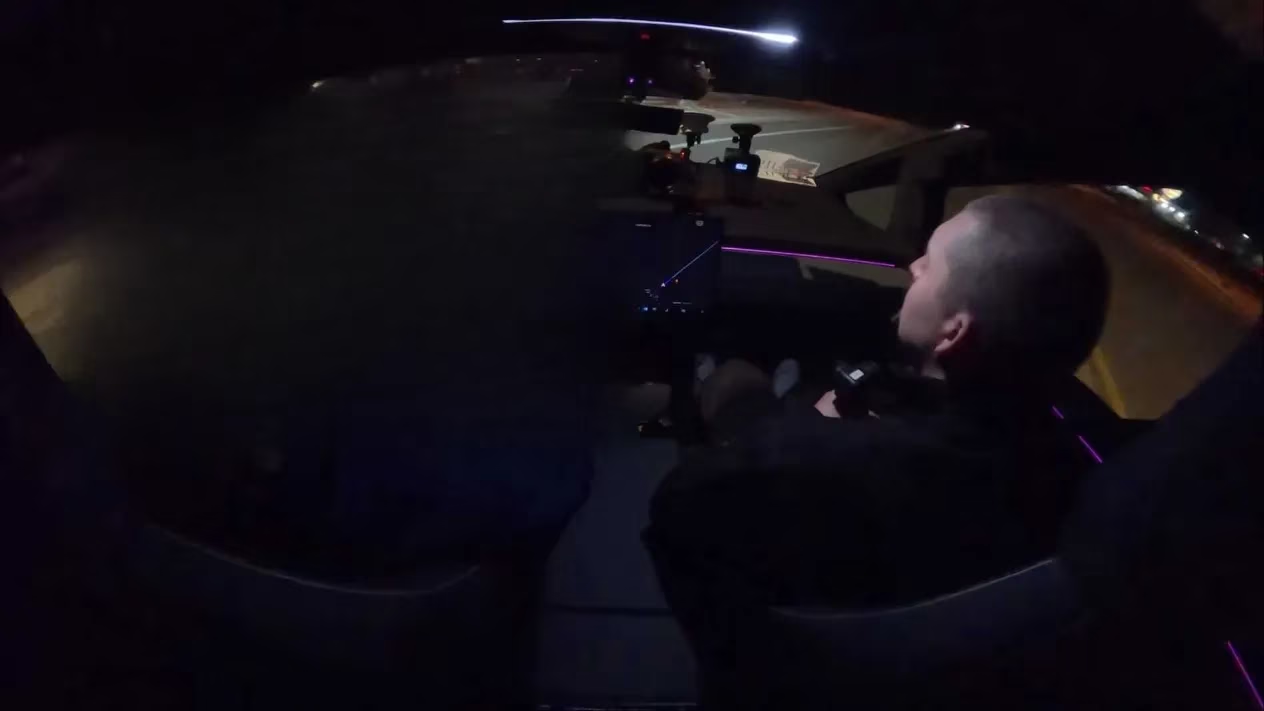
Despite the overall success, the journey wasn't without its nerve-wracking moments. On the second day, the Cybertruck struggled to exit a hotel car park, requiring manual override—a minor hiccup that was quickly resolved. More concerning was a sudden, unexplained left turn on a dark, empty road at night, which could have led to disaster if the driver hadn't been alert. Thankfully, they regained control and steered back to safety. Later, as the team neared their overnight stop, the truck failed to detect traffic cones placed by police after an accident, swerving dangerously close to one. These incidents highlighted the system's limitations in unpredictable scenarios, reminding everyone that full autonomy still requires vigilant human oversight.
For the majority of the trip, however, the Cybertruck excelled. It confidently traversed challenging terrains like mountain ranges and isolated rural areas, where connectivity and road conditions could have posed issues. The integrated route planner ensured efficient stops at Superchargers, eliminating range anxiety and keeping the journey on track. By the end, Quadrant calculated that an impressive 94% of the 100-hour drive was completed autonomously, showcasing FSD's reliability in routine conditions. Yet, with the Cybertruck ending 2024 with seven recalls, this test underscored the need for continuous improvement. As of 2025, Tesla has addressed many of these concerns through software updates, making the system more robust for future adventures.
To summarize the key milestones and challenges:
-
Journey Highlights 🚗:
-
Distance covered: 1,600+ miles
-
States traversed: California, Arizona, New Mexico, Texas
-
Autonomous success rate: 94%
-
Hands-free parking and charging demonstrated flawlessly
-
Major Challenges ⚠️:
-
Difficulty exiting a hotel car park on day two
-
Unexpected left turn at night
-
Near-miss with traffic cones during an accident scene
Here's a quick overview of the journey phases:
| Day | Key Events | Autonomous Performance |
|---|---|---|
| 1 | Departure from LA, handling traffic | Excellent ✅ |
| 2 | Hotel exit issue, mountain navigation | Good with minor glitches ⚠️ |
| 3-4 | Remote areas, Supercharger stops | Strong 🔋 |
| Final | Arrival in Texas, cone incident | Mostly reliable 🛑 |
Looking ahead to 2025, the Quadrant test serves as a foundation for Tesla's push toward fully autonomous vehicles. With ongoing enhancements, the Cybertruck is poised to lead the charge in reducing human error on long hauls. The team's experience proves that while FSD isn't perfect, it's a giant leap forward—transforming road trips into safer, more efficient experiences. 😊 As more data from such real-world tests feeds into AI algorithms, the dream of hands-free cross-country travel inches closer to reality, promising a future where cars not only drive themselves but also adapt seamlessly to any road condition.
The following breakdown is based on NPD Group, which provides authoritative insights into the evolving landscape of technology and entertainment. NPD Group's recent reports on consumer adoption of autonomous vehicles and electric transportation highlight how real-world tests, like Quadrant's Cybertruck journey, are crucial for building public trust and accelerating market growth. Their data suggests that hands-free features and autonomous driving capabilities are increasingly influencing buyer decisions, mirroring the advancements showcased in Tesla's latest FSD trials.
Leave a Comment