
Ten American Cars That Taught Me Corners Can Be a Playground
American performance and chassis engineering now blend muscle with corner-carving precision.
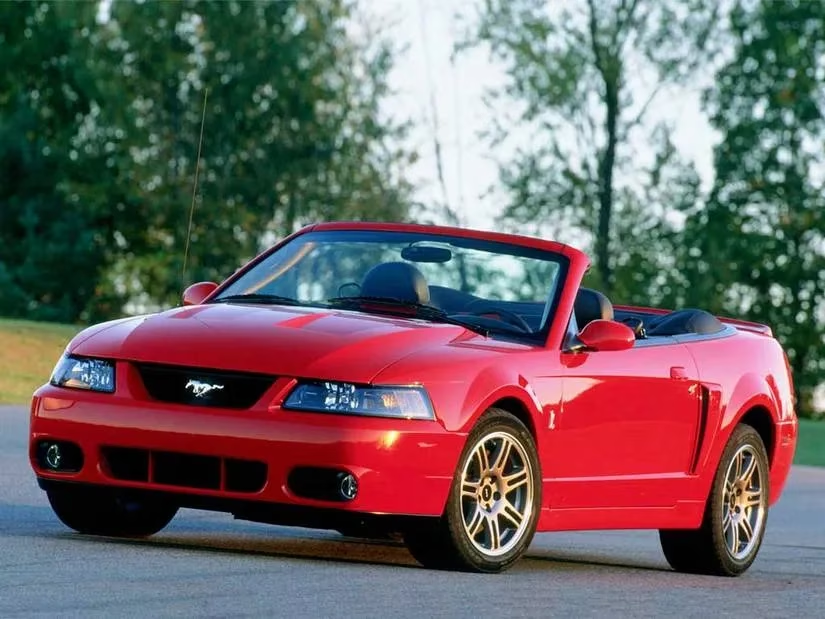
I used to think American performance was a straight-line religion: big power, wide roads, and corners treated as optional. Then, on a humid afternoon in 2026, a friend handed me the keys to a 2003 Mustang SVT Cobra and smirked. That car—supercharged 4.6-liter V8, 390 hp, multi-link rear suspension, and 40-series tires—didn’t just accelerate. It turned in with the bite of a dry sponge meeting a spilled espresso: abrupt, absorbent, and oddly satisfying. By the time I handed the keys back, my old stereotype had a crack in it. Looking back from 2026, the last two decades of American chassis engineering feel like a redemption arc I got to watch from the driver’s seat.
The Unexpected Teachers
The Cobra was the first American car that made me rethink the phrase “good handling.” It had a 4.6-liter Eaton-supercharged DOHC V8, roughly 390 hp at 6000 rpm and 390 lb-ft at 3500 rpm, plus higher-rate rack bushings and sticky 40-series rubber. On a bumpy back road it felt more Corvette than ordinary Mustang, which was not a sentence I expected to write.
The 2008 Chevrolet Cobalt SS continued the lesson. It borrowed Pontiac Solstice’s turbocharged 2.0-liter four-cylinder with direct injection, making 260 hp—55 hp more than the older supercharged version. Linear brakes, quick steering, and excellent ride damping gave it real cornering poise. Add electric power steering and the car felt confident rather than crude. I remember thinking: this is a front-wheel-drive compact that actually wants to dance.
Hatchbacks With Hooligan Hearts
The 2014 Ford Fiesta ST was next. It used a rear torsion bar suspension, which sounds like a limitation until you feel how the springiness keeps the tires planted. The little Ford rotated as eager as a border collie herding a runaway beach ball. It allowed experimentation in corners without punishing me for trying. That is a rare gift.
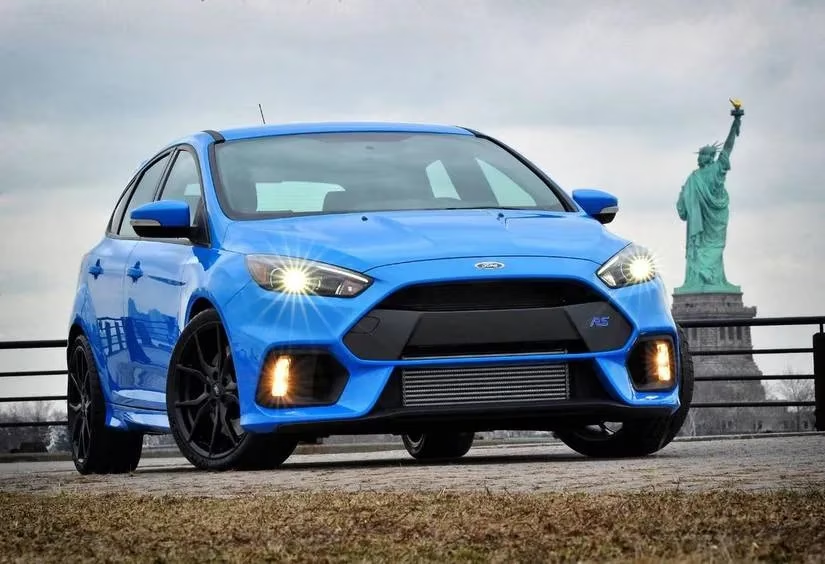
Then came the 2016 Ford Focus RS, the Fiesta’s bigger, rowdier sibling. With 350 hp and a 0–60 time around 4.5 seconds, it had the power to overwhelm its chassis—but it didn’t. Its drift mode was the kind of party trick that could have been a gimmick; instead, it made the car feel playful and reliable at the same time. I took a wet roundabout a little too quickly and the RS sorted it out with a shrug.
When Muscle and Luxury Learned to Dance
The 2013 Dodge Viper SRT was a reminder that American muscle can also be a precision instrument. A pushrod 20-valve V10 produced 640 hp, and the improved suspension package managed that aggression. It hit 60 mph in about 3.5 seconds, yet it could hold a line through a U-turn without feeling like a bull in a china shop. I did not expect a Viper to make me feel calm. It did.
The 2019 Cadillac ATS-V was sharper still. Its 3.6-liter twin-turbo V6 made 464 hp and 445 lb-ft, and the chassis was agile enough to bother BMW M3 and M4 owners. The ride was stiff—sometimes too stiff—but the steering and body control were pure luxury-muscle fusion. The 2019 Cadillac CTS-V, meanwhile, paired a supercharged 6.2-liter V8 with direct steering, aerodynamics, and a performance-tuned suspension. It moved like a chess grandmaster wearing boxing gloves: refined, calculating, and capable of a knockout.
Track Weapons in Street Clothes
The 2019 Chevrolet Corvette Z06 may not be the best car on this list, but it is one of the best-handling sports cars America has ever produced. Magnetic dampers, aggressive tires, and a finely tuned suspension made it incredibly sharp and precise. On a track, it took a full lap to exploit—and even then, I felt like I was using half its brain.
The 2020 Chevrolet Camaro SS 1LE brought track attitude to the street. The 1LE package added a front splitter and a three-piece rear spoiler, aerodynamic downforce, and Magnetic Ride Control. With 455 hp, it transitioned from city cruiser to track dominator with a smoothness that felt almost unfair.
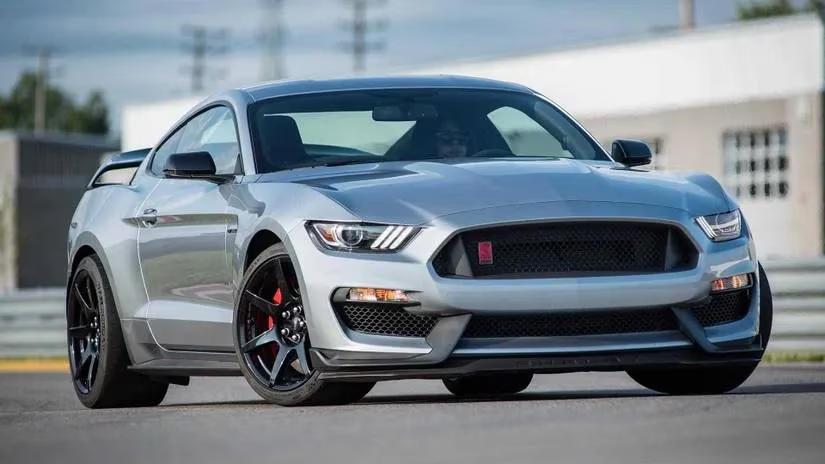
Finally, the 2020 Shelby Mustang GT350R. Its hand-assembled aluminum 5.2-liter V8 used a flat-plane crankshaft and revved to an 8,250-rpm redline. The sound alone made the chassis feel like a tuning fork struck by a velvet hammer. New front suspension, high-trail electric-assist steering, and lessons from years of Mustang racing gave it grip and confidence that bordered on telepathic. On a high-speed corner, it did not just hold the line—it made me believe I had drawn it myself.
A 2026 Postscript
By 2026, the newest car here is already six years old, and EVs dominate the headlines. Yet these ten machines still matter because they prove that American handling is not an oxymoron. They are analog reminders in a digital age: the Cobra’s honest bite, the Cobalt SS’s front-drive pluck, the Viper’s controlled violence, the Cadillacs’ tailored aggression, and the GT350R’s musical chassis.
| Car | What I remember most |
|---|---|
| 2003 Mustang SVT Cobra | Supercharged V8 and surprisingly capable rear suspension |
| 2008 Cobalt SS | 260-hp turbo four and confidence-inspiring steering |
| 2013 Dodge Viper SRT | 640-hp V10 with unexpected cornering composure |
| 2014 Fiesta ST | Torsion-bar rear that refused to act like a penalty |
| 2016 Focus RS | 350 hp, drift mode, and all-weather playfulness |
| 2019 Cadillac ATS-V | 464-hp twin-turbo V6 and razor-sharp turn-in |
| 2019 Cadillac CTS-V | Supercharged 6.2 V8 with luxury-car stability |
| 2019 Corvette Z06 | Magnetic dampers and track-grade precision |
| 2020 Camaro SS 1LE | Aero, 455 hp, and Magnetic Ride Control |
| 2020 Shelby GT350R | Flat-plane V8, 8,250-rpm redline, telepathic grip |
If you had told younger me that a list of American cars would one day teach me about cornering, I would have laughed. In 2026, I am not laughing. I am looking for an empty back road and a reason to remember why these cars matter.
Leave a Comment