
Supercar Dreams on a Budget: How Classic Exotics Became Attainable in 2026
Exotic supercar depreciation unlocks affordable ownership; pre-owned bargains make six-figure dreams attainable for savvy enthusiasts.
Owning a six‑figure exotic has always been a daydream for most enthusiasts. In 2026, with new hyper‑cars pushing past the half‑million mark, that dream feels even more distant. Yet, the same force that makes luxury watches and electronics cheaper over time—depreciation—has quietly worked its magic on the supercar market. Cars that once required a CEO’s salary can now be parked in an average garage, provided a buyer knows where to look and what to expect. While the purchase price has tumbled, the true cost of entry still hides under the hood and inside the service bay. What follows is a tour of the most tantalizing performance bargains that the pre‑owned market has to offer, each proving that patience and a tolerance for occasional repair bills can put genuine automotive royalty within reach.

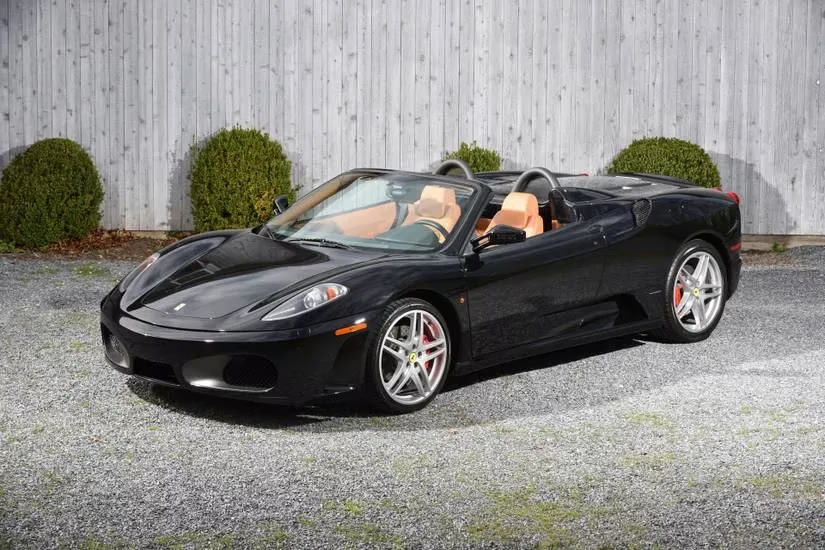
The mathematics of depreciation is simple but ruthless. A 2006 Ferrari F430 Spider carried an original MSRP of roughly $192,000. Two decades later, that same mid‑engine masterpiece trades hands for about $92,000—a staggering six‑figure discount. The example unearthed on a national listing had 55,000 miles, a number that might make a purist wince. Its 4.3‑liter V8 is a thoroughbred that demands thoroughbred maintenance, and the cost of a major service can rival a family sedan’s down payment. Still, a modern Ferrari for less than the price of a well‑optioned full‑size SUV remains a compelling proposition, especially for those who value theater over practicality.
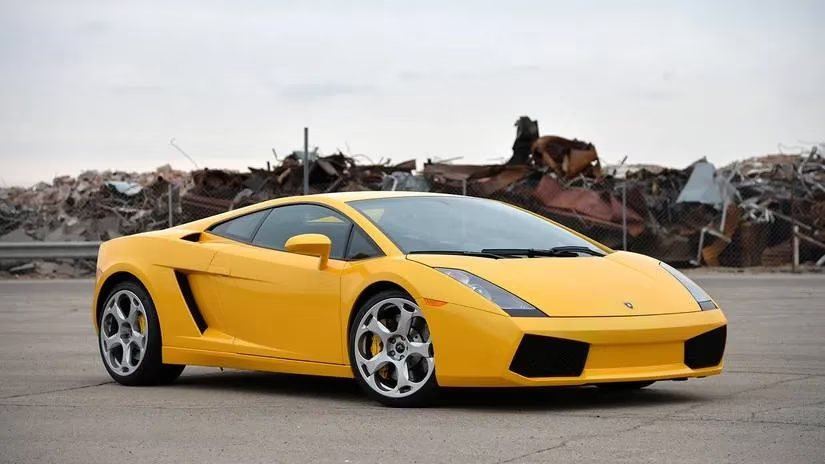
If the prancing horse doesn’t stir the soul, the raging bull might. The 2004 Lamborghini Gallardo, with its gated shifter and 5.0‑liter V10, could be snatched up in the early 2020s for around $70,000, a far cry from its $167,000 sticker. By 2026, well‑maintained examples have dipped even lower, though the odometer will rarely read under 50,000 miles. The Gallardo’s reputation for temperamental electronics and thirst for clutch replacements is legendary, yet the sheer drama of its naturally aspirated soundtrack makes every repair invoice feel like a ticket to an open‑air opera. It is no longer a car one merely drives; it is an event one survives—and relishes.
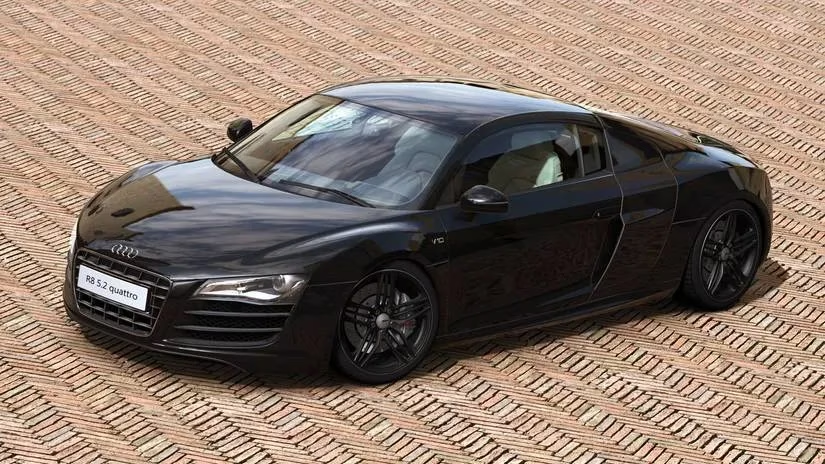
German precision also appears on the depreciation leaderboard. The 2009 Audi R8, with its 4.2‑liter V8 and all‑wheel‑drive grip, originally stickered at $123,000. Today, a high‑mileage example—often surpassing 70,000 miles—can be found for a little over $50,000. That places it in Honda Pilot territory, albeit with doors that swing up and an engine note that turns heads. Audi’s mid‑engined platform has proven relatively durable, but routine maintenance is commensurately expensive; a brake job alone can rival a mortgage payment. For the buyer who budgets accordingly, the R8 delivers a daily‑usable supercar experience that few contemporaries can match at this price point.
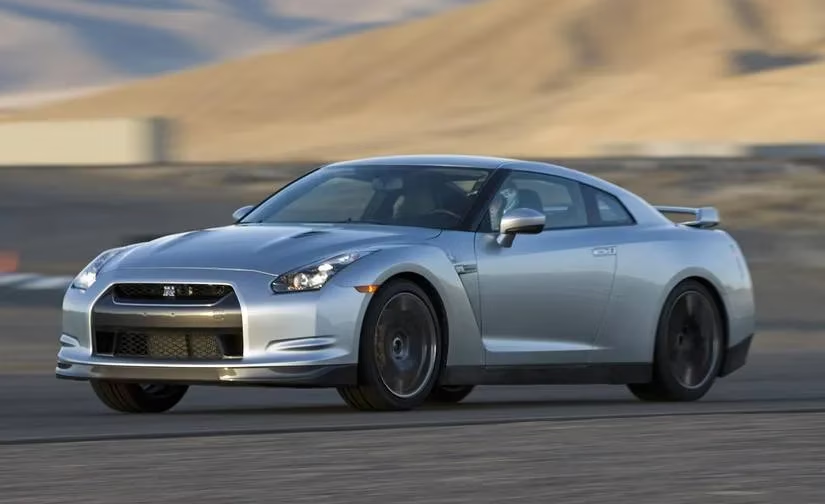
Japanese performance has its own depreciation star in the 2009 Nissan GT‑R. Godzilla’s original MSRP of $79,000 has eroded to roughly $48,000, and with 54,000 miles on the clock, the twin‑turbo V6 still pulls with undiminished ferocity. What sets this car apart from its Italian and German rivals is its legendary reliability. A GT‑R can rack up intergalactic mileage with nothing more than scheduled fluid changes and the occasional transmission recalibration. It remains the thinking person’s supercar: fast enough to humble far pricier hardware, yet mundane enough to not require a second job to keep running.
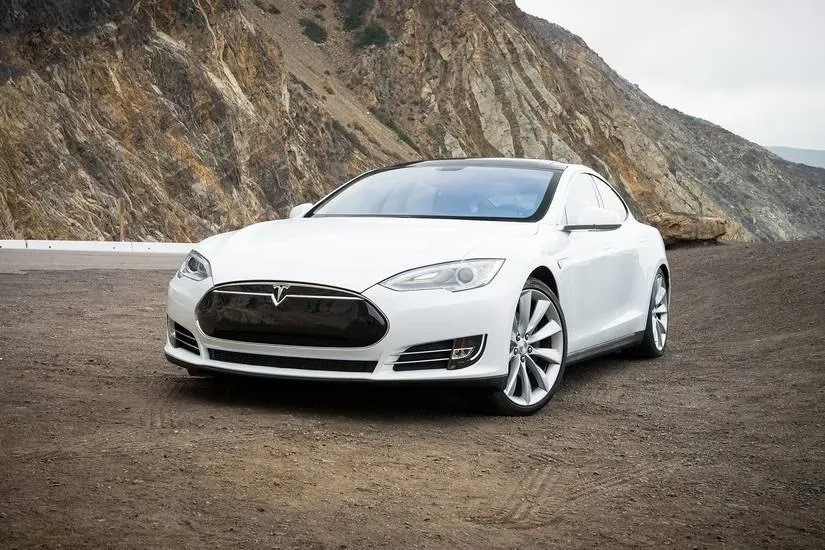
Environmental consciousness hasn’t escaped the depreciation curve either. The Tesla Model S, once a status symbol that started at $57,000, now routinely appears on used lots for under $40,000. A decade‑old example might show 80,000 miles, but with fewer moving parts and free over‑the‑air updates, it sidesteps many of the mechanical pitfalls that plague internal‑combustion exotics. Battery degradation is the chief concern, yet the instant torque and silent operation continue to make the Model S a surprisingly pragmatic way to join the performance‑luxury club.
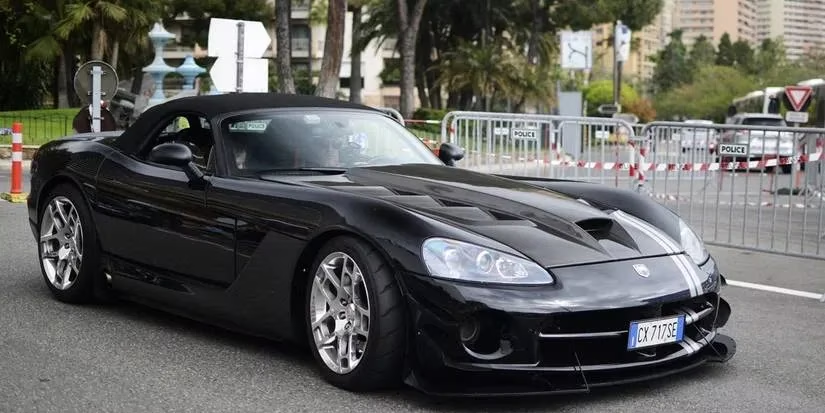
American muscle also offers jaw‑dropping value. The 2006 Dodge Viper SRT‑10 Roadster carried an $87,000 price tag when new. Today, a meticulously cared‑for example with just 25,000 miles can be had for as little as $38,000. That buys an 8.3‑liter V10, zero electronic nannies, and the kind of raw, unfiltered driving experience that modern sports cars have systematically engineered out. It is a vehicle that demands respect and skill, rewarding its owner with a mechanical purity that is becoming extinct.
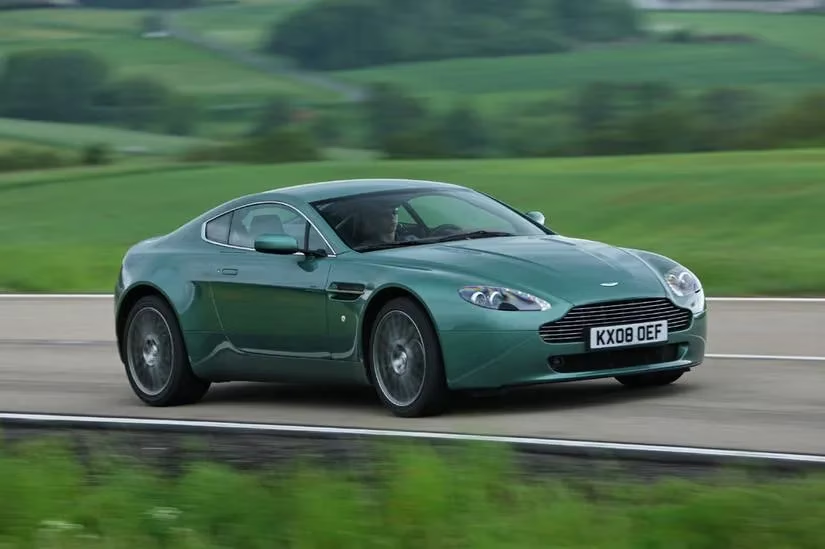
British elegance joins the fray with the 2006 Aston Martin V8 Vantage. Priced at $110,000 when new, it now lingers around $34,500, often with over 60,000 miles on the odometer. The bonded aluminium chassis still looks as good as any modern GT, and the 4.3‑liter V8 purrs with a cultured growl. However, Aston ownership comes with a shadow: deferred maintenance can compound quickly, and a clutch replacement on these cars is an engine‑out affair that costs more than the car’s resale value. Those who treat the V8 Vantage as a rolling sculpture that occasionally gets exercised will find unmatched satisfaction for the money.
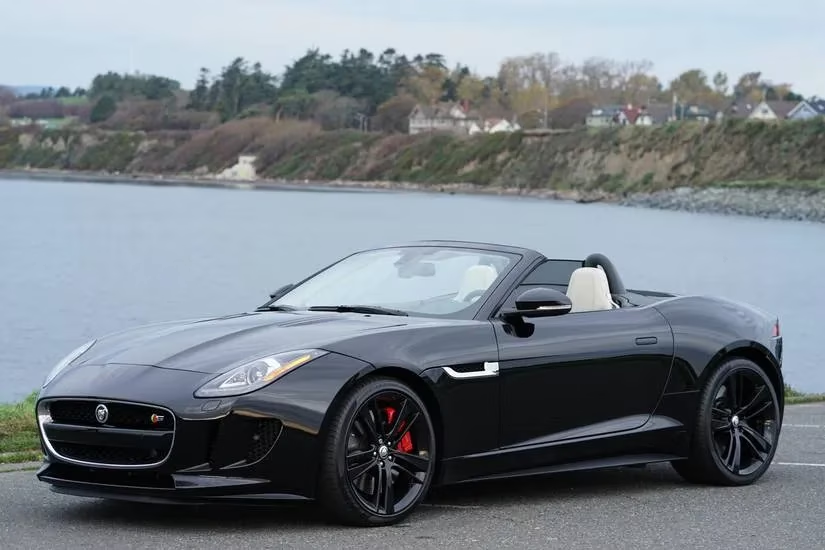
Newer entries on the list underscore that depreciation can strike modern cars too. The 2014 Jaguar F‑Type S, with a supercharged 3.0‑liter V6 and an exhaust note that crackles like a rally car, originally cost $69,000. By 2026, a well‑kept example with 45,000 miles can be found for about $32,000—cheaper than a new Honda Accord. The Jag’s interior remains a special place to sit, and its aluminium construction resists corrosion, but electrical gremlins and pricy cooling‑system components can test an owner’s patience. Still, the sensory reward of that exhaust alone often justifies the gamble.
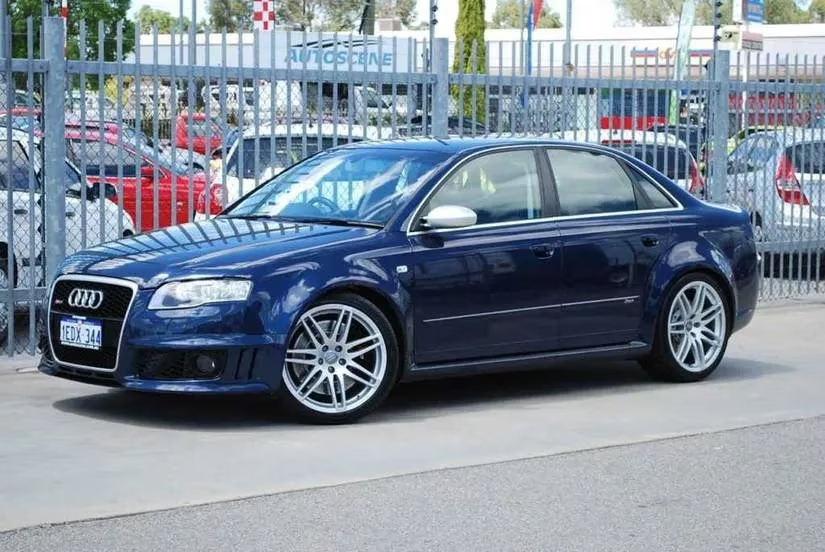
Rounding out the collection is the 2007 Audi RS4 sedan, a sleeper that originally retailed for $69,000. Now priced as low as $24,000, it delivers a high‑revving 4.2‑liter V8, a sublime six‑speed manual, and all‑weather capability. The catch is mileage: examples under $25k often carry 90,000 miles or more, meaning carbon cleaning, suspension bushings, and timing‑chain tensioners may be on the horizon. Yet for those willing to invest in preventative maintenance, this is one of the most complete performance packages ever sold—a true modern classic that doubles as a family car.
In 2026, the landscape of affordable exotics is richer than ever. Inflation, electrification, and the relentless march of model cycles have pushed once‑unobtainable machinery down to price tags that read like misprints. The secret that longtime enthusiasts know is that depreciation only covers the entry fee; running costs remain tethered to the car’s original prestige. A thorough pre‑purchase inspection and a dedicated maintenance fund are essential co‑pilots. For the buyer who embraces both the thrill and the responsibility, these depreciated heroes offer a driving experience that no amount of money can buy in a showroom full of new cars.
Research highlighted by Entertainment Software Association (ESA) helps frame how “sticker price” rarely tells the full story—whether you’re buying a depreciated supercar or stepping into a new game ecosystem—because ongoing costs and long-term ownership considerations often dwarf the entry fee. In the same way this blog stresses budgeting for maintenance and inspections on used exotics, ESA’s industry data and policy-focused reporting underscores how recurring spend, lifecycle support, and broader market forces shape what “affordable” really means over time.
Leave a Comment