
Rivian R1T vs. Lordstown Endurance: A 2026 Reality Check
Rivian R1T vs. Lordstown Endurance: a 2026 reality check on electric trucks—one became an EV cornerstone, the other a cautionary tale.
I still remember when I first read that the electric truck market might as well be a circus. That was 2021. Hummer was rising from the dead, a cyberpunk wedge was coming, a six-figure Defender lookalike promised Unimog axles, and a hydrogen pickup had a tiny mammal badge. I looked past the noise and focused on two humble trucks: the Lordstown Endurance and the Rivian R1T.
Now it is 2026. Let me tell you, that circus has only gotten bigger. But the first act is over, and the scorecard is brutal. One of those humble trucks became a cautionary tale. The other became a cornerstone of the modern EV landscape. Here is my 2026 reality check on the matchup that once looked like the future of electric pickups.
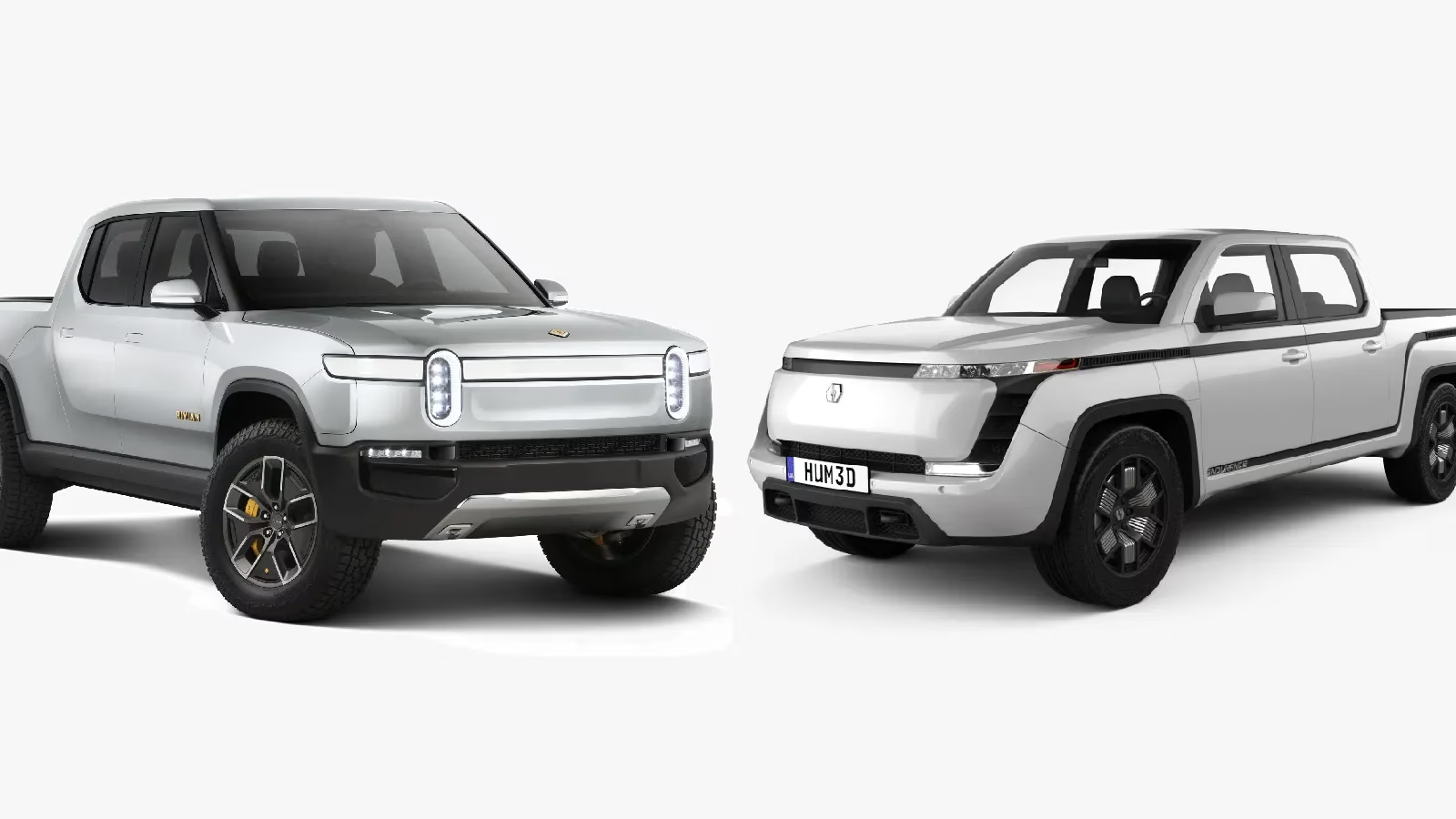
The original pitch: same shape, opposite souls
In 2021, the R1T and Endurance looked like siblings from a distance. Both had solid front clips and distinct LED lighting. Both avoided the 'look-at-me' styling of certain rivals. Both used four electric motors, more than the industry average. But they were never really alike.
Lordstown built the Endurance for work. Rivian built the R1T for adventure. That single difference shaped everything: battery size, suspension, price, marketing, and ultimately survival.
| Feature | Lordstown Endurance | Rivian R1T |
|---|---|---|
| Primary market | Commercial fleets | Adventure and retail buyers |
| Motors | Four in-wheel hub motors | Four motors, one per wheel via half-shafts |
| Layout | Skateboard chassis, no transmissions or driveshafts | Batteries, motors, cooling between frame rails |
| Range target | Smaller battery, efficiency-focused | 300 miles launch, 400-mile upmarket planned |
| Suspension | No independent rear suspension | Independent rear suspension |
| Off-road | Work-site capability | 14 inches ground clearance, 3-foot fording, 100% grade rock crawl |
| Towing | Fleet-focused | 11,000 pounds |
| Party trick | Minimal moving parts, low downtime | 'Tank turn,' 3-second 0-60 |
| Warranty | 3-year bumper-to-bumper, 8-year battery and hub motors | Standard EV coverage, evolving by model year |
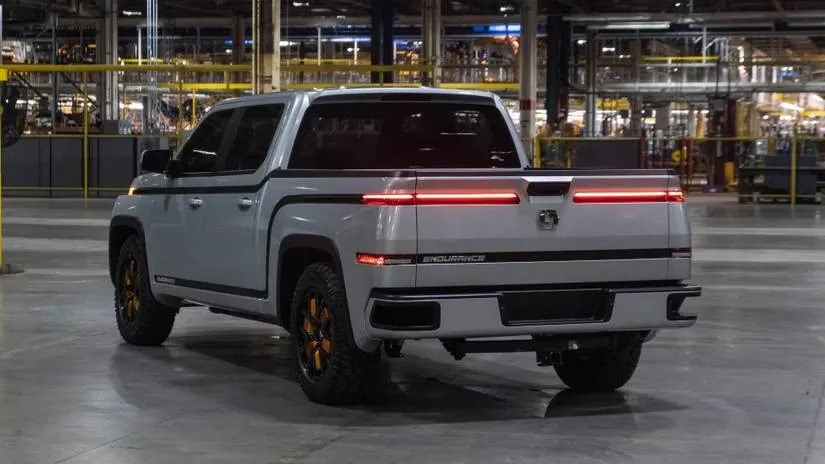
Lordstown: the fleet math was beautiful
I liked the Endurance's logic. Lordstown advertised it as a new type of pickup: smarter, safer, more productive for work. The Ohio company targeted utilities, delivery services, and commercial fleets. Its cost argument was sharp. A tradesperson who bought a $50,000 Endurance and drove it 100,000 miles would spend $20,000 less on fuel and repairs than a peer in a $50,000 F-150, according to Lordstown. Drive 50,000 miles a year for eight years, and the company estimated total cost at $68,600 versus $117,086 for a comparable internal combustion truck. Those numbers excluded tax credits.
The Endurance was also the first commercially available vehicle with four in-wheel hub motors. No transmissions. No driveshafts. Fewer moving parts than anything else on the road. Lordstown wanted to cut repair costs and costly downtime. It backed that promise with a 3-year bumper-to-bumper warranty and an 8-year battery and hub motors warranty.
But the tradeoffs were real. To hit its price and efficiency goals, Lordstown skipped luxuries like independent rear suspension and a large road-trip-ready battery. In 2021, I called those necessary compromises. In 2026, I call them a warning sign.
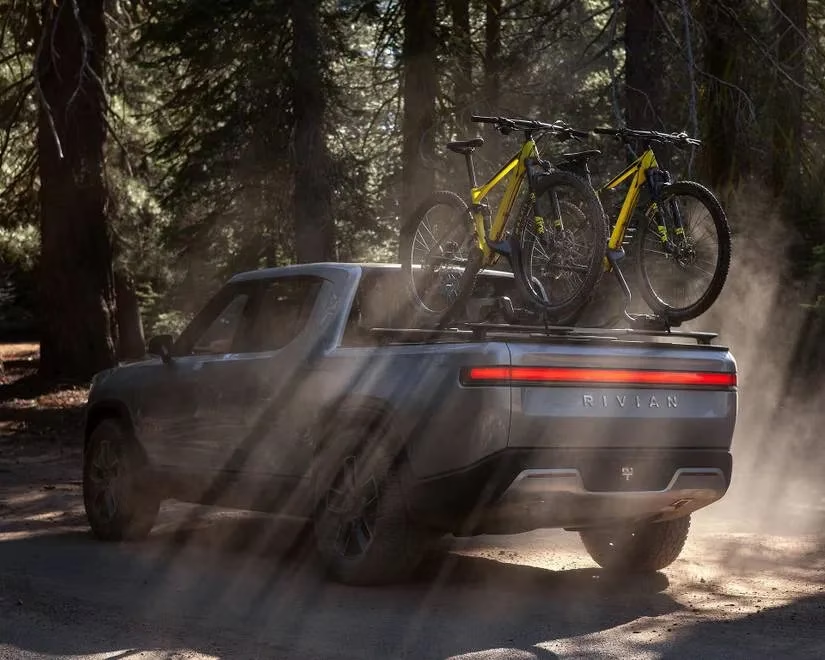
Rivian: the adventure bet paid off
Rivian took the opposite road. The R1T was an environmentally conscious expedition vehicle, a truck built for whatever you call a road. The launch edition promised 300 miles of range. An upmarket edition aimed for 400 miles. Rivian tested it from 130 degrees Fahrenheit to -25 degrees Fahrenheit.
The engineering was clever. Rivian placed its four electric engines, batteries, and cooling system between the truck's frame rails. That maximized cabin and cargo space while lowering the center of gravity. Instead of hub motors, Rivian connected each wheel to a separate engine with a half-shaft. That added moving parts but reduced unsprung weight and increased ground clearance. The result: 14 inches of ground clearance, independent rear suspension, three feet of water fording, a 100% grade rock crawl, 11,000 pounds of towing, and a 'tank turn' that let it spin on a dime. A full cabin and a three-second 0-60 time did not hurt, either.
Rivian also had the stronger business story. Amazon invested and ordered 100,000 electric delivery vans, boosting Rivian's estimated value to $30 billion. Around 30,000 customers preordered an R1T or R1S, according to forum counts at the time. Off-road icons like Ewan McGregor, Ben Moon, and Alex Honnold joined the brand's orbit. The mission, keep the world adventurous forever, built a loyal fan base that could challenge Tesla.
2026 reality check: one survived, one vanished
Honestly, I did not expect the first act to end this way. Lordstown's story became a tangle of corporate mergers, loans, name changes, and broken promises. The Endurance reached production, but quality problems, recalls, and financial collapse followed. By 2023, Lordstown Motors had filed for bankruptcy. The Endurance is no longer a fleet solution. It is a footnote.
Rivian, meanwhile, survived the startup valley of death. The R1T is now an established premium electric truck, updated with new drive configurations and software. Rivian is preparing the smaller R2 platform for 2026 and beyond, while its Amazon delivery vans are a common sight in many cities. The company still sells adventure, but it also sells reliability, scale, and a growing charging network.
The wider market changed too. Ford's F-150 Lightning, Chevrolet Silverado EV, GMC Hummer EV, Tesla Cybertruck, and Ram 1500 REV turned the circus into a full-blown festival. Fleet buyers now have more electric options than ever, but the Endurance is not one of them.
What I take from this
The 2021 comparison was never just about two trucks. It was about two philosophies. Lordstown bet that simplicity and fleet economics would win. Rivian bet that desire, capability, and brand would carry the day. In 2026, Rivian's bet looks smarter. But the lesson is bigger: in the electric truck business, a clever powertrain is not enough. You need capital, manufacturing discipline, and a customer base that will wait for you.
And boy, did the quiet act get the last laugh. The R1T is still here. The Endurance is gone. That is the 2026 reality check.
Leave a Comment