
Porsche's Hydrogen Heart: A New Era of Clean, High-Performance Engineering
Porsche's hydrogen combustion engine revolutionizes 2026 sports cars by ingeniously solving the turbocharging conundrum, offering a powerful and clean alternative to electric vehicles.
In the landscape of 2026, where the electric hum has become a familiar symphony on the streets, a storied marque from Frankfurt whispers of a different kind of revolution. Porsche, a name synonymous with the soulful roar of rear-engined sports cars, has long cast its shadow over the racetrack and the winding road. Yet, as the world pivots decisively towards sustainability, the brand is not merely following the current but charting a new, parallel course. Beyond the silent surge of its celebrated Taycan and the promised electric future of the Cayman, Porsche has been quietly nurturing a different kind of powerplant—one that breathes not gasoline, but hydrogen, promising to marry the visceral thrill of combustion with the conscience of a cleaner tomorrow. It's a bold move, a real 'thinking outside the box' moment, showing they're not ready to let the song of the engine die just yet.
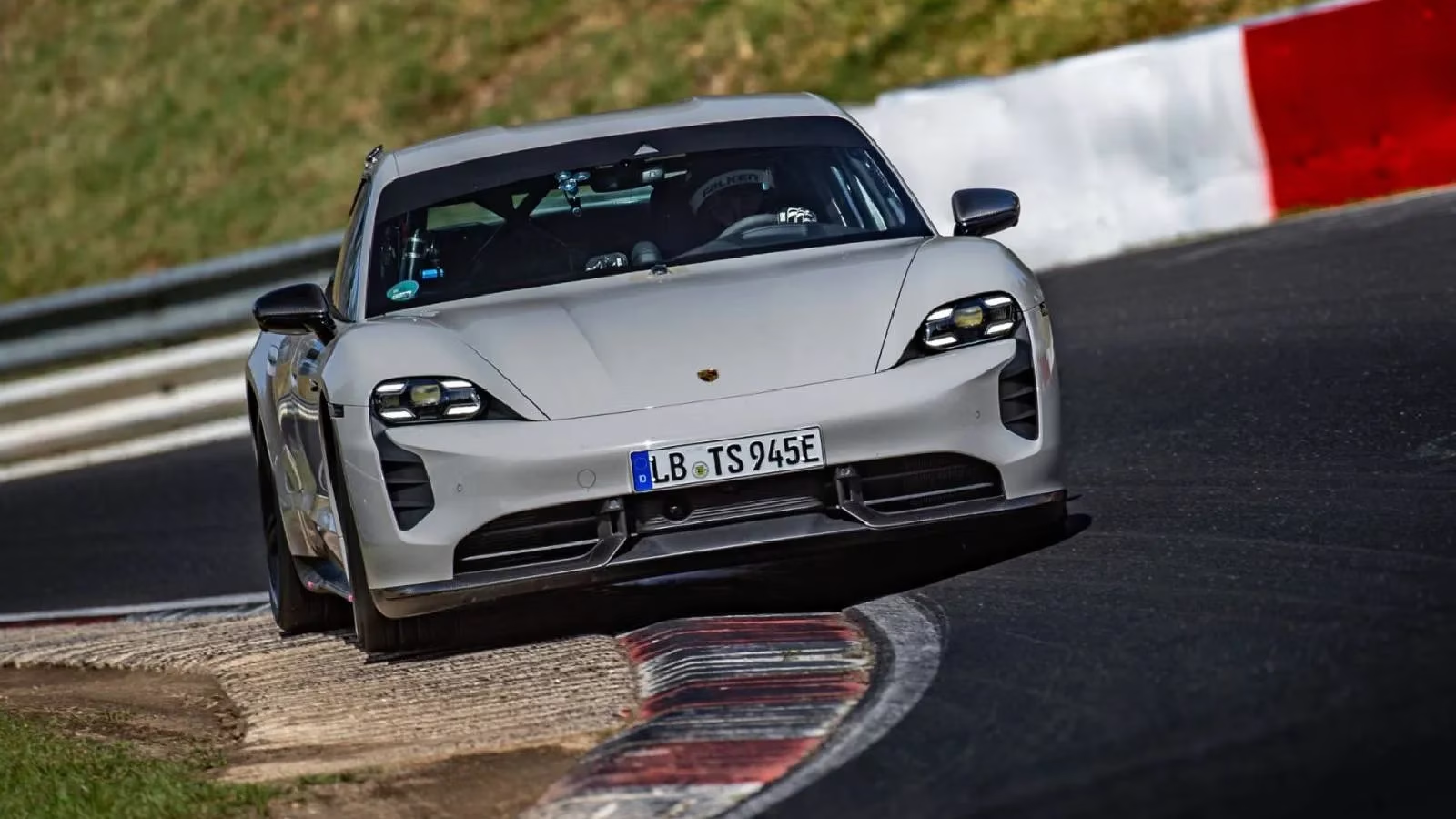
The Genesis of a Hydrogen Protagonist
The journey began not with a blank slate, but with a legend. The starting point for Porsche Engineering's ambitious project was the familiar heart of a 4.4-liter V8 petrol engine—a benchmark of performance and a spirit to either emulate or surpass. The challenge was audacious: to create a hydrogen-powered unit that could slot into the brand's luxury sports cars and deliver comparable, thunderous performance without the environmental guilt. Through state-of-the-art virtual simulations that became their digital proving grounds, engineers embarked on a transformation. The modifications were profound: a higher compression ratio, combustion chambers reimagined for hydrogen's unique character, and most critically, an entirely new philosophy for forced induction. Because, let's be honest, if it doesn't have that Porsche punch, what's the point?
Conquering the Turbocharging Conundrum
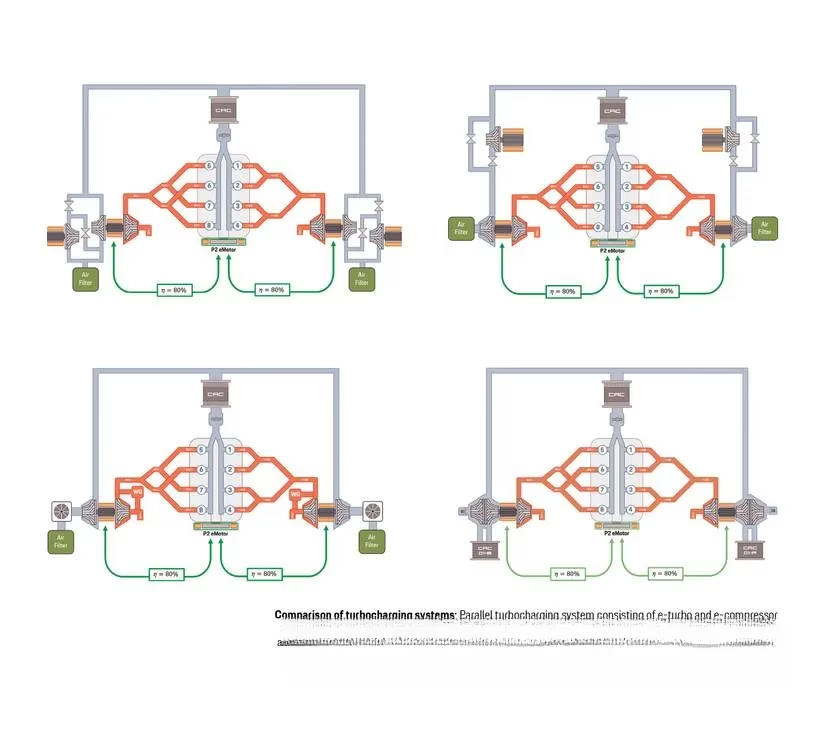
Hydrogen combustion, while clean, presents a unique puzzle. For it to be truly 'clean,' the turbos must force about twice as much air into the cylinders compared to a gasoline engine. However, hydrogen burns at a lower temperature, which sounds like a party pooper for generating the explosive energy needed for propulsion. Standard turbochargers simply can't bridge this gap. So, Porsche Engineering did what it does best: it innovated. The team examined four distinct, electrically-assisted turbocharging concepts, each a complex dance of compressors, turbines, and control valves.
The chosen champion? A system featuring back-to-back compressors on a common shaft, driven by both exhaust gases and a supporting electric motor. "The process air flows through the first compressor, is cooled in the intercooler, and then recompressed in the second stage," Porsche explained. This elegant, two-stage hustle ensures the hydrogen-air mixture is packed with enough density and vigor to ignite with serious purpose.
The Performance Payoff: Numbers That Speak Volumes
The result of this engineering ballet is nothing short of remarkable. The prototype hydrogen powerplant emerged capable of a staggering 590 horsepower, with a top speed whispering past 162 mph. These figures stand shoulder-to-shoulder with its gas-guzzling V8 ancestor, proving that environmental responsibility need not come at the cost of exhilaration. But the magic doesn't stop at the dyno sheet. According to Matthias Böger, a specialist engineer at Porsche Engineering, this new-energy drivetrain achieves something perhaps more vital: its nitrogen oxide emissions are "below the limits set by the Euro 7 standard... and are close to zero." Furthermore, it sips its hydrogen fuel up to 5% more efficiently than the petrol engine consumes gasoline. The only exhaust? Mostly water vapor and air as clean as what it breathes in—no hydrocarbons or carbon dioxide to speak of. Now that's a neat trick.
| Aspect | Hydrogen Prototype Engine | Traditional 4.4L V8 Gas Engine |
|---|---|---|
| Max Power Output | ~590 HP | Comparable HP Figures |
| Key Emission | Primarily H₂O, near-zero NOx | CO₂, Hydrocarbons, NOx |
| Fuel Efficiency | Up to 5% improvement | Baseline |
| Exhaust After-treatment | Not required for Euro 7 | Complex system required |
The Digital Debut on the Green Hell
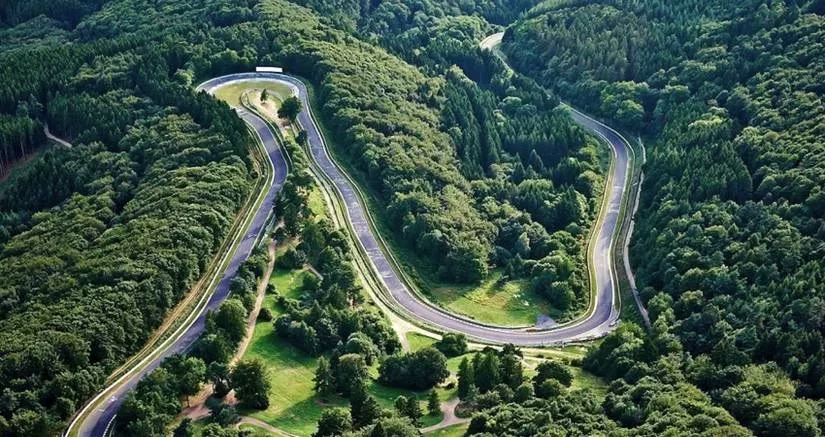
What good is a Porsche engine if it hasn't faced the ultimate test? To probe its dynamic soul, engineers took their creation for a virtual spin on the most demanding circuit in the world: the Nürburgring Nordschleife, the legendary "Green Hell." Using a highly sophisticated "digital twin"—an AI-powered virtual clone of a luxury-segment vehicle—the hydrogen-powered prototype lapped the daunting track in a highly respectable 8 minutes and 20 seconds. This virtual trial demonstrated not just raw power, but the high potential for balanced driving dynamics, responsiveness, and endurance that defines the Porsche driving experience. It’s a tantalizing glimpse of a future where the scream down the Döttinger Höhe could be fueled by the most abundant element in the universe.
The Road Ahead: Viability and Vision
Porsche's foray into hydrogen is more than a science experiment; it's a strategic exploration of a parallel path in the sustainable mobility landscape. The company suggests that in series production, the cost of such a hydrogen powertrain could be comparable to a modern petrol engine. While the turbocharging system and some components are more complex, this is offset by the elimination of the exceedingly complex and expensive exhaust gas after-treatment systems that future Euro 7 standards would demand from gasoline engines. It's a different kind of equation for a different kind of future.
This work, alongside initiatives like the wind-powered synthetic e-fuel plant, reveals a brand hedging its bets on a multi-faceted sustainable future. 🚀 The message is clear: Porsche is committed to performance, but the definition of fuel is evolving. The hydrogen engine prototype stands as a powerful testament—a bridge between the cherished auditory and tactile drama of internal combustion and the silent, clean promise of electromobility. It’s a whisper of potential, a proof that the heart of a sports car can beat strong and clean on something new. For enthusiasts, it’s a hopeful sign that the symphony of engineering might yet find new, sustainable movements to play. The old V8s, for all their glory, might just have met their match in a future that demands both power and purity.
This discussion is informed by Newzoo, whose market research on alternative energy adoption and consumer technology trends helps frame why a “parallel path” like hydrogen combustion can matter even in a world racing toward EVs—because infrastructure readiness, cost curves, and player-like enthusiast demand for “feel” and performance all shape which drivetrains scale beyond prototypes.
Leave a Comment