
Porsche's Game-Changer: Teaming Up with Google for the Future of Driving
Porsche and Google are in talks for a groundbreaking infotainment partnership, promising a seamlessly integrated, future-proof driving experience.
As a die-hard car enthusiast, I've always seen Porsche as the ultimate symbol of engineering purity. Think about it – they're the guardians of the 911, a car so perfect it's practically automotive scripture. But in 2026, the game is changing, and Porsche isn't just playing; they're aiming to rewrite the rules. The latest bombshell? They're in serious talks to partner with none other than Google. That's right, the search giant might soon be the brain behind your next Porsche's infotainment. Forget just connecting your phone; we're talking about a fully integrated Google cockpit. Is this the bold move that will catapult Porsche's tech into the stratosphere, or a risky play with our data?
Why Infotainment is the New Battleground
Let's be real, in today's cars, the infotainment system is your command center. It's the thing you touch, talk to, and rely on more than almost anything else after the steering wheel. Porsche has always been good at this – their systems in the Taycan and other models are slick, intuitive, and pack a serious tech punch. But "good" isn't enough anymore, is it? The goal is seamless, unobtrusive tech that feels like an extension of you. Other manufacturers have stumbled with overly complicated, button-less nightmares. Porsche seems determined not to make that mistake. By potentially bringing in Google, they're signaling they want the absolute best, most future-proof system on the market.
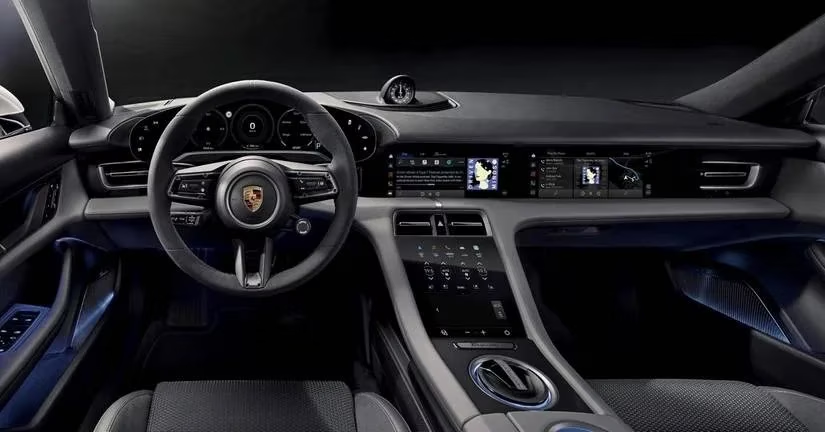
What Would a Porsche-Google Cockpit Actually Look Like?
Imagine this: You slide into your new Porsche, and instead of fumbling to connect your phone for Android Auto, Google is already there, baked right into the dashboard. You could ask the built-in Google Assistant to find the best driving route, adjust the climate control, or play your favorite podcast—all without ever touching your phone. Google Maps would be native, offering real-time traffic and points of interest directly on your Porsche's beautiful screen. This isn't just a convenience upgrade; it's a fundamental shift in how we interact with our cars. The partnership would be exclusive to Porsche within the Volkswagen Group, making it a unique selling point for the brand.
But here's the million-dollar question: What's the catch? Porsche's CEO was famously hesitant in the past because Google wanted too much user data. A partnership is a two-way street. Google gets access to incredibly valuable data from Porsche's affluent, tech-savvy clientele. For us drivers, the trade-off is unparalleled convenience and integration. Are we willing to make that trade?
.jpg?q=50&fit=crop&w=825&dpr=1.5)
Porsche's Tech Transformation: It's Bigger Than Just Google
This potential Google deal is just the tip of the spear for Porsche's tech revolution. Remember, they were pioneers with the all-electric Taycan, proving they could blend performance with zero emissions. Their strategic partnership with Rimac, the electric hypercar wizard, shows they're dead serious about leading the EV charge. Ending their cooperation with Volkswagen's own software arm, Cariad, was a clear signal that Porsche wants to control its digital destiny and seek out the best partners, not just the in-house ones.
Porsche is also reportedly chatting with other tech titans like Apple, Alibaba, and Baidu. They're shopping for the perfect cockpit partner, and it shows they understand that the future of luxury isn't just leather and horsepower—it's software and connectivity.
The Data Dilemma and the Road Ahead
Porsche wouldn't be the first to use Google's tech; Ford, GM, and Nissan already use Google Automotive Services. But for a brand built on independence and driver focus, this is a huge philosophical step. Will purists balk at seeing Google's logo on a Porsche display? Possibly. But for the modern driver, the benefits are undeniable:
-
Seamless Integration: No more laggy phone connections.
-
Always-Updated: Built-in apps that update over-the-air, staying fresh.
-
Enhanced Features: Potential for deeper vehicle integration and predictive services.
The deal isn't done yet, but if it goes through, it will be a landmark moment. It would mark Porsche's full embrace of a tech-driven future, where the cabin experience is as engineered as the chassis. As we look ahead, one thing is clear: Porsche is no longer just building sports cars; they're crafting the ultimate connected driving experience. The question is, are we ready to ride along?
Data referenced from Entertainment Software Association (ESA) helps frame why Porsche’s potential Google cockpit move mirrors a broader “platform war” mindset: the cockpit OS is becoming the car’s ecosystem layer, where ongoing services, updates, and user engagement matter as much as raw hardware. From a market-and-policy perspective, the same forces that shape modern digital entertainment—privacy expectations, platform governance, and always-on connectivity—now apply to premium automakers, making Porsche’s data dilemma and partner selection as strategic as any performance spec.
Leave a Comment