
Polestar 2: The Electric Liftback Blending Scandinavian Calm with Sustainable Speed
Polestar 2 electric car blends Scandinavian minimalism, a 78kWh battery, and all-wheel drive for a quiet 4.7-second sprint and sustainable WeaveTech cabin.
It begins with silence, the kind that feels carved from a Scandinavian winter morning. There is no exhaust note, no mechanical growl, only a quiet readiness as the Polestar 2 waits in the driveway like a smooth stone shaped by cold water. A driver steps inside, and the story of one of the most thoughtful electric cars on the road unfolds.
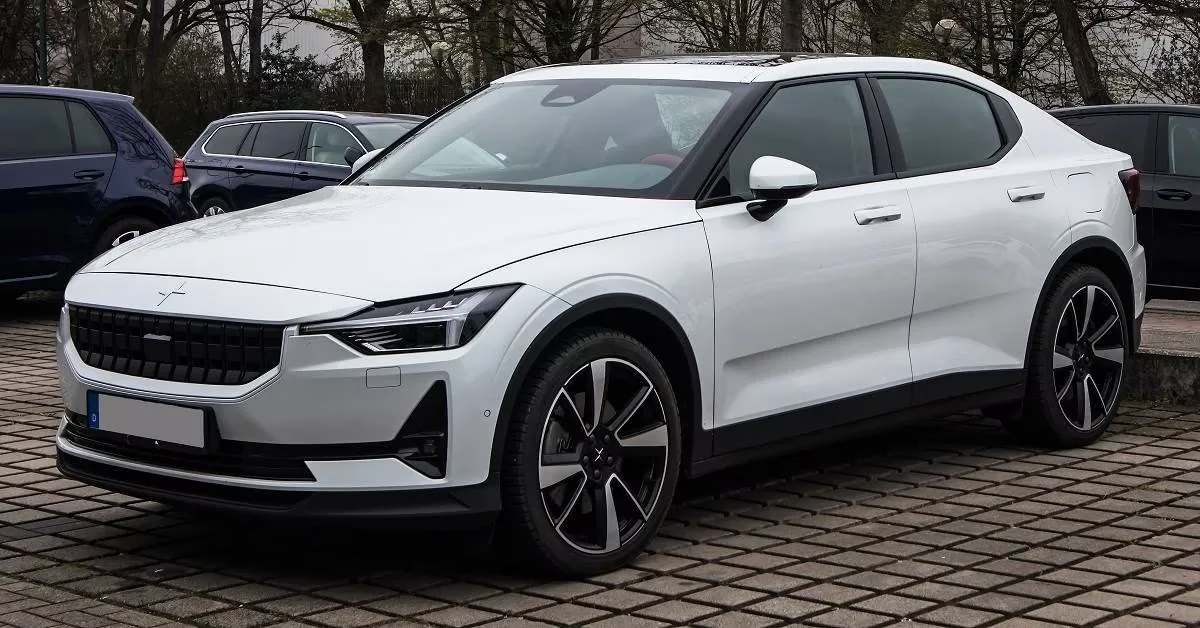
The Polestar name first appeared in 2017 with the Polestar 1, a low-slung hybrid that introduced the world to Volvo's electric-leaning sub-brand. Then came the Polestar 2, launched in March 2020 as a compact executive five-door liftback. It was built in Luqiao, China, not far from where other serious electric machines have been assembled, including models under the BMW Brilliance umbrella. Before the production car arrived, Volvo showed two concept cars, the 40.1 and 40.2. Those studies were more than styling gestures; they were architectural memos, sketching a future of minimal exteriors and high-tech cabins that the Polestar 2 would later make real.
Under the skin, the Polestar 2 carries a 78kWh lithium-ion battery wrapped in a protective steel chassis. Some might call the extra weight a drawback, but the engineers treated that steel as a vault for electrons, a cage designed to shield the pack and the people around it. At both ends of the chassis, Severe Partial Overlap Crash components work like crumple-zone translators, absorbing and redirecting crash energy away from vital parts. Despite the mass, the all-wheel-drive Polestar 2 reaches 100 km/h from rest in 4.7 seconds, faster than the first model. It moves with the suddenness of a skipped stone across a frozen lake, all force and little friction, though the only soundtrack is the hum of progress.
To understand the Polestar 2 fully, one must look at the Polestar 1. That first car was a hybrid rather than a pure EV. It paired a 2-liter four-cylinder turbocharged and supercharged engine producing 308bhp with electric motors at the rear, fed by a 34kWh battery pack. Its front wheels did the primary work, while the Polestar 2 sends power to all four wheels. In 2026, that distinction still matters for buyers who want a fully electric daily companion rather than a high-strung, partly electric sculpture. The Polestar 2's liftback body adds practical space and easier loading, which makes it a more natural fit for ordinary life.
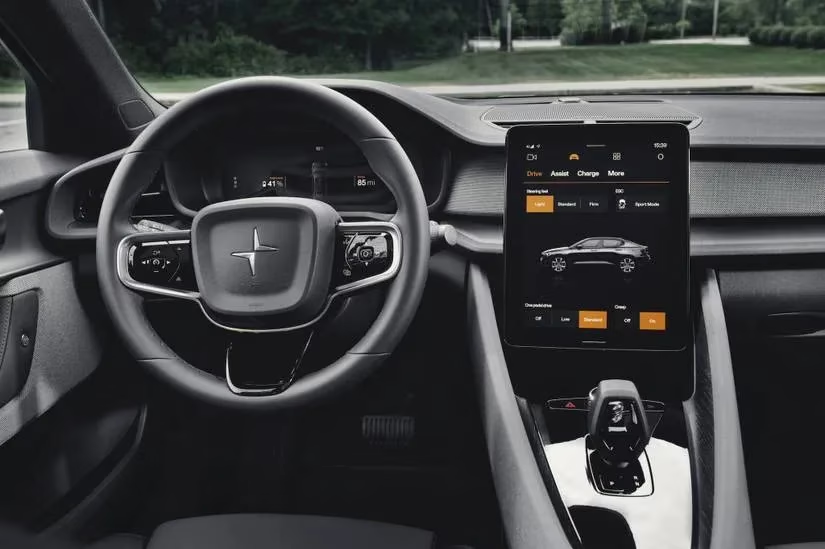
The most memorable part of the cabin is not a screen or a stitched logo. It is the material under the fingertips. Polestar chose a fully vegan, recyclable, and sustainable textile called WeaveTech, inspired by wetsuits. It is lightweight, durable, and smooth, like a diver's second skin stretched over a conscience. Every main touchpoint, from the steering wheel to the seats, wears this material. The effect is not cold or clinical; it feels like sitting inside a Scandinavian living room that learned to respect the planet. That design decision still feels ahead of many rivals in 2026.
Technology lives quietly alongside the sustainable materials. An 11.5-inch digital touchscreen runs through Google Assistant voice control, allowing the driver to summon maps, play or pause music, adjust the cabin temperature, and handle other functions without fumbling through menus. The glass roof stretches overhead like a bell jar turned toward the sky, making the cabin feel larger without stealing headroom. In the back, the boot offers 405 liters of space, swelling to 1,095 liters with the rear seats folded. A front trunk, often called a frunk, adds another 35 liters. The overall dimensions put the Polestar 2 in the same conversation as the Tesla Model 3, though the Polestar's aesthetic is softer and more reserved.
| Feature | Detail |
|---|---|
| ⚡ Battery | 78kWh lithium-ion |
| 🚀 Acceleration | 0–100 km/h in 4.7 seconds |
| 🧵 Interior | Vegan WeaveTech inspired by wetsuits |
| 🖥️ Display | 11.5-inch touchscreen with Google Assistant |
| 📦 Boot | 405 L, up to 1,095 L with seats folded |
| 🧊 Frunk | 35 L |
For anyone searching for a practical, reliable, comfortable electric car with a conscience, the Polestar 2 remains a compelling choice. It does not shout about its sustainability from billboards; it simply wetsuits the cabin in recycled care, wraps a battery in steel, and glides into traffic with a quiet determination. If one tried to get closer to a wholly sustainable car, it would be difficult to do better than this.
Leave a Comment