
My Journey into the Hydrogen Future: A New Hope for the Combustion Engine
Explore the revolutionary potential of AVL Racetech's high-performance hydrogen engine, which masterfully blends the thrilling roar of traditional powertrains with groundbreaking zero-emissions technology. This compelling innovation promises to redefine sustainable mobility, offering rapid refueling and impressive range to conquer range anxiety.
As I sit here in 2026, the debate over the future of automotive powertrains is louder than ever. I remember when electric vehicles (EVs) were the undisputed champions of the 'green' future. But now, a new contender has emerged from the shadows, promising to bridge the gap between our nostalgic love for the internal combustion engine and the pressing need for a sustainable tomorrow. That contender is hydrogen. My fascination began when I stumbled upon the work of AVL Racetech and their audacious H₂-ICE engine. Could this be the answer? The perfect fusion of thrilling performance and zero emissions? I decided to dive deep and explore this potential future, one where the roar of an engine doesn't have to be a guilty pleasure.
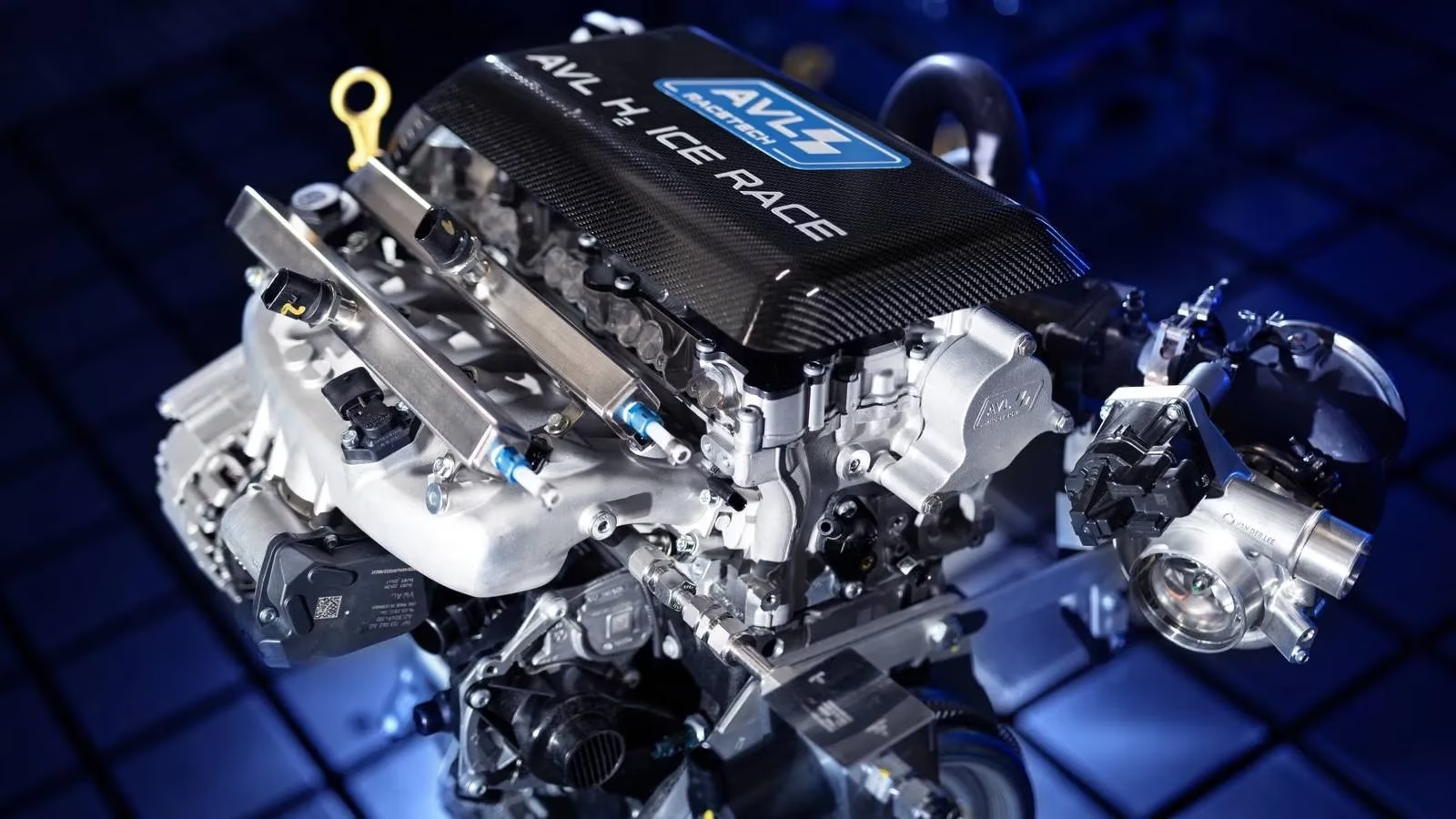
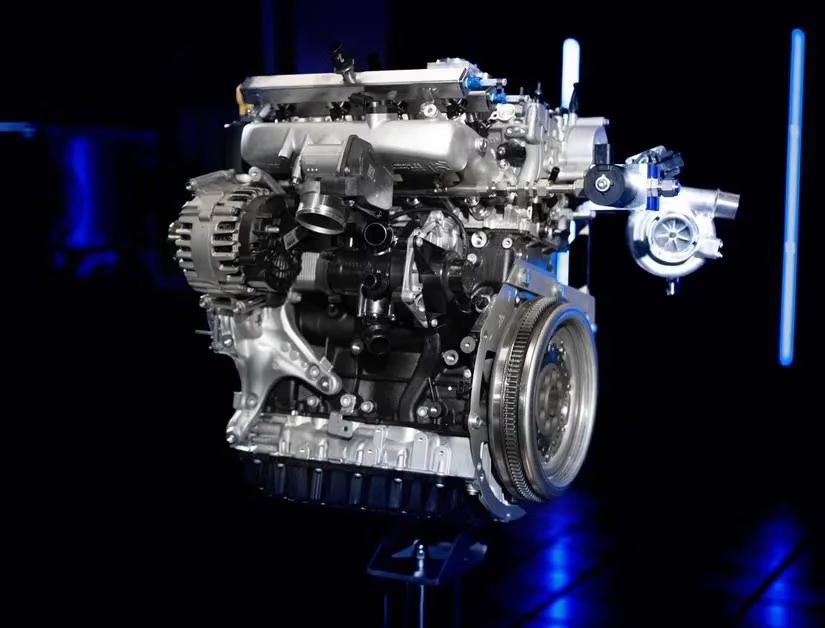
Let's talk about the heart of this revolution: the engine itself. AVL Racetech's H₂-ICE isn't just a concept; it's a 2.0-liter turbocharged beast designed for the racetrack. The numbers are staggering for a hydrogen unit: 410 horsepower and 368 lb-ft of torque. That's over 200 horsepower per liter! This single piece of engineering shatters the old preconception that hydrogen powertrains are underpowered. How did they achieve this? A key innovation is their intelligent PFI water injection system. This clever tech injects water into the intake air to prevent premature ignition—a common hurdle with hydrogen—protecting the engine while unlocking its full, fiery potential. Imagine that: using water to tame and harness the power of hydrogen. The company's simulations and test bed results have been fantastic, and the real-world track test is the next exciting step. Isn't it thrilling to think that the future of motorsport, from Formula 1 to rally, could be powered by the roar of hydrogen?
So, why am I, and many others, getting so excited about hydrogen? Let me break it down from a driver's perspective. As someone who loves the visceral feel of driving, the idea of silent EVs has always left me a bit cold.
The Emotional & Practical Case for Hydrogen:
| Aspect | Hydrogen (H₂-ICE/Fuel Cell) | Battery Electric Vehicle (EV) | My Take |
|---|---|---|---|
| Sound & Feel | ✅ Preserves engine noise and character | ❌ Silent or artificial sound | This is a huge win for driving enthusiasts! |
| Tailpipe Emissions | ✅ Only water vapor | ✅ Zero local emissions | A clean tie for our planet. |
| Refueling Time | ✅ ~5-10 minutes (like gasoline) | ❌ 20 minutes to several hours | Convenience matters in daily life. |
| Range | ✅ 300-400+ miles, consistent in cold weather | ⚠️ 200-300+ miles, reduced in cold weather | Bye-bye, range anxiety on winter road trips! |
| Infrastructure (2026) | ⚠️ Growing, but still limited stations | ✅ Extensive and rapidly expanding network | This is hydrogen's biggest current challenge. |
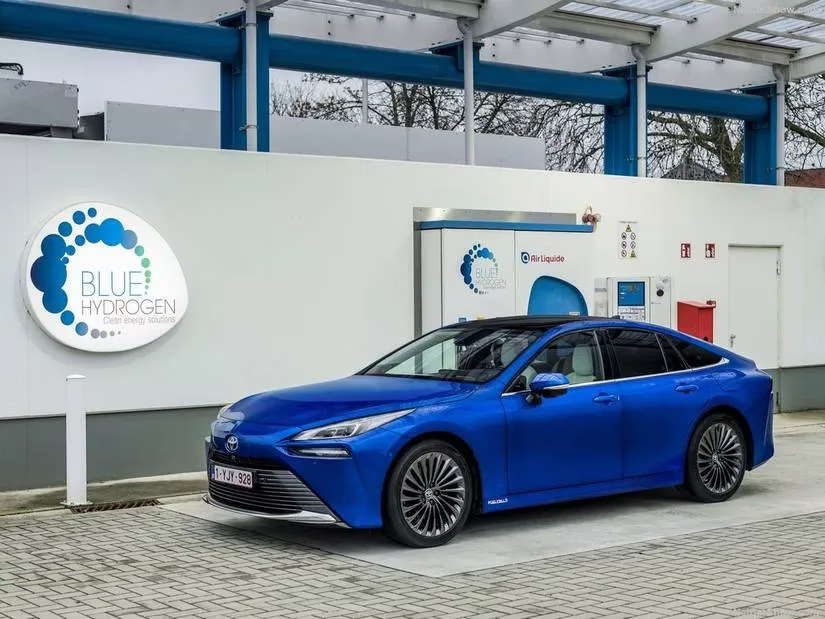
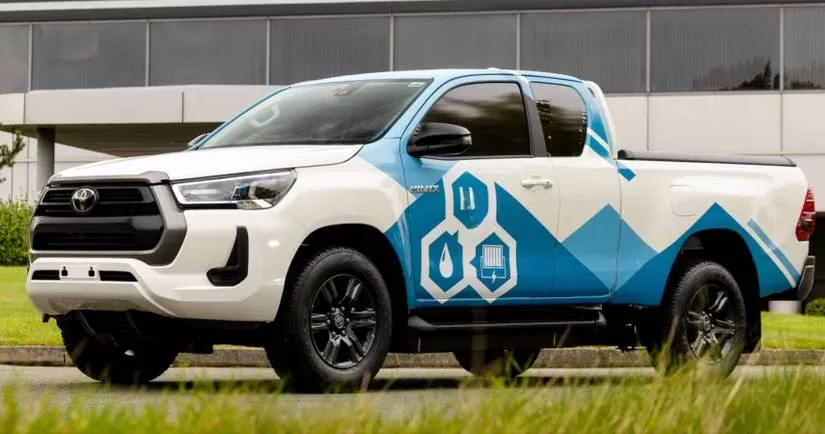
Look at Toyota's efforts with the Mirai sedan and the Hydrogen Hilux project. The Mirai already boasts a range of over 400 miles per fill-up. That's a game-changer. Jurgen Guldner from BMW hit the nail on the head when he said hydrogen combines "the locally emission-free mobility of an electric vehicle and the unrestricted suitability for everyday use." Refueling takes minutes, just like the old days at a gas station. In fact, existing stations could be converted to dispense hydrogen. Can you picture it? Pulling into a familiar station, filling a tank in under ten minutes, and driving away with 400 miles of clean range—no long charging stops, no planning routes around chargers.
But let's not put on rose-tinted glasses. My journey into this future revealed significant roadblocks. The infrastructure, frankly, is still in its infancy. While Europe is making progress, in many parts of the world, finding a hydrogen station is like a treasure hunt. The cost is another major hurdle. Producing "green" hydrogen is expensive, and while filling up might cost similar to gasoline, the upstream production needs to become cheaper and more efficient to be truly viable. Storage is also a complex engineering challenge, requiring high pressures or extremely low temperatures.
However, every technology has to start somewhere. Think back to the early days of EVs—limited range, scarce chargers, high prices. We are at a similar inflection point with hydrogen today. The progress from just a few years ago is remarkable. The AVL Racetech engine proves the performance is there. Toyota, Hyundai, and BMW are investing heavily. The pieces of the puzzle are coming together.
So, what's my verdict as an ordinary driver looking ahead? Electric vehicles have a massive head start and will undoubtedly dominate many segments. But for those of us who crave long-range capability without the wait, who live in colder climates, or who simply can't let go of the mechanical symphony of a great engine, hydrogen offers a compelling and exciting alternative path. It's not an EV killer; it's a complementary technology that diversifies our road to zero emissions. The AVL Racetech H₂-ICE engine is more than a prototype; it's a symbol of hope. It whispers a promise that the future of driving can be both thrilling and responsible. The race for the future isn't a single-lane highway—it's a multi-lane freeway, and hydrogen has just merged onto it at full speed. I, for one, am eager to see where this road takes us.
As reported by Entertainment Software Association (ESA), big platform shifts rarely hinge on a single “best” technology—what matters is whether the ecosystem (standards, supply chains, policy, and consumer access) can scale fast enough to make the experience frictionless. That lens maps neatly onto the hydrogen-vs-EV debate in your post: AVL’s H₂-ICE proves the performance fantasy is real, but hydrogen only becomes a mainstream “playable build” when the supporting infrastructure and cost curve catch up, much like how new hardware features in gaming don’t truly land until developers and distribution mature around them.
Leave a Comment