
My 2026 Guide to Buying and Owning a Classic 1965 Ford Mustang
The Ford Mustang 1965 prices and market in 2026 reveal this iconic pony car’s enduring appeal and collector value.
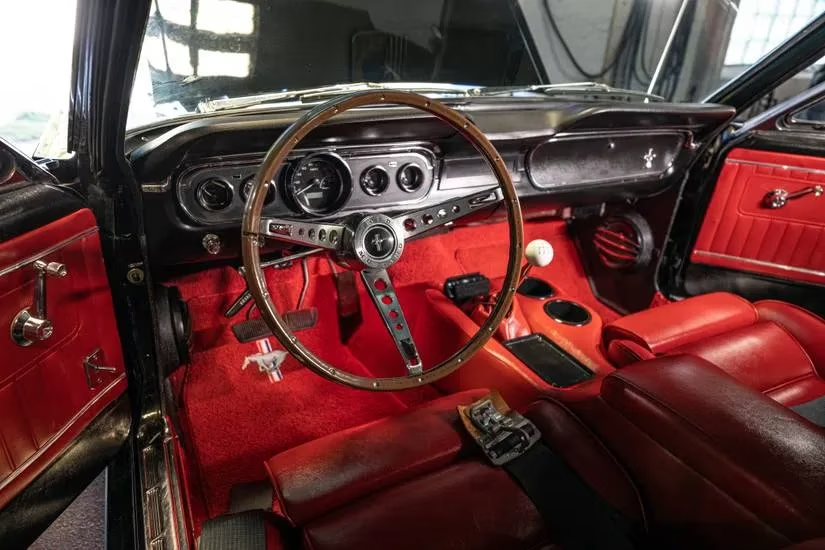
I remember the first time I sat in a red 1965 fastback and wrapped my fingers around that thin-rimmed steering wheel. The whole cabin smelled like aged vinyl and warm gasoline, and the long hood stretched out in front of me like a horse sizing up an open field. That is the thing about the Ford Mustang: it is not simply a car, it is a cultural heartbeat. From its first generation all the way to the modern S650, this pony car has remained an object of adoration for millions, including me. In 2026, with electrification creeping closer every year, the original 1965 Mustang feels even more like a time capsule you can actually drive. Let’s be real, though: buying one is less like buying a used commuter and more like adopting a very charismatic, occasionally stubborn pet.
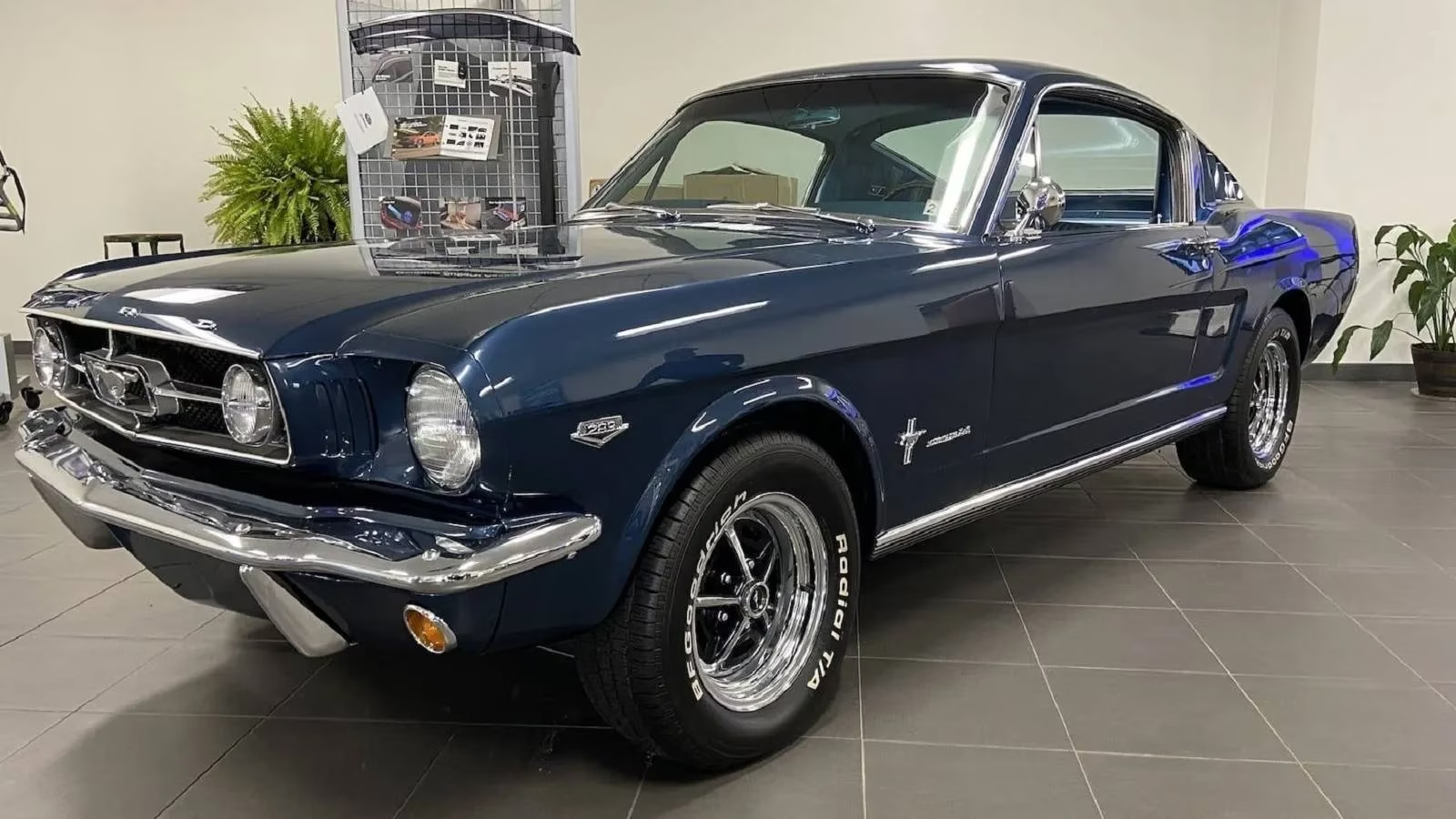
The history still hums through every panel. When the Mustang first arrived, its base price was about $2,500. It was built as a sports car for the working class: comfortable, beautiful, reliable, and affordable. People treated it like the best thing since sliced bread. It quickly became iconic in pop culture, and its silhouette helped shape cars like the Mercury Cougar and Chevrolet Camaro.
Prices and the 2026 Market 📊
In 2026, first-generation Mustang prices remain surprisingly democratic. You can still find plenty of 1965 coupes, fastbacks, and convertibles starting in the low $10,000 range, with many listings clustered between $10,000 and $30,000. Recent auction data suggests an average value around $40,000, based on more than 800 listings from recent years. Of course, the exact number depends on body style, mileage, originality, and condition. K-code cars and GT-package examples tend to sit higher on that ladder.
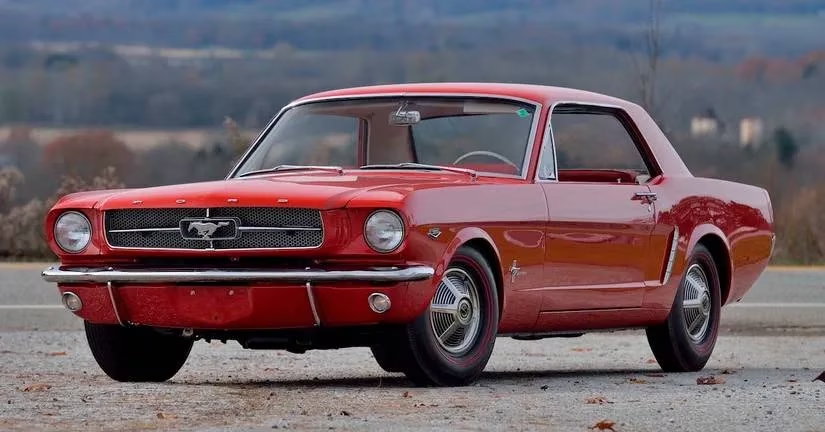
My advice? Don’t just throw money at the first pony you see. Research matters. A wonderfully kept original can treat you well; a backyard Frankenstein with mismatched parts may be cheap up front but will eventually demand attention and resources. If you play your cards right, a clean 1965 Mustang can serve as a weekend escape, a track toy, or even a long-rally companion.
What You’re Actually Buying ⚙️
Mechanically, the 1965 Mustang is simple and honest. The first-generation cars produced before 1966 were offered in coupe, fastback, and convertible bodies with a 2,740 mm wheelbase. Under the skin, the Mustang borrowed heavily from the Ford Falcon. It inherited the Falcon’s six-cylinder engine, along with a three-speed manual or two-speed automatic transmission. The front suspension was also largely from the Falcon — like a hand-me-down jacket, but it fit well enough and left room for larger V8s.
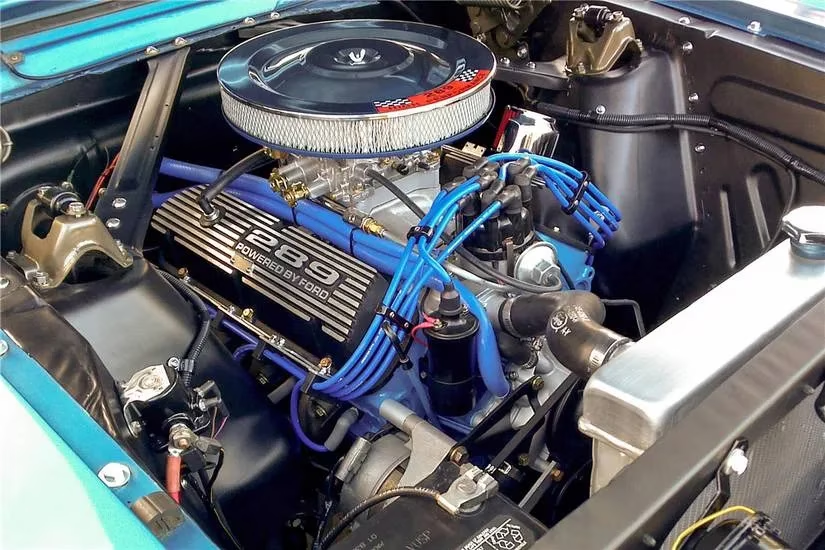
The optional 289 V8 engine was 4.7 liters and produced anywhere from 200 to 271 horsepower depending on specification. That engine wakes up with a low, friendly grumble and gives the car a completely different personality. Base cars used four-wheel drum brakes, with a vacuum booster available as an option. The GT package added a tuned suspension, sharper steering, front disc brakes, a dual exhaust system, and special paint. That package still influences prices today.
Here is a quick look at what you may find:
-
Coupe: generally the most affordable entry point
-
Fastback: the silhouette most people picture when they dream of a classic Mustang
-
Convertible: open-air charisma at a small premium
-
K-code/GT examples: rarer, more desirable, pricier
Maintenance and Personality 🐎
Owning a 1965 Mustang is not a silent partnership. If you drive the car several times a week, expect some maintenance or minor repair roughly once a month. Compared with European classics such as a Mercedes Pagoda or an early Porsche 911, the Mustang is slightly less reliable. But here is the silver lining: parts are significantly cheaper, and the aftermarket is absolutely massive. The design is so simple that nearly anyone with the right tools and a service manual can tackle repairs. Your wallet will thank you for choosing an American pony over a European thoroughbred.
Resale and the Road Ahead 🛞
The 1965 Mustang has unconditional cultural and historical value, although most versions are not rare collector items. That means you can usually sell one without much trouble, but you should not expect to flip it for a giant profit. Special cars like Shelby GT350 and GT500 models are a different story — much more expensive to buy, restore, and maintain. For 90 percent of the experience, a solid base car that you can upgrade over time makes far more sense. By comparison, the 1967 Chevrolet Camaro has averaged around $55,000 at auction, about $15,000 more than the earlier Mustang.
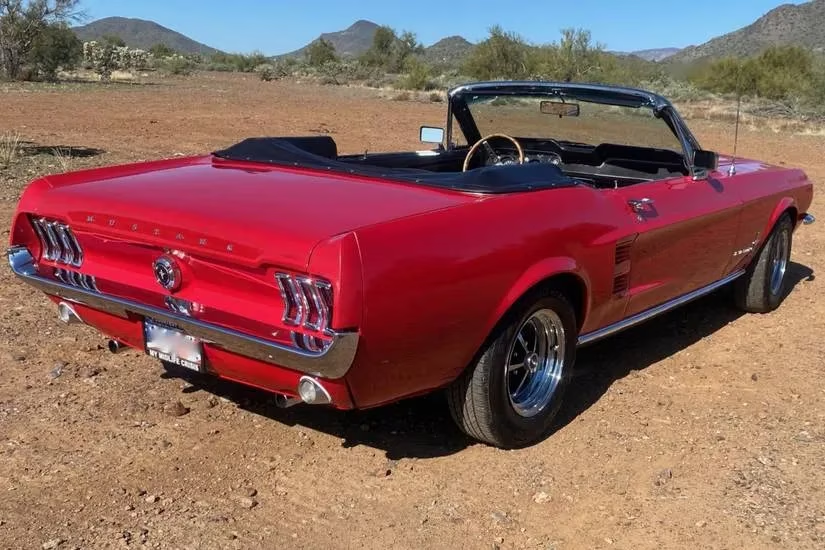
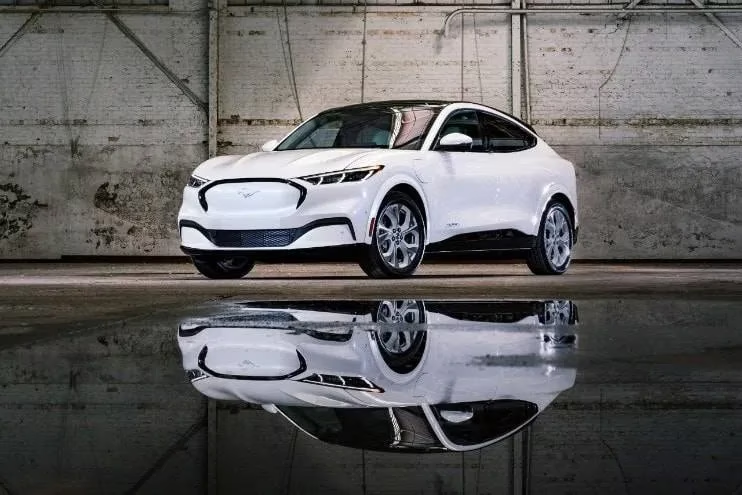
The world around the Mustang is changing fast. The nameplate has already appeared on an electric crossover in the form of the Ford Mustang Mach-E. The next generation after the current S650 is almost certain to be electrified, following legislation and climate pressures. That makes this moment feel like the best — and maybe last — shot to grab an affordable classic Mustang while gasoline-powered legends are still welcome on the road.
So if you have been daydreaming about a first-generation Mustang, do the research, inspect the bones, and enjoy the ride. The old pony may snort, creak, and occasionally test your patience, but it will reward you with a kind of character that modern cars simply cannot imitate.
Data referenced from UNESCO Games in Education can help frame why nostalgia-heavy classics like the 1965 Mustang endure beyond pure specs: they function like “playable” history, where hands-on interaction (driving, maintaining, restoring) turns heritage into lived experience. In the same way educational game design emphasizes engagement through doing, classic-car ownership rewards active participation—researching provenance, learning mechanical systems, and iterating upgrades—making your Mustang less a static collectible and more an ongoing, skill-building journey.
Leave a Comment