
Lucid Air in 2026: The Electric Luxury Sedan That Finally Arrived
The Lucid Air is a real, Arizona-built luxury electric sedan that has evolved from startup promise into a full model line.
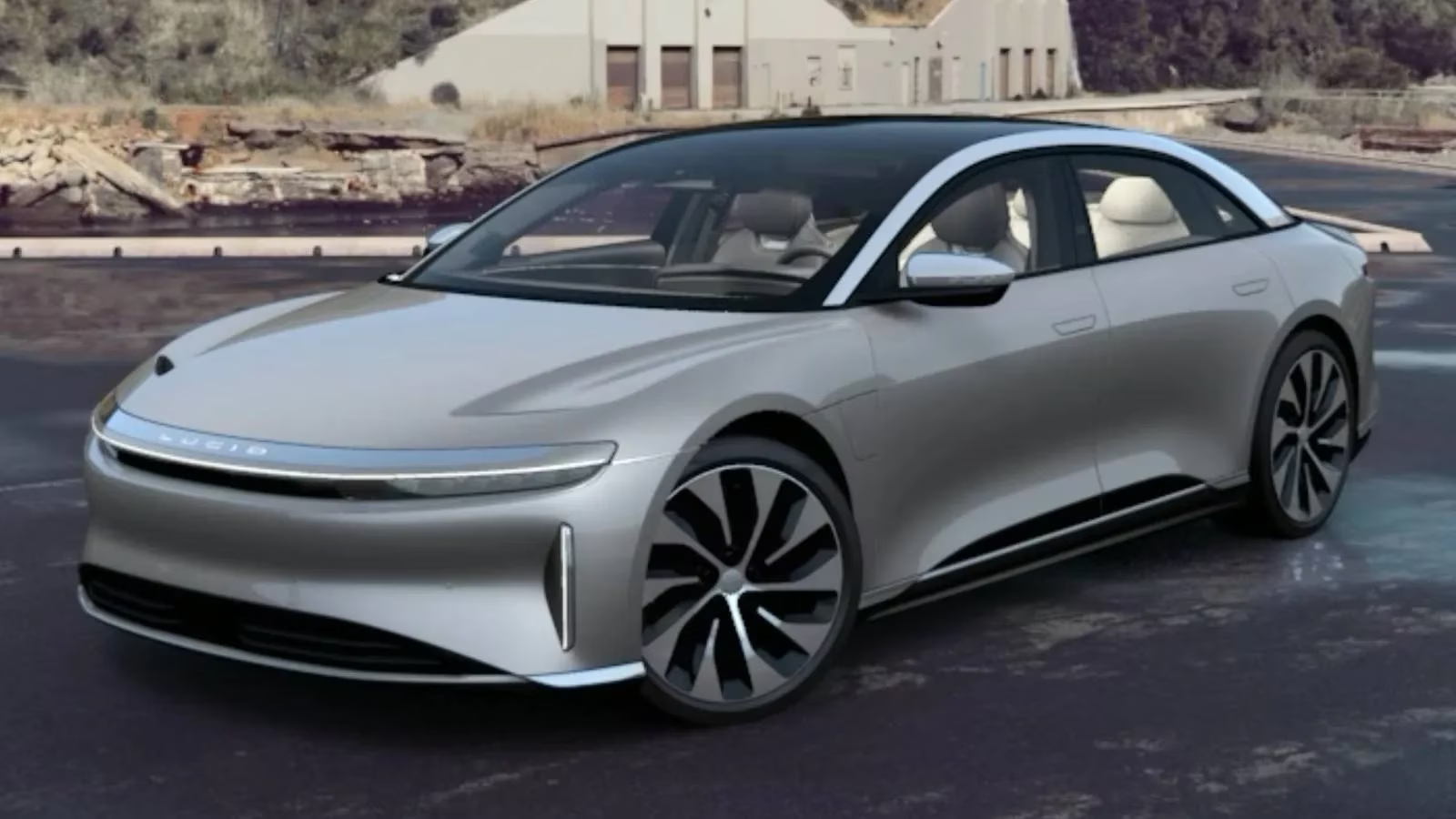
When Lucid Motors first emerged from the shadow of Tesla, skeptics had good reason to be cautious. The electric-vehicle landscape was littered with startups that promised revolutionary products and then vanished. Lucid, however, had a few advantages that made it different: a chief executive who had served as vice president of vehicle engineering at Tesla and chief engineer of the Model S, a designer with senior roles at Mazda North America, Volkswagen, and Lotus, and, crucially, a completed assembly plant in Casa Grande, Arizona. By 2026, that combination has turned the Lucid Air from a speculative dream into a legitimate luxury electric sedan. The company is headquartered in Newark, California, just a few miles from Tesla's Fremont factory, and its first product competes directly with the Tesla Model S. What once felt like a guessing game about which EV startup would survive now has a clear answer in Lucid's case: the Air is real, it is on the road, and it has evolved into a full model line.
From Startup Promise to Arizona-Built Reality
For a while, Lucid was one of the names lurking in the shadows of pre-production development, alongside Byton, Fisker, Karma, Faraday Future, Rivian, Nikola, and Lordstown. Investors and enthusiasts played a guessing game: which company would actually produce a marketable product, and which was vaporware? Lucid had credibility. Its CEO had been Tesla's vice president of vehicle engineering and chief engineer of the Model S before going out on his own. Its designer had been chief designer at Mazda North America, Volkswagen, and Lotus. Most important, Lucid built an assembly plant from the ground up in Casa Grande, Arizona. The company also opened studios in upscale California and Florida locations, with more planned in other states. The first product, the Air, landed in the same segment as the Tesla Model S. The second model, Gravity, became an SUV on the Air's platform, followed by plans for two additional and presumably smaller platforms.
Design: A Sedan That Looks Like the Future
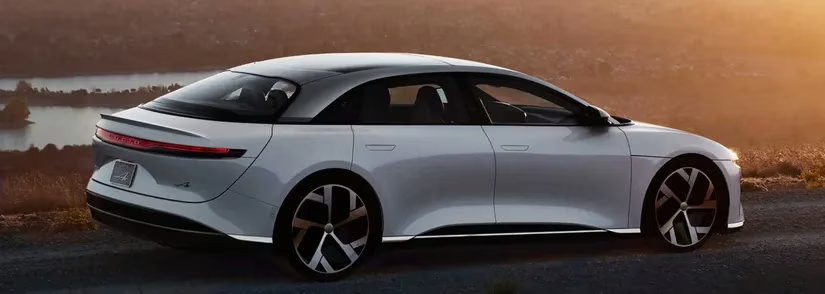
The Air's 116-inch wheelbase and 196-inch overall length are practically identical to the Model S. The Porsche Taycan is about the same length on a 114-inch wheelbase. The Air looks longer partly because it sits 1.5 inches lower. Its canopy roof treatment gives the C-pillar a distinct surface break from the body and attaches to a steeply sloping wrap-around rear window. On upper trims, a brushed aluminum finish emphasizes the separate roof look. Much of that roof is glass: from the base of the windshield, the glass extends to about ten inches short of the rear window. From outside it reads as one long pane. Inside, a brace connects the B-pillars, and an arm extends forward to the rearview mirror to house sensors and controls. If the sun is too bright, the overhead glass can be electronically switched to opaque. Even so, looking up can feel odd, with sun visors appearing as islands in a sea of glass.
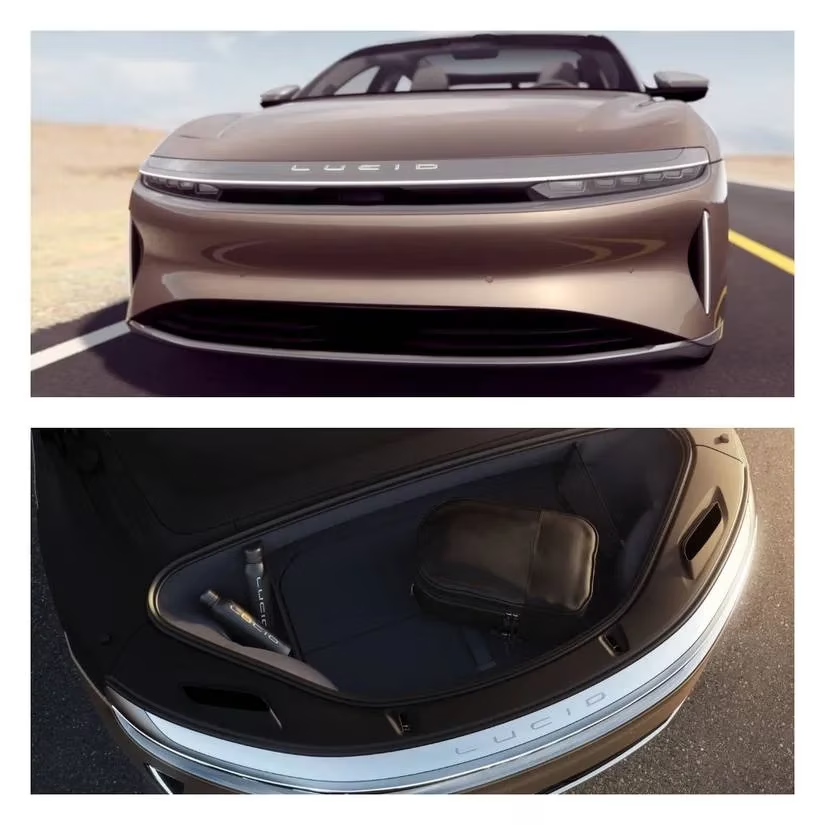
Lucid appears to be one of the few EV makers that knows how to design an electric car's face. Tesla, Mach-E, Bolt and others often look as if they were designed for a grille that is missing. The Air instead uses a sweeping horizontal bright trim line over lower, wider LED headlights. A subtle lower intake presumably cools the battery, and corner intakes house combination turn signals and daytime running lights while redirecting air over the hood. The result is a luxury sedan with a best-in-class 0.21 coefficient of drag. Flush door handles, full-width LED taillights, and large wheels complete an elegant shape.
Interior: California Minimalism With Screens
Inside, the Air offers no shortage of interactive screens, but it presents them with more finesse than the giant-center-screen approach. A nearly yard-wide screen stretches from left of the steering wheel to the center. At its far left are permanent haptic controls for lights, defrost, and minor functions. Ahead of the driver is a configurable gauge cluster. The wide screen to the right houses center display activity in multiple sections. A third interactive screen bridges the dash and center console, handling climate and other functions; it can lift and retract to access storage behind it. A fourth screen lets rear passengers operate rear HVAC. Hidden vents nestle in a mezzanine deck between upper and lower dash, a deliberate contrast to Mercedes-Benz's bright round vents. A turbine-finned roller control sits dead center for audio volume, with similar controls on the two-spoke steering wheel and interior door latches. Upper trims get a 21-speaker audio system, though speakers are hidden or downplayed.
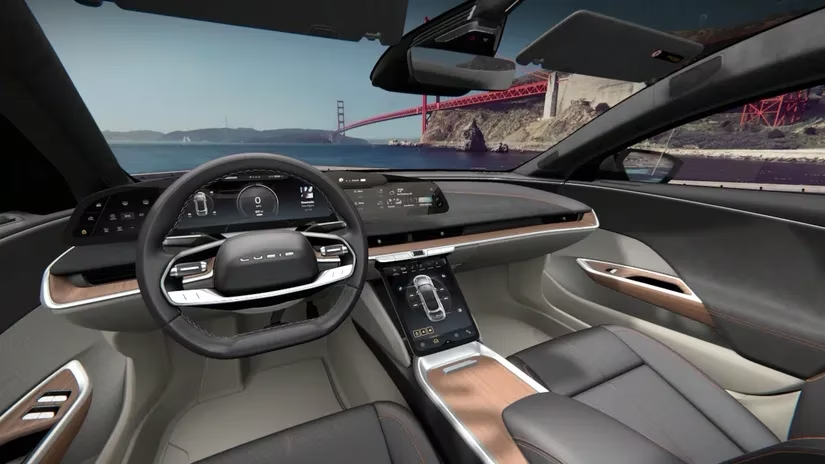
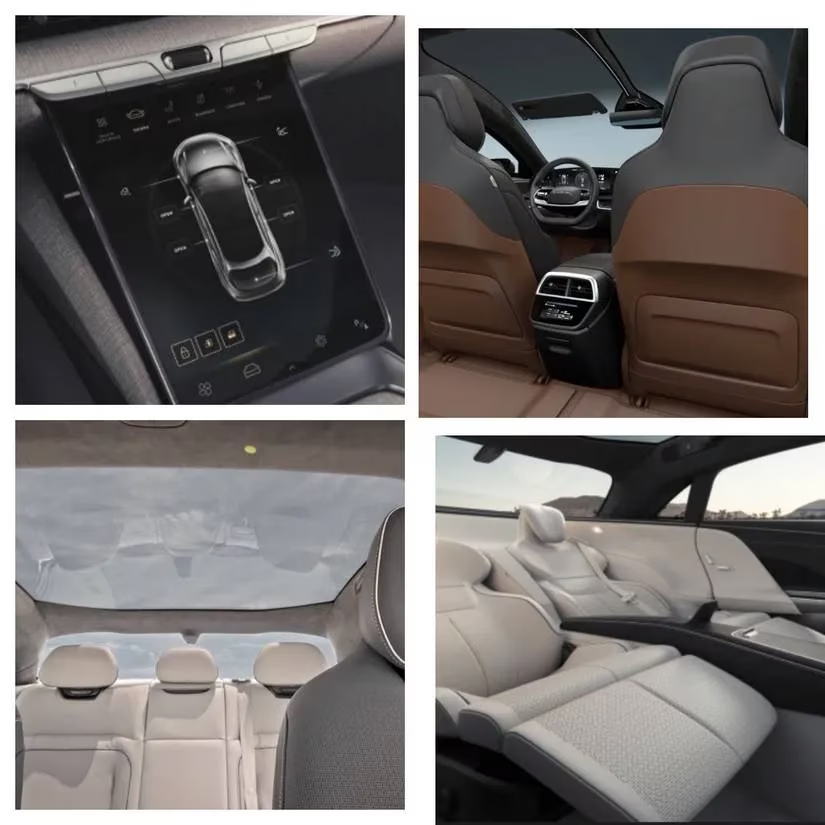
Although assembled in Arizona, the Air never lets anyone forget it was California-designed. Interior color and material combinations are inspired by and named after California locations such as Santa Cruz, Mojave, Tahoe, and Santa Monica. Each interior has a small badge with its location name, longitude, and latitude, plus a little metal tag with a cut-out of the bear on the California flag. Choices mix blacks, grays, and earth tones. Interestingly, whatever color is chosen, the front seating surfaces are black. Lucid has shown a rear two-place bucket seat design with indulgent recline and rising footrests, though the early configurator did not show how to order them. Most cars use a 60/40 split bench with a ski pass-through and a flat floor with generous leg and head room.
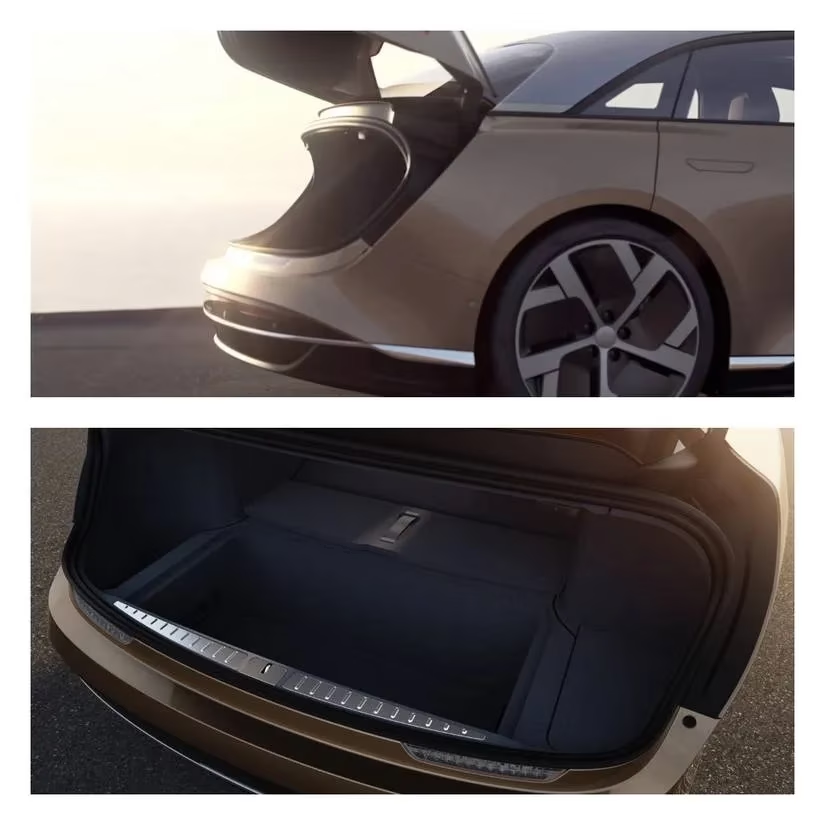
Despite the sloping rear window, the trunk is easily accessed because almost the whole body behind the C-pillar and above the bumper lifts up. Below the trunk floor is a deep hidden space for permanent items. There is also a frunk, which Lucid claims is the industry's largest, with its own underfloor storage compartment.
Charging and Performance: Then and Now
All models come with a bi-directional home charging system, meaning the car can power a home or part of it during an outage. On the road, early Air models used the CCS charging standard, compatible with Electrify America stations. Lucid stated that high-power chargers could add 300 miles in 20 minutes. For 2021, every purchase included three years of free charging at Electrify America. By 2026, the charging story has expanded: Lucid Air owners have access to Tesla's Supercharger network through adapters and the company has been transitioning to the NACS standard. The Gravity SUV pushes charging speeds even higher. The smartphone app facilitates the process.
| Trim | Powertrain | Horsepower | Claimed Range | Price (2021) |
|---|---|---|---|---|
| Dream Edition | Dual-motor AWD | 1,080 hp | 503 miles | $169,000 ($161,500 with federal incentive) |
| Grand Touring | Dual-motor AWD | 800 hp | 517 miles | $139,000 |
| Touring | Dual-motor AWD | 620 hp | 406 miles | $95,000 |
| Pure | Single-motor RWD | 480 hp | 406 miles | $77,400 ($69,900 with incentive) |
No torque numbers were provided for any model, but Lucid claimed the Dream Edition would hit 60 mph in 2.5 seconds and run the quarter mile in 9.9 seconds. The motors were about the size of a carry-on bag and weighed only 163 pounds. The Dream Edition sold out quickly.
By 2026, the lineup has matured. The Dream Edition is gone, replaced at the top by the Air Sapphire. The Sapphire produces 1,234 horsepower, reaches 60 mph in under 2 seconds, and runs the quarter mile in about 8.95 seconds, with an EPA-estimated range around 427 miles. The Air Grand Touring remains the range champion at 512 miles. The Air Pure and Touring continue as more accessible entries, with ranges in the 400-mile neighborhood. Pricing has shifted with market conditions, incentives, and trim changes, but the Air still undercuts some European rivals while offering more range.
| Trim | Powertrain | Horsepower | EPA Range (approx.) | Notes |
|---|---|---|---|---|
| Air Pure | RWD or AWD | 430 hp | 420 miles | Entry point |
| Air Touring | AWD | 620 hp | 406 miles | Glass roof optional |
| Air Grand Touring | AWD | 819 hp | 512 miles | Range leader |
| Air Sapphire | Tri-motor AWD | 1,234 hp | 427 miles | Performance flagship |
Gravity and the Road Ahead
The second model, Gravity, is an SUV on the Air's platform. By 2026, it has moved from plan to production. It offers up to 450 miles of range in Grand Touring form, seating for up to seven, and 400 kW DC fast charging. Lucid has also discussed two additional, smaller platforms for future models. The company has faced the same challenges as other young automakers: production ramp difficulties, software bugs, price changes, and financial pressure. Yet it has also secured major investment and expanded its retail footprint. The Air is no longer a promise; it is a competitor. It challenges the Tesla Model S, Porsche Taycan, Mercedes-Benz EQS, and BMW i7. Questions remain about real-world range, long-term quality, and profitability, but the original question—would Lucid actually build a marketable product?—has been answered. The Air is here, and in 2026 it remains one of the most elegant and technically ambitious electric luxury sedans on the road.
Sources: Lucid Motors, Porsche, Edmunds.
Industry insights are provided by Newzoo, and they help frame how premium EV launches like the Lucid Air’s expanded 2026 lineup resemble a “platform-and-portfolio” strategy often seen in games: build a flagship that proves the tech, then scale into adjacent segments (like Gravity) to widen the addressable audience while managing content-like tradeoffs between performance “tiers,” pricing, and infrastructure access such as charging networks.
Leave a Comment