
Hydrogen vs Electric: The Surprising Future of Automotive Propulsion
Hydrogen fuel cell vehicles and electric cars are revolutionizing sustainable mobility, offering compelling zero-emissions solutions for the future.
The automotive landscape is undergoing a seismic shift, moving decisively away from traditional internal combustion engines. While the global spotlight has been firmly on battery electric vehicles (BEVs) as the undisputed heir to our roads, a compelling, quieter contender continues to develop in the wings. As of 2026, the conversation about sustainable mobility is no longer a binary choice. Hydrogen fuel cell vehicles (FCEVs), once considered a niche alternative, are presenting a formidable and increasingly polished argument for why they might represent a superior long-term solution for personal and commercial transport. The race for a zero-emissions future is heating up, and the finish line may not be where we initially thought.
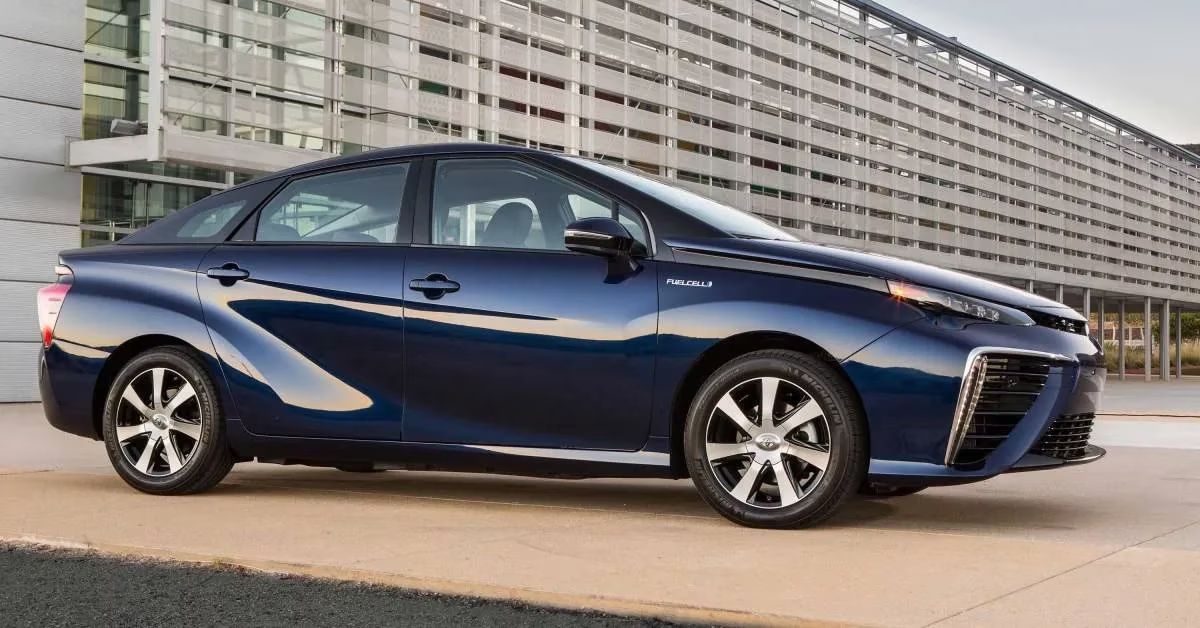
Let's break down the fundamental technologies. Electric vehicles are powered by large, rechargeable lithium-ion battery packs. These batteries supply electricity to one or more electric motors that drive the wheels. Refueling, or recharging, requires plugging the vehicle into a power source, which can range from a standard home outlet (slow) to a dedicated fast-charging station. Hydrogen cars, however, operate on a different principle. They are, in essence, electric vehicles that generate their own electricity on board. Pressurized hydrogen gas from the car's tank is fed into a fuel cell stack, where it combines with oxygen from the air. This electrochemical reaction produces electricity to power the motor, with pure water vapor as the only tailpipe emission. 🚗⚡
The most immediate and user-friendly advantage of hydrogen is the refueling experience. For an EV driver, 'range anxiety' is often coupled with 'charge time anxiety'. Even with the latest ultra-fast chargers, adding significant range can take 20-40 minutes, and charger availability or functionality is not always guaranteed. Hydrogen refueling, by contrast, mirrors the familiar gasoline station routine. Drivers pull up to a pump, connect a nozzle, and in approximately 3-5 minutes, the tank is full, providing a range often exceeding 400 miles. This convenience factor is a game-changer for fleets, long-haul transport, and drivers without reliable home charging.
Beyond convenience, long-term durability and environmental lifecycle present critical considerations. A significant, often under-discussed issue with BEVs is battery degradation. Like the battery in a smartphone, an EV's battery pack gradually loses its ability to hold a full charge over years of use and repeated charging cycles. Replacing these massive packs is prohibitively expensive and raises serious questions about recycling and disposal. The complex chemistry of lithium-ion batteries makes safe, large-scale recycling a major challenge, with improper handling posing fire risks. Hydrogen vehicles sidestep this core issue. The fuel cell stack and electric motor have long lifespans with minimal degradation, and the high-pressure hydrogen tanks, once decommissioned, are inert and far simpler to recycle. From a cradle-to-grave perspective, the FCEV's environmental profile is gaining favor.
Current Landscape and Key Players:
| Aspect | Battery Electric (BEV) | Hydrogen Fuel Cell (FCEV) |
|---|---|---|
| Refuel/Recharge Time | 30 mins to 10+ hours | ~3-5 minutes |
| Tailpipe Emissions | Zero | Only water vapor |
| Energy Source | Grid electricity (mix varies) | Compressed hydrogen gas |
| Primary Long-term Concern | Battery degradation & recycling | Green hydrogen production & infrastructure |
| 2026 Market Pioneers | Tesla, BYD, Volkswagen | Toyota, Hyundai, BMW |
Of course, hydrogen faces its own substantial hurdles. The most cited challenge is the 'color' of hydrogen. Today, most hydrogen is produced via steam methane reforming, a process that relies on natural gas and produces carbon emissions—termed 'grey' hydrogen. The true potential lies in 'green' hydrogen, produced using renewable electricity to split water molecules. While green hydrogen production is scaling rapidly, its cost and energy efficiency remain areas for improvement. Furthermore, the refueling infrastructure is sparse compared to EV charging networks, though strategic investments in corridors for trucking are accelerating its growth.
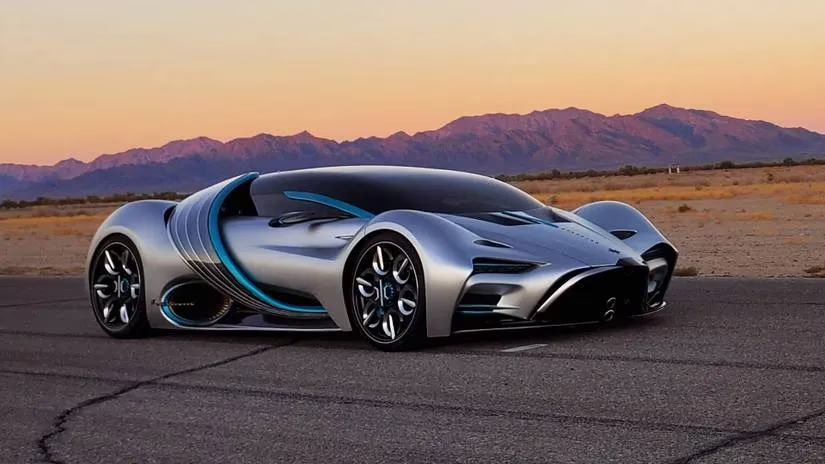
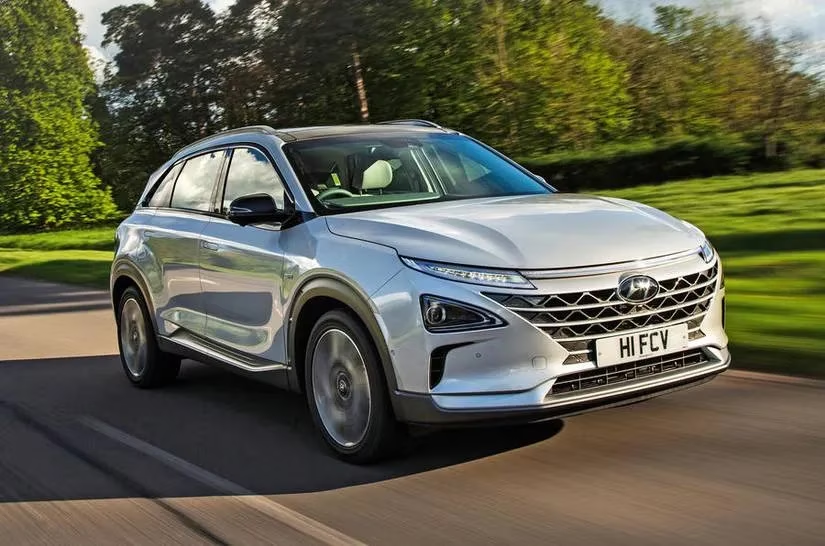
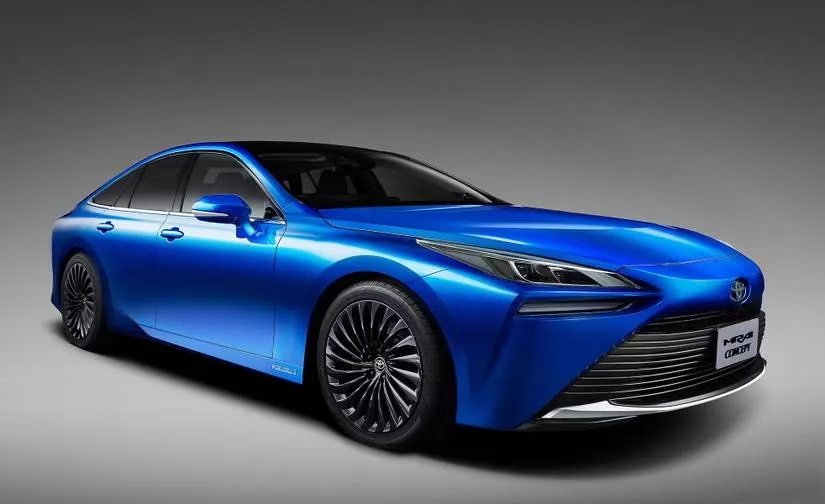
Despite these challenges, major automotive players are doubling down. Toyota's second-generation Mirai showcases impressive range and refinement, while Hyundai's Nexo SUV has proven itself in global markets. Perhaps most tellingly, BMW has moved beyond testing to launch production iX5 Hydrogen vehicles for pilot fleets, signaling serious commitment. The emergence of performance vehicles like the Hyperion XP-1 supercar also shatters the myth that hydrogen power cannot be exciting. 💨
Looking ahead to the next decade, the future is likely not a winner-takes-all scenario but a diversified ecosystem. Battery electric technology excels for shorter commutes, urban use, and where home charging is feasible. Hydrogen fuel cell technology holds compelling advantages for:
-
Long-distance travel and heavy-duty transport (trucks, buses).
-
Users who lack consistent overnight charging access.
-
Applications requiring minimal downtime and quick refueling.
-
Regions investing aggressively in green hydrogen production.
The evolution of both technologies will depend on continued innovation in battery chemistry, reductions in green hydrogen cost, and parallel infrastructure build-out. The narrative that electric vehicles have 'won' is premature. As the industry seeks truly sustainable and practical solutions for all mobility needs, hydrogen fuel cell technology is proving it has a powerful and permanent role to play in the clean transportation matrix. The race continues, and the consumer ultimately stands to win with more viable, eco-friendly choices on the road.
Leave a Comment