
Hydrogen Fuel Cell Cars in 2026: My Perspective on the Viable EV Alternative
Hydrogen fuel-cell vehicles present a compelling, safe alternative to mainstream EVs for a zero-emission future, leveraging electric drive with rapid refueling. Modern engineering ensures impressive safety, surpassing concerns, though green hydrogen production remains the critical challenge for true sustainability.
As someone deeply invested in the future of clean mobility, I find the current automotive landscape incredibly exciting. While electric vehicles (EVs) have undeniably captured the mainstream imagination, I believe the narrative is shifting. Having followed the technology for years, I see hydrogen fuel-cell vehicles not just as an alternative, but as a compelling parallel path to a zero-emission future. In 2026, the conversation has matured beyond simple comparisons; it's about finding the right tool for the right job. The core promise remains powerful: a car that runs on the most abundant element in the universe, emitting only water vapor.
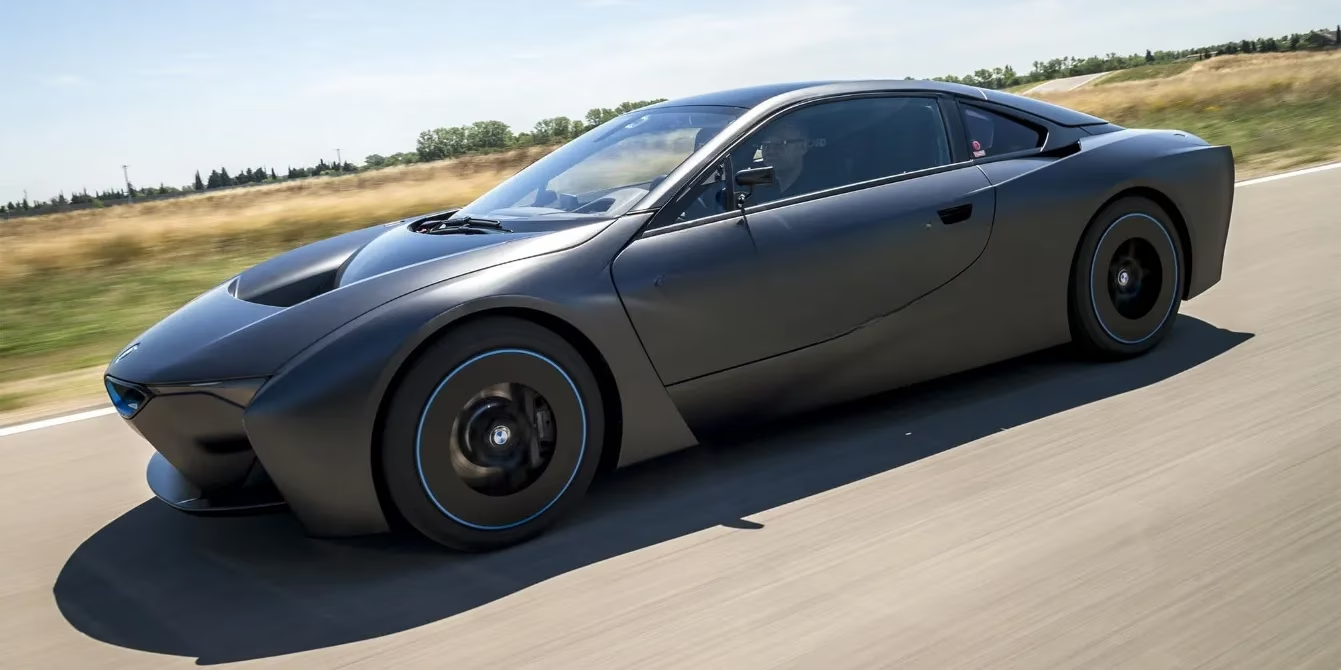
From my perspective, understanding a fuel-cell car starts by recognizing its kinship with an EV. Under the hood, it's fundamentally an electric vehicle. It uses the same electric motors for propulsion, delivering that instant, silent torque we've come to love. The crucial difference lies in the energy source. Instead of a massive, cable-charged battery pack, a fuel-cell vehicle carries pressurized hydrogen. This hydrogen isn't burned; it undergoes a chemical reaction in the fuel cell stack. The magic happens here: the reaction strips electrons from the hydrogen atoms to create electricity, which then powers the motor. The only byproducts are electricity for the battery and pure water. It's an elegant solution that combines electric drive with a refueling experience familiar to any driver.
I've spent considerable time examining the safety concerns, which are often the first hurdle for public perception. The shadow of the Hindenburg is long, but the reality of modern hydrogen storage is one of extraordinary engineering. The tanks in today's cars are marvels of composite material science, designed to withstand immense pressure and extreme impacts. I've reviewed test footage where these tanks were subjected to brutal collisions, gunfire, and even deliberate fires. The results are consistently impressive: the hydrogen either dissipates harmlessly or burns in a controlled, vertical plume, causing minimal damage to the vehicle's structure. In many ways, I find these systems to be demonstrably safer than the high-voltage lithium-ion battery packs in EVs, which pose a different, and sometimes more persistent, fire risk.
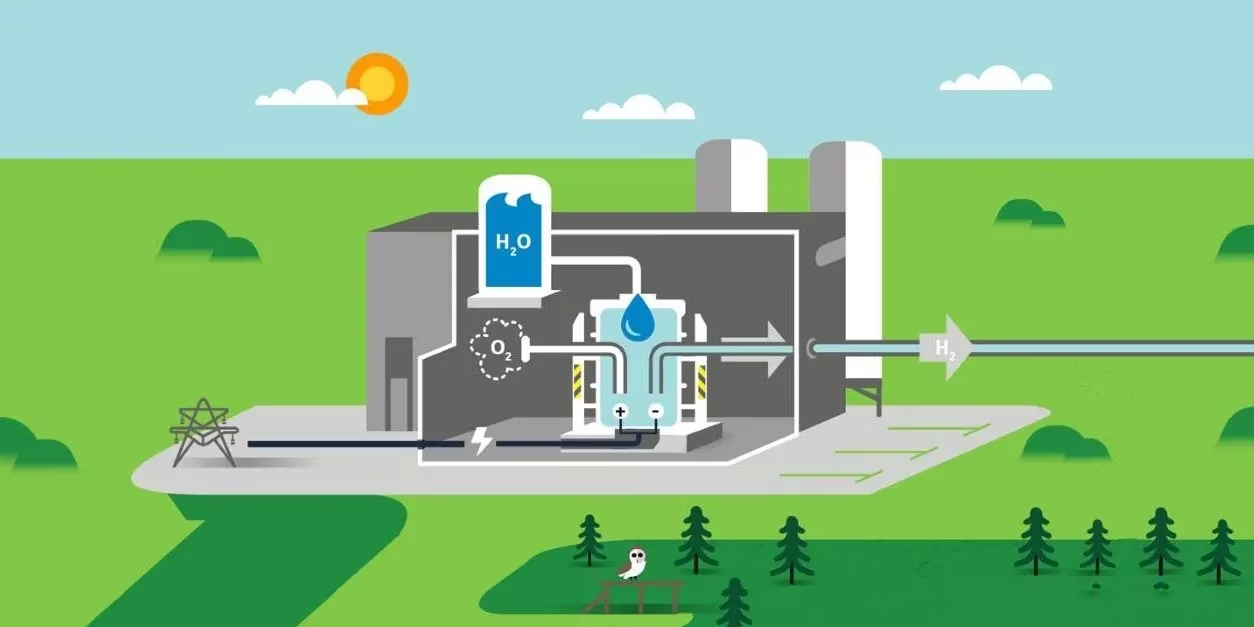
However, my enthusiasm is tempered by the most significant challenge: the hydrogen production dilemma. The 'greenness' of a hydrogen car is only as good as the source of its fuel. Today, a substantial portion of industrial hydrogen is still produced via steam methane reforming, a process that relies on natural gas and releases carbon dioxide. This is the critical paradox. But the landscape is changing rapidly. I'm encouraged by the surge in green hydrogen projects powered by renewable energy like solar and wind. While the process—electrolysis—can be inefficient, losing energy in conversion, it provides a crucial solution for energy storage. Think about it: when the sun is blazing or the wind is howling, and the grid can't absorb all the power, that excess renewable energy can be used to produce hydrogen, effectively storing it for later use in vehicles or industry. This turns a weakness into a strategic strength for a renewable-powered grid.
Let's talk about the driving and ownership experience, because that's where this technology truly shines for me.
-
🚀 Performance & Refueling: You get all the benefits of electric instant torque and smooth, quiet operation. But the real game-changer is refueling time. It takes roughly 3-5 minutes to fill a tank, comparable to gasoline. This eliminates the 'range anxiety' and long charging stops associated with even the fastest-charging EVs on long trips.
-
📊 Range: Models like the Toyota Mirai have consistently achieved ranges over 300 miles on a single tank. With newer models and improved tank technology, we're seeing this number climb, effectively matching or surpassing many long-range EVs.
-
🔧 Maintenance: Like EVs, these vehicles have far fewer moving parts than internal combustion engines. There's no complex transmission, oil to change, or spark plugs to replace. Maintenance is simpler and potentially cheaper.
Of course, the current reality has its hurdles. The infrastructure, while growing, is still sparse compared to EV chargers. In 2026, major corridors and metropolitan areas are seeing more stations, often added to existing gasoline stations—a logistical advantage over building dedicated Supercharger networks from scratch. The cost of hydrogen fuel, while decreasing, is still higher than electricity on a per-mile basis. But I see this as a scaling issue. As production ramps up and green hydrogen becomes more common, prices are projected to fall significantly.
The manufacturer commitment in 2026 is more robust than ever. It's no longer just Toyota and Honda. Legacy giants and new players are entering the arena.
| Manufacturer | Model / Project | Status (2026) |
|---|---|---|
| Toyota | Mirai (Next Gen) | Available for purchase/lease |
| Hyundai | NEXO | Available for purchase/lease |
| BMW | iX5 Hydrogen | Limited fleet testing, consumer timeline announced |
| Stellantis | Various Van/CV prototypes | Commercial vehicle deployments underway |
| Start-ups (e.g., Hyperion) | XP-1 (hypercar concept) | Showcasing performance potential |
Looking forward, I don't see this as a winner-takes-all battle between batteries and hydrogen. Each has its ideal domain. Battery EVs are perfect for daily commuting and local travel, where overnight charging is convenient. Hydrogen fuel-cell vehicles, I believe, are the superior solution for long-haul transportation, heavy-duty trucks, and fleets that require quick turnaround times. They also offer a practical zero-emission option for people who lack reliable home charging.
The journey for hydrogen feels familiar—it echoes the early days of modern EVs. The technology works brilliantly, but it needs scale, infrastructure investment, and continued public and private sector commitment. As battery technology seeks breakthroughs in energy density and charging speed, hydrogen provides a parallel, complementary path. For me, the ultimate goal isn't a single victorious technology, but a diverse, resilient, and truly clean mobility ecosystem. Hydrogen fuel-cell cars, with their unique blend of electric performance and refueling convenience, have firmly earned their place in that future. The progress from 2020 to 2026 has been tangible, and the road ahead looks clearer and more promising than ever.
Leave a Comment