
Hydrogen Cars vs. EVs: The 8 Biggest Hurdles Facing the H2 Revolution in 2026
Hydrogen fuel cell vehicles promise a cleaner alternative to electric vehicles, but face daunting efficiency and environmental challenges in 2026.
The automotive world in 2026 is a fascinating battleground. While electric vehicles (EVs) have firmly established their dominance on roads and in showrooms, a persistent challenger continues to whisper promises of a cleaner, more efficient future: the hydrogen fuel cell vehicle (FCEV). It's a technology that, in many theoretical respects, could be superior to battery-electric powertrains. Imagine refueling in minutes for a range of hundreds of miles, with water vapor as the only tailpipe emission. Sounds like the dream, right? 🤔 Yet, despite years of development and the backing of major players like Toyota and Hyundai, hydrogen cars remain a rare sight. Why is that? The answer lies in a series of formidable challenges that hydrogen must overcome to truly compete with the EV juggernaut. Let's dive into the eight biggest hurdles standing in the way of the hydrogen revolution.
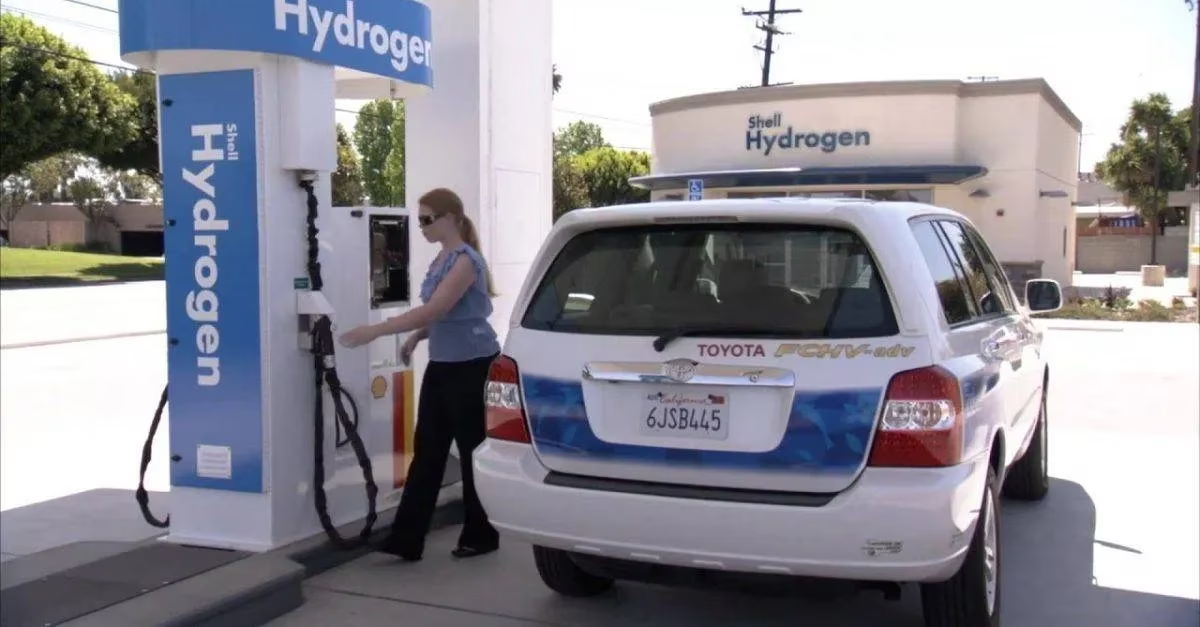
1. The Inefficiency Problem: A Costly Energy Chain
Let's start with the fundamental physics. Producing usable hydrogen fuel is, frankly, an energy-hog. Here’s the typical process:
-
Generate electricity (ideally from renewable sources).
-
Use that electricity in an electrolyzer to split water (H₂O) into hydrogen (H₂) and oxygen (O₂).
-
Compress or liquefy the hydrogen for transport and storage.
-
The fuel cell in the car then converts the hydrogen back into electricity to power the motor.
See the issue? At every step—production, compression, transportation, and conversion—significant energy is lost. An EV, by comparison, simply takes electricity from the grid and stores it directly in its battery with far less loss. This "well-to-wheel" inefficiency makes green hydrogen a premium energy carrier. The silver lining? Engineers are working on using excess renewable energy (like midday solar oversupply) for electrolysis, turning a waste problem into a fuel solution.
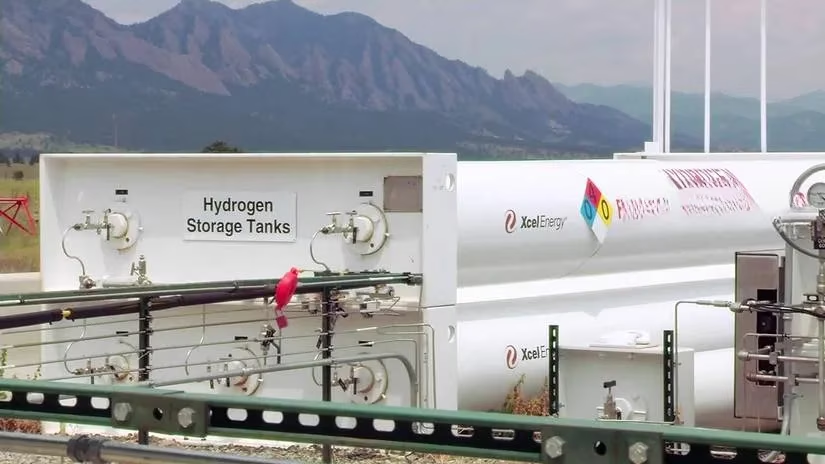
2. The Green vs. Brown Hydrogen Dilemma
Ah, the "color" of hydrogen. This isn't about aesthetics; it's about its carbon footprint. The promise of hydrogen is its cleanliness, but that's only true if the hydrogen itself is produced cleanly.
-
Grey/Brown Hydrogen: Made from natural gas or coal. This is the most common type today and comes with a hefty CO₂ footprint. Using this kind of hydrogen in a car barely beats a modern gasoline engine on total emissions.
-
Green Hydrogen: The holy grail. Produced via electrolysis using 100% renewable electricity. This is the only type that delivers on the full environmental promise.
The good news for 2026? The global push for green hydrogen is accelerating massively. Governments and companies are investing billions in gigawatt-scale electrolyzer projects. The goal is to flip the script and make green hydrogen the norm, not the exception.
3. The Infrastructure Nightmare: Where Do You Fill Up?
This is perhaps the most visible hurdle for consumers. Think about the convenience of EV charging: you can plug in at home, at work, or at thousands of public stations. Now, imagine hydrogen. You need a high-pressure fueling station, a complex and expensive piece of machinery.
| Infrastructure Type | EVs (2026) | Hydrogen FCEVs (2026) |
|---|---|---|
| Home Refueling | ✅ Widespread (Level 1/2) | ❌ Virtually Impossible |
| Public Stations | ✅ Millions globally | ⚠️ A few thousand globally, concentrated in specific regions (e.g., California, Germany, Japan, China) |
| Refueling Time | ⚠️ 20 mins to several hours | ✅ 3-5 minutes (similar to gasoline) |
Building a nationwide or global network of hydrogen stations requires astronomical investment and coordination between automakers, energy companies, and governments. It's the ultimate "chicken and egg" problem: no one buys the cars without the stations, and no one builds the stations without the cars.
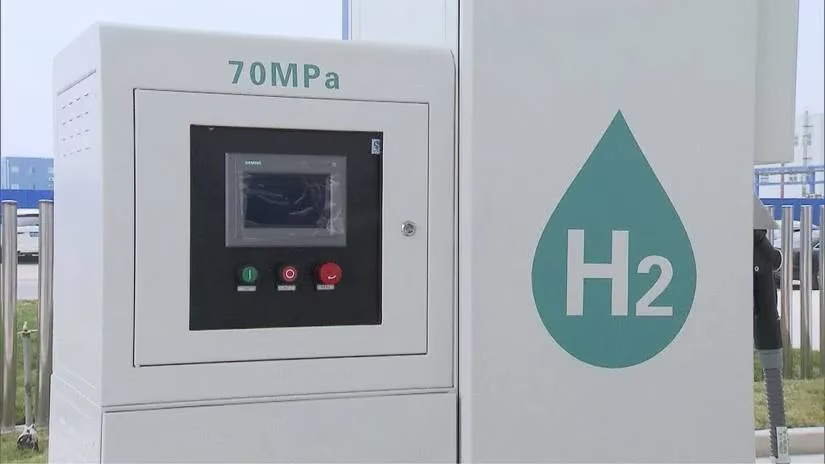
4. The Sticker Shock: High Costs Everywhere
Let's talk money. In 2026, hydrogen faces a cost crisis on multiple fronts:
-
Vehicle Cost: The fuel cell stack (which combines hydrogen and oxygen to make electricity) still uses expensive materials like platinum. While costs are falling, FCEVs remain significantly more expensive to manufacture than comparable EVs or ICE vehicles.
-
Fuel Cost: Pump prices for hydrogen are high. Producing, transporting, and dispensing green hydrogen is capital-intensive, and those costs are passed to the consumer. Per mile driven, hydrogen often remains more expensive than gasoline or electricity.
-
Infrastructure Cost: As mentioned, building stations is wildly expensive.
Until economies of scale kick in for all parts of the supply chain—from electrolyzers to fuel cells to stations—hydrogen will struggle with a price disadvantage.
5. The Storage & Transport Conundrum
Hydrogen is the lightest element in the universe, which makes it tricky to handle. To store a meaningful amount in a car, it must be compressed to extreme pressures (700 bar) or cooled to a liquid at -253°C. Both processes require energy and heavy, expensive tanks.
Transporting it is another headache. You can't just put it in a pipeline designed for natural gas without major modifications due to embrittlement risks. Trucking it around in high-pressure tube trailers is inefficient and costly. Solving this logistical puzzle is critical for widespread adoption.
6. The Investment Gap: All Eyes Are on Batteries
Follow the money. In the past decade, investment has overwhelmingly flowed into battery technology. This has led to:
-
Rapidly falling battery costs (per kWh).
-
Breakthroughs in energy density and charging speed.
-
A massive, global supply chain for lithium-ion cells.
Hydrogen, while receiving growing investment, especially in industrial and heavy transport sectors, has not seen the same level of private capital frenzy for passenger cars. This investment gap means battery tech continues to advance at a faster pace, widening the competitive moat for EVs.
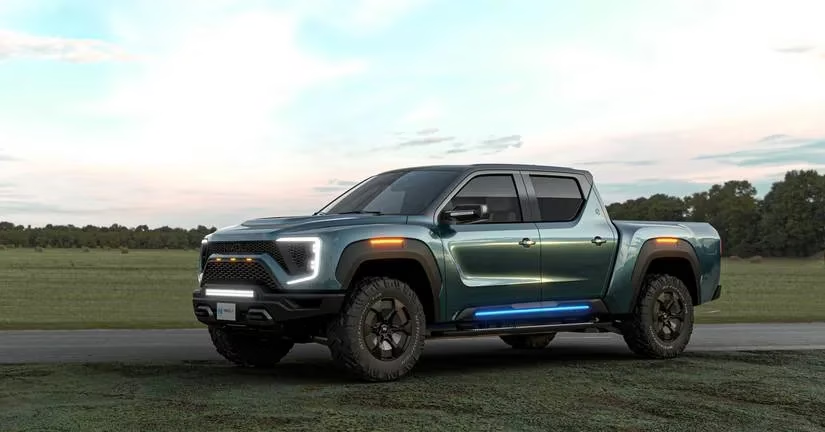
7. Public Perception & The "Viability" Question
After years of "it's the fuel of the future," a degree of skepticism has set in. Is hydrogen for cars a viable mass-market technology, or is it a niche solution for buses, trucks, and trains? This lack of definitive confidence affects consumer adoption, policymaker priorities, and investor appetite. People are hesitant to buy into a technology that might not have long-term support. The success of models like the Toyota Mirai and Hyundai Nexo is crucial to changing this narrative, but they need to become more than a rare curiosity.
8. The Running Cost & Total Cost of Ownership
Even if you get past the high purchase price, the running costs of a hydrogen car in 2026 can be a deterrent. While electricity prices for EVs are relatively stable and cheap, hydrogen prices at the pump are volatile and high. This impacts the total cost of ownership, making it harder for FCEVs to compete economically with both EVs and efficient hybrids over the life of the vehicle.
So, Is There Hope for Hydrogen? Absolutely! 🚀
The hurdles are massive, but the potential payoff is equally huge. Hydrogen's advantages—fast refueling, long range, minimal weight penalty for larger vehicles, and excellent performance in cold weather—make it particularly compelling for specific applications:
-
Long-haul trucking 🚛
-
Aviation and maritime transport ✈️ 🚢
-
Heavy-duty machinery and fleet vehicles
-
Energy storage for the grid (using excess renewables)
In 2026, the narrative is shifting. Hydrogen may not "replace" EVs for the average passenger car. Instead, the future is likely complementary. EVs will dominate personal mobility, while hydrogen fuel cells will become the zero-emission solution of choice for sectors where batteries are impractical. The race isn't necessarily hydrogen vs. electric; it's about finding the right tool for the right job in our decarbonized future. The journey for hydrogen cars is far from over—it's just taking a different, perhaps more strategic, road.
Leave a Comment