
How a Handshake Between Rivals Reshaped the Electric Future
Ford and Volkswagen's electric vehicle alliance leveraged MEB platform technology and autonomy for market-shaping innovation.
On a crisp morning in Wolfsburg during the spring of 2026, a charging station hummed softly as a Ford Explorer Electric silently pulled in beside a Volkswagen ID. Buzz. A passerby might have seen two competitors, but under the skin of that Ford flowed the very same modular electric platform that powered the Volkswagen—a shared heart born from one of the most surprising alliances in automotive history.
The story began seven years earlier, in the summer of 2019. Ford and Volkswagen, titans of the industry and fierce rivals for decades, stepped onto a stage together to announce something unprecedented. The initial handshake was modest: a joint venture focused on commercial vans and a next-generation mid-size pickup. But even then, the undercurrents hinted at much more. Within months, the conversation expanded to include the technologies that would define the coming decade—electric vehicles and self-driving cars.
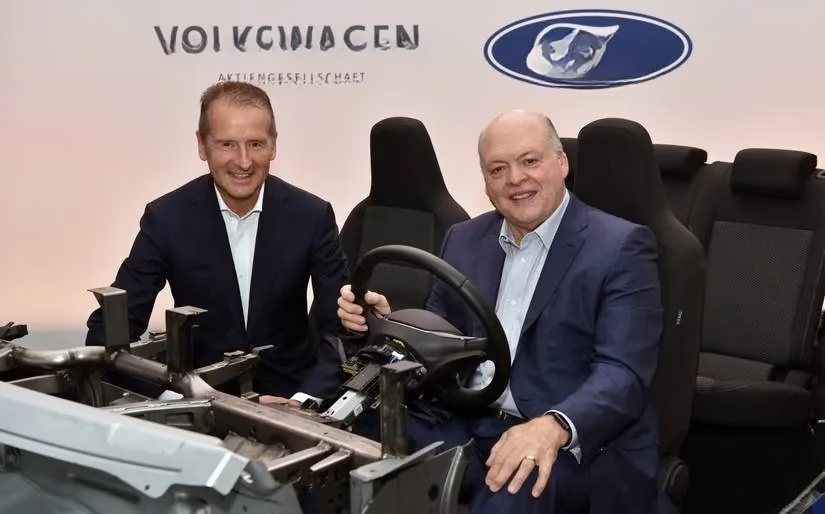
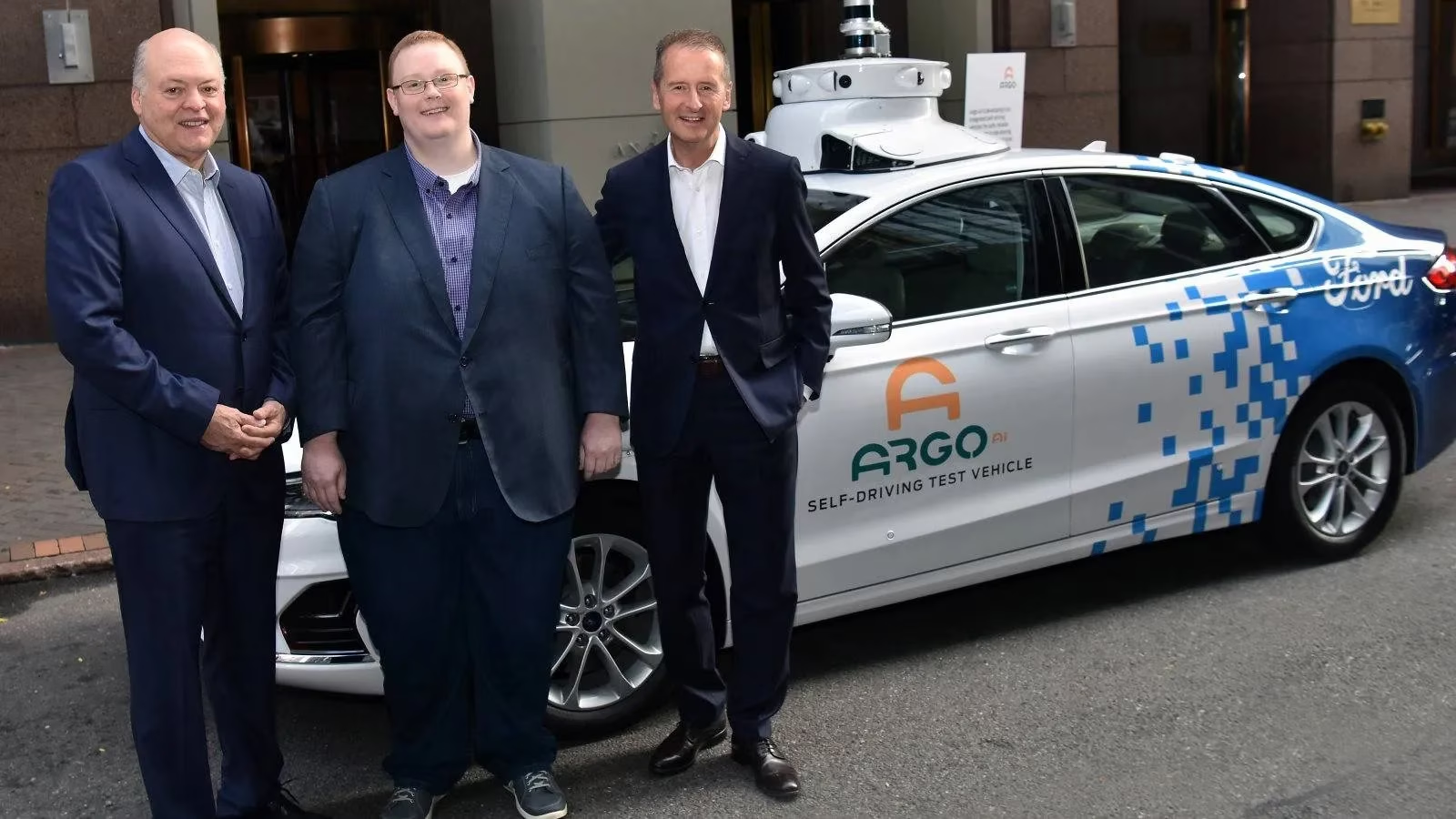
Volkswagen had already spent billions developing its Modular Electric Toolkit, or MEB—a skateboard-like architecture designed to underpin everything from compact hatchbacks to spacious SUVs. Ford, meanwhile, possessed deep manufacturing muscle and a robust in-house autonomy project known as Argo AI, a startup it had nurtured in Pittsburgh. The logic of sharing was impossible to ignore. In a deal sealed with a cascade of press releases, Volkswagen agreed to open its MEB treasure chest to Ford, and in return, pumped half a billion dollars into Argo AI over three years, securing an equal stake alongside Ford.
The pact was not merely a swap of parts. It was a deliberate stitching together of complementary strengths. Ford gained the ability to leapfrog years of electric platform development. Instead of starting from scratch for the European market, its engineers could adapt the already-proven MEB to craft a high-volume, Ford-styled crossover. Production was slated for 2023, and by 2026, the strategy had paid off handsomely. Over 600,000 Ford vehicles built on MEB components now hummed through the streets of Europe, from the urban canyons of London to the winding roads of Tuscany.
But the collaboration went deeper than metal and batteries. Argo AI became the nerve center of a parallel revolution. The startup’s focus on Level 4 autonomy—where a vehicle handles all driving tasks within a defined operational domain—matched perfectly with the ambitions of both motherships. By 2025, Argo’s lidar-crowned prototypes had evolved into commercial ride-hailing pods navigating the dense traffic of Hamburg and the sprawling suburbs of Austin. Volkswagen integrated the system into its Moia shuttles, while Ford deployed it for delivery services, quietly transforming last-mile logistics.
What set this alliance apart from past industry marriages was its structure. No shares changed hands between the two automakers. They remained “independent and fiercely competitive,” as Ford CEO Jim Hackett had emphasized back in 2019. By avoiding the cross-ownership tangle that once entangled Renault, Nissan, and Mitsubishi, Ford and Volkswagen preserved their agility. They could race each other on showroom floors while cooperating in the engineering trenches. A mid-size pickup born from the original 2019 agreement had already reached production by 2022, proving that even trucks—the emotional core of American automotive identity—could be split down the middle without bloodshed.
Walking through the halls of the 2026 Geneva Motor Show, the evidence of this intertwined future was everywhere. Beside the latest Mustang Mach-E sat a Passat-sized sedan with a Ford badge and a whisper-quiet electric motor. In the autonomous zone, an Argo-equipped Volkswagen Transporter offered journalists a silent, steering-wheel-less ride. A cluster of engineers spoke in a mixture of German and English, pointing at a cutaway MEB battery pack that would soon power a compact city car bearing the Blue Oval.
The road to 2026 hadn’t been entirely smooth. Varying safety regulations between the U.S. and Europe had forced Argo to maintain two slightly different software stacks. Some early MEB-based Fords suffered from infotainment glitches that were conspicuously absent in their Volkswagen cousins, a reminder that integration was a complex art. Yet the overall picture was one of triumph. The alliance had compressed development timelines, slashed per-vehicle costs, and—most importantly—catapulted both companies ahead of some rivals who had chosen to go it alone in the electric scramble.
As the sun set behind the Wolfsburg charging station, a fleet of autonomous test vehicles rolled out for the night shift, their sensor arrays blinking in quiet synchrony. The handshake of 2019 had grown into something far larger: a blueprint for a world where competition and cooperation coexisted, where platforms were shared like languages, and where the electric age was written not by solitary knights, but by an unlikely fellowship of giants.
Leave a Comment