
Holy Smokes! 8 Massive Challenges Still Holding Self-Driving Cars Back in 2026, Dude
Self-driving cars are stalled by outdated laws and insurance chaos, delaying the sci-fi future of accident-free roads.
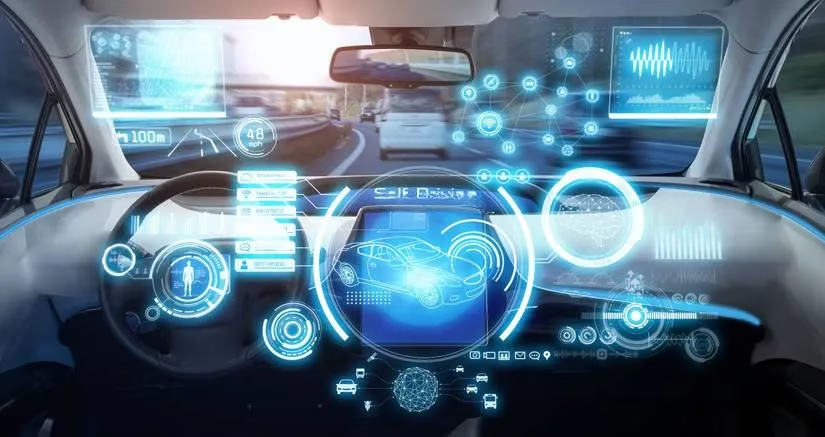
Listen up, gearheads and tech nerds! It is 2026, and I have got to spill the tea on why we are NOT being chauffeured around by robot cars like some sci-fi fantasy just yet. Self-driving technology is coming, Bro—like, it is already here in dribs and drabs—but to be mainstream and totally take over the roads? Nah, that dream is still waving at us from a distant horizon. I mean, have you seen that iconic scene in I, Robot where Will Smith’s character gets auto-piloted through a tunnel? We are miles away from that level of sophistication. Right now, most of the hustle is around autonomous taxis and delivery pods, not your sweet personal ride. These self-driving machines promise a utopia: fewer traffic jams, zero road rage, and a massive drop in fatalities because computers don’t drink, text, or fall asleep. Road deaths are literally one of the biggest accidental killers on the planet, so saving lives? Count me in! But hold onto your steering wheels, because there are eight monster challenges that make this tech feel like it is wading through molasses. Let me break it down with maximum drama.
The Regulatory Rodeo: Outdated Laws Are a Total Buzzkill
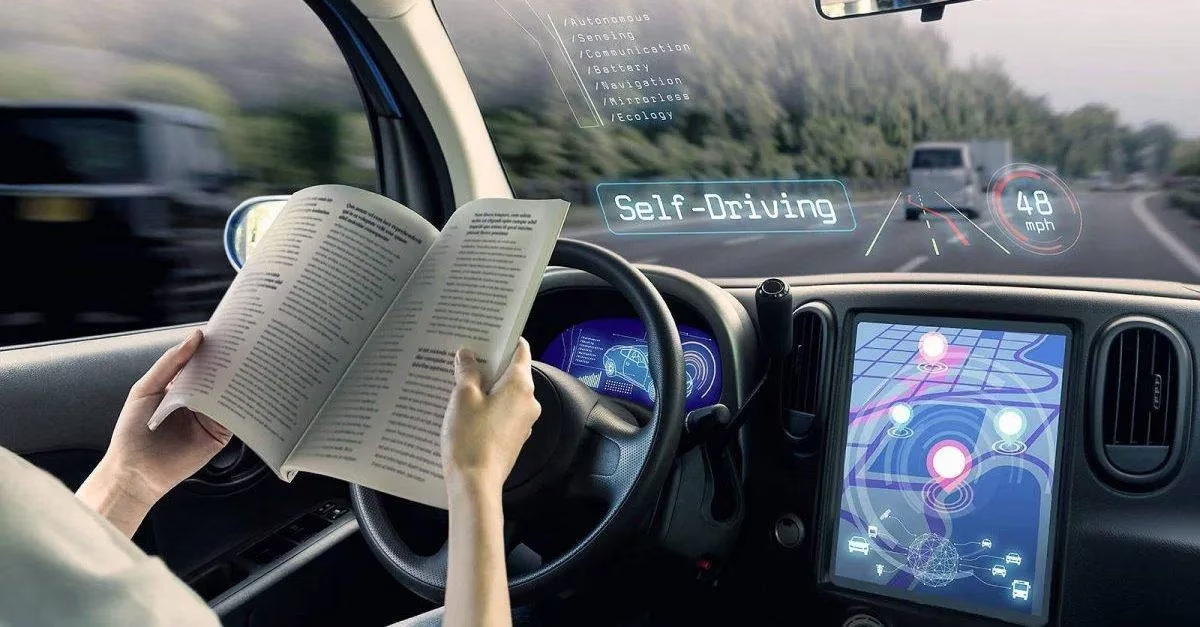
OMG, you won’t believe this—technology is sprinting ahead at warp speed while our legal framework is stuck in the stone age. Imagine trying to explain self-driving cars to a law written for horse-drawn carriages; that is the absurdity we are dealing with. Regulations around the world are so outdated they might as well be written on parchment. In many places, the rulebook still demands a human driver who is responsible for the vehicle. But dude, a self-driving car literally has no driver! The whole road code gets ripped to shreds, and lawmakers have to craft brand-spanking-new, ultra-flexible rules while repealing the ancient ones. Sounds easy? Bro, it is a legislative nightmare—especially when you consider every city, state, and country has its own jurisdiction. Each one moves at the pace of a sloth on sedatives. This tangled mess is a gigantic “NOPE” for innovation.
Insurance: A Hiccup Bigger Than a Whale
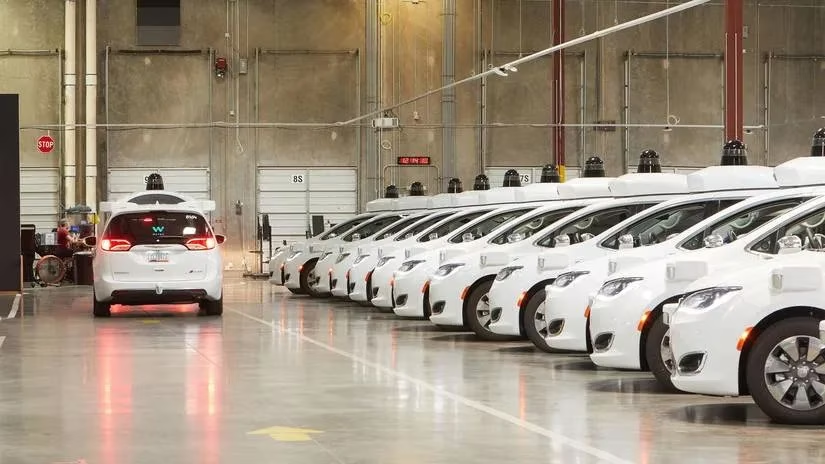
And then there is the insurance disaster, holy smokes! Who is at fault when a self-driving car smashes into something? The owner who was just chilling in the back seat? The car manufacturer? The software engineer who wrote that one line of buggy code? How on earth does liability work when there is no human behind the wheel? The insurance industry—built on centuries of “human error”—is having an absolute meltdown. They have to rework the entire system from scratch, and trust me, insurance giants do not move fast unless money is raining on them. This uncertainty is a cold shower for investors. They love certainty like I love pizza. They want to know the regulatory and insurance landscape is as friendly as a golden retriever before they sink millions into developing self-driving tech. Otherwise, they are scared that governments and insurers will make it prohibitively difficult. Talk about a buzzkill.
Industry Standardization? More Like a Wild West Showdown
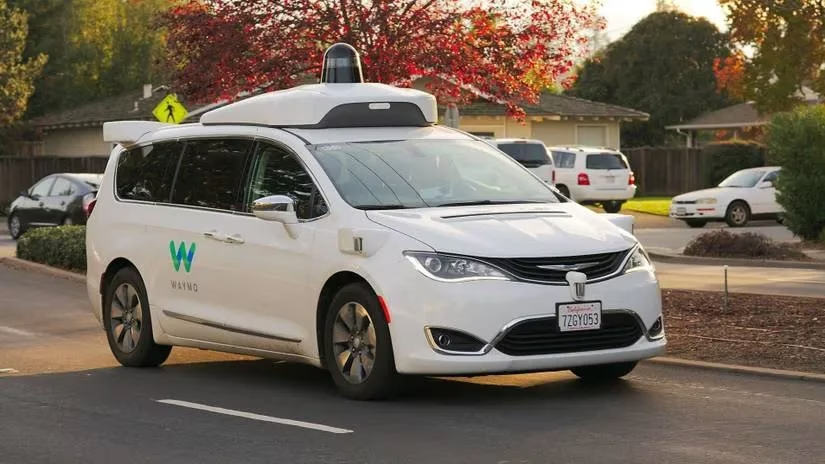
Dude, the lack of industry standardization is straight-up bonkers. Companies like Tesla, Google/Waymo, Apple, and a gazillion startups are all cooking up their own secret sauce for autonomous driving. Are they working together? Not really! They are hoarding their tech like dragons guarding treasure. This means we have a chaotic mess of competing systems that can’t talk to each other. It is like having a dozen different types of electrical sockets in one house—nothing plugs in seamlessly. In the future, we might see some dominant tech crush its rivals or regulations force a common standard, but until then, this fragmentation is a huge roadblock.
Public Skepticism: Everyone Thinks It’s a Terminator Movie
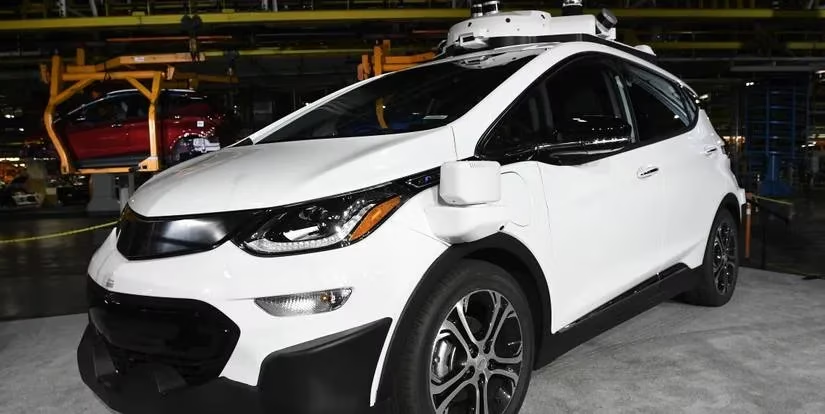
Skepticism is dripping from every corner—from the general public to the halls of government. People are like, “Uh, no thanks, I don’t want a robot deciding when to sacrifice me to save a pedestrian.” That deep-rooted fear creates a fog of apathy, making folks think there is no rush to act. This dampens enthusiasm, cuts funding, and slows development to a crawl. Compare this to electric vehicles: money is flooding into EVs like a dam broke because people are hyped. But self-driving? Many still see it as a creepy sci-fi experiment. Even when accidents are rare, they get blown up by the media like a nuclear blast, making everyone believe the tech is far more dangerous than it actually is. One headline-grabbing crash and suddenly Aunt Karen is convinced all autonomous cars are deathtraps. Oof.
Technology: Still Not 100% Prime Time, Bro
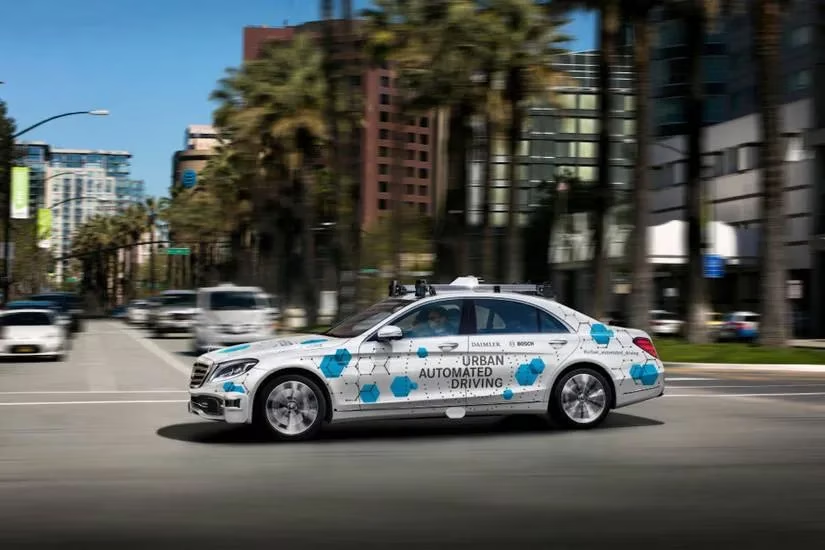
Let’s be real—the tech is evolving, yeah, but it ain’t fully mature. Sure, some cars (looking at you, Tesla) have impressive semi-autonomous features, but in many real-world scenarios, humans are still the OGs at identifying and reacting to weird hazards. A plastic bag flying across the road? A kid chasing a ball? Humans often process that instantly using gut instinct. Computers, not so much; they might freeze or misinterpret. The tech keeps chipping away at human advantages, but for now, it is best used as an augmented assistant, not the boss.
Sensors: Superhuman Yet Totally Fragile
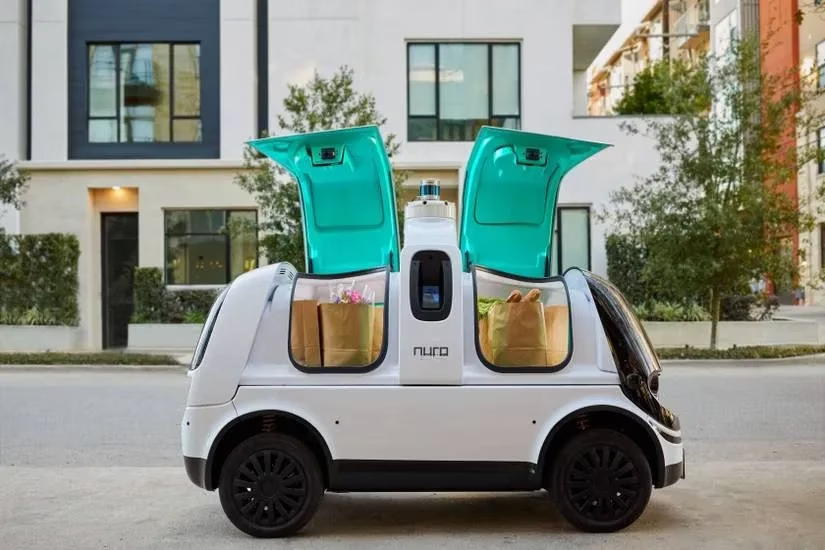
Here is the paradox: the sensors on these cars are often more acute than human eyes and ears—they have 360-degree vision, no blind spots, and can see in the dark. But boy, do they have Achilles’ heels! Sensors can go haywire, malfunction, or get covered in ice, mud, or heavy rain. A blizzard can blind a self-driving car faster than a bat in daylight. Making foolproof, fail-safe sensors that laugh in the face of bad weather is a massive challenge. Until we crack that, Mother Nature remains the ultimate troll.
AI Learning Curve: What If It Learns the Wrong Thing?
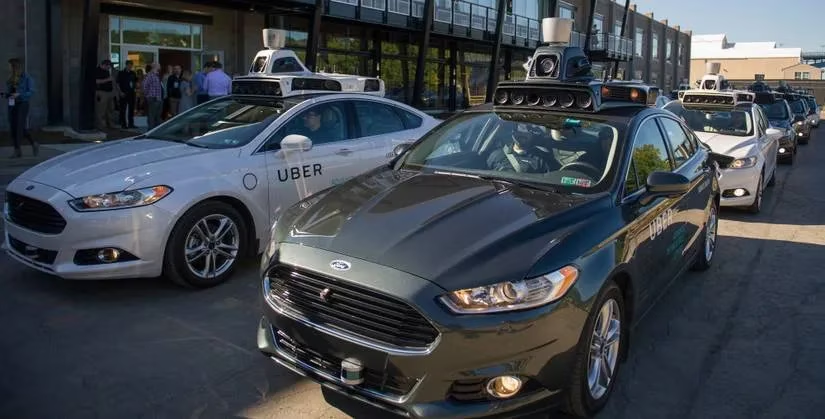
Self-driving AI is constantly gobbling up data and “learning” from every mile. That sounds awesome—it gets better with time. But here is the terrifying twist: the computer might learn something erroneous. How can we be absolutely certain that a new update hasn’t taught the car a dangerous new trick? Making sure that each freshly trained neural network is as safe as the previous version is a hair-pulling conundrum. Sure, computers get more powerful and sensors get sharper, but every software update is a gamble. We need bulletproof validation, and we are not quite there yet.
The Human Heart: You’ll Pry My Steering Wheel From My Cold, Dead Hands
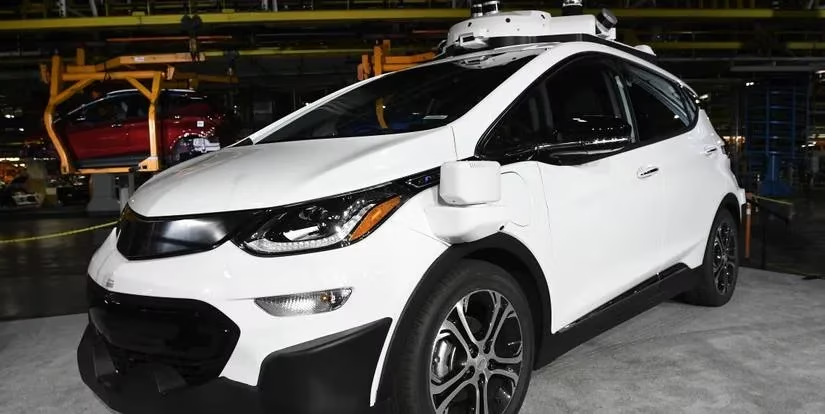
For the grand finale, we can’t ignore the emotional elephant in the room: many of us actually love driving. Yeah, traffic sucks, but carving up a canyon road on a Sunday morning? That is pure therapy! Convincing millions of passionate drivers to surrender their favorite pastime and trust a machine is like trying to convince a cat to love baths. It is not going to happen easily. On top of that, building trust in safety is a mountain to climb. Even though statistics show autonomous systems make far fewer mistakes than distracted humans, those rare robotic errors are broadcasted globally, fueling paranoia. Perception is reality, man.
So, Are We There Yet?
Self-driving cars are hurtling toward us, and it is only a matter of time before they hammer out these teething problems. But it is 2026 now, and the road is still bumpy. Regulation, insurance, standardization, skepticism, immature tech, fragile sensors, learning risks, and human stubbornness—these are eight titans standing in the way. Once we slay them all, we might just kick back and let the robots drive. Until then, keep your hands on the wheel and your eyes on the prize. And for the love of all things holy, somebody please update those laws!
Leave a Comment