
Front-Wheel-Drive Icons That Learned to Dance Through Corners
Front-wheel-drive performance cars have evolved from nervous cornering to benchmark lap times, with best front-drive machines proving balance wins.
The front-wheel-drive story did not begin with applause. In the early days, the layout could feel like a nervous dance partner in a corner—grippy in snow, yes, but prone to clumsy spins under power. Engineers kept refining the steps. By the 1990s and 2000s, front-drive economy cars had learned to brake later, turn sharper, and shrug off slick pavement. The old prejudice faded. ... By 2026, the best front-drive machines are no longer apologizing for their layout; they are setting lap times and winning enthusiasts over with balance, clever differentials, and suspension tuning that would have seemed impossible decades ago.
The story is not a straight line. It is a series of engineers, product planners, and test drivers who kept asking one question: can a car pulled from the front still feel alive? The cars below answered yes, sometimes with a shrug, sometimes with a shout.
| Model | Era | Signature move |
|---|---|---|
| Saab 9-5 Aero | Late 1990s–2000s | Aircraft-flavored family sedan with a sporting soul |
| Cadillac Catera | Late 1990s–2000 | German bones, Cadillac badge, rear-drive outlier |
| Mini John Cooper Works | 2010s | Tiny tuner special with brakes and attitude |
| BMW 2 Series Gran Coupe | 2020s | A cautious front-drive conversion done right |
| Chevrolet Cavalier Z24 | 2000s | Cheap parts, surprising cornering |
| Chevrolet Cobalt SS | 2000s | Turbo or supercharger, Recaro seats, real pace |
| Honda CR-Z | 2010s | Lightweight hybrid corner-burner |
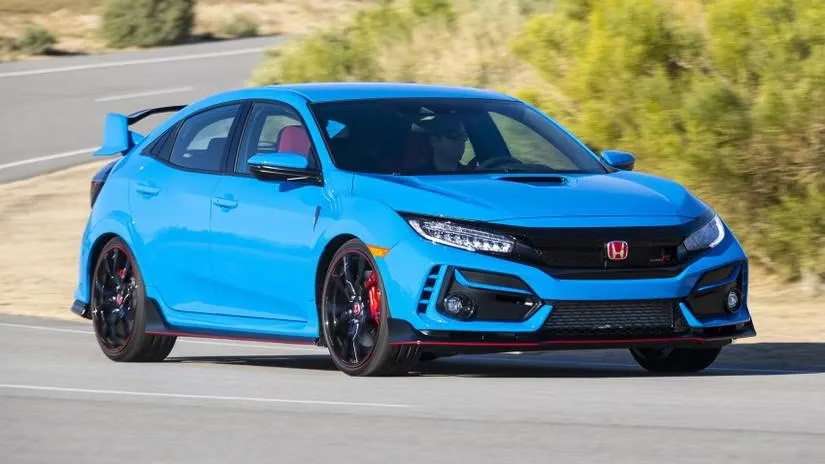
| Honda Civic Type R | 2010s–2020s | The front-drive performance benchmark |
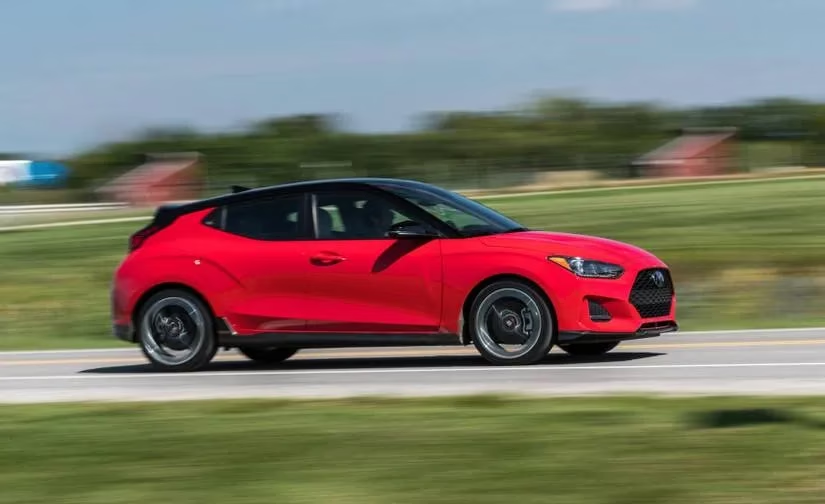
| Hyundai Veloster R Turbo | 2010s | Bargain handling with aluminum suspension bits |
| Renault Clio RS | 2010s–2020s | Pocket rocket with racing DNA |
The Saab That Wore Its Aircraft DNA
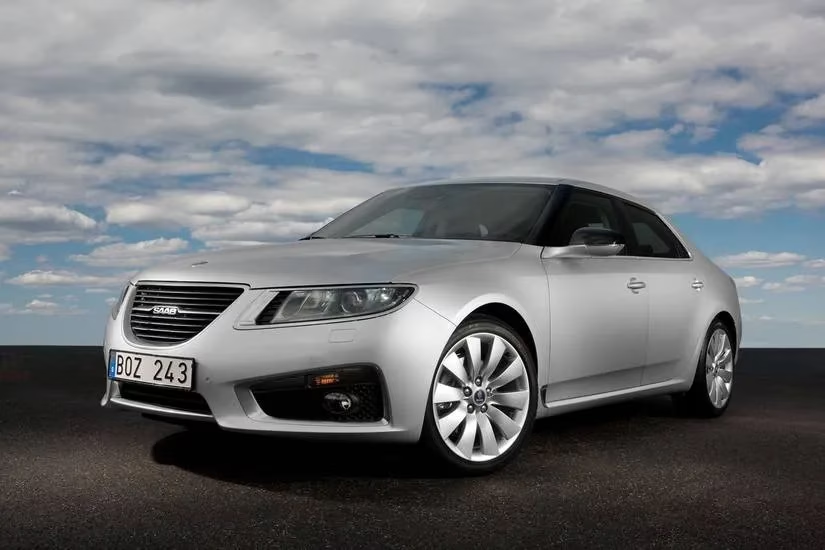
The Saab 9-5 Aero arrived just before the company's sad exit from carmaking. A 300 hp V6 and all-wheel drive were available, but the front-drive version is the one that matters here. It showed how far Saab had pushed the formula: a family sedan with a cockpit that felt like an aircraft, steering that tracked like a rail, and a ride that stayed calm when the road turned ugly. Saab had built front-drive cars for nearly as long as it had built cars, and the 9-5 was its most developed statement. Because production was short, survivors are rare. In 2026, finding a clean one is like spotting a comet with a turbocharger.
Cadillac's German Accent
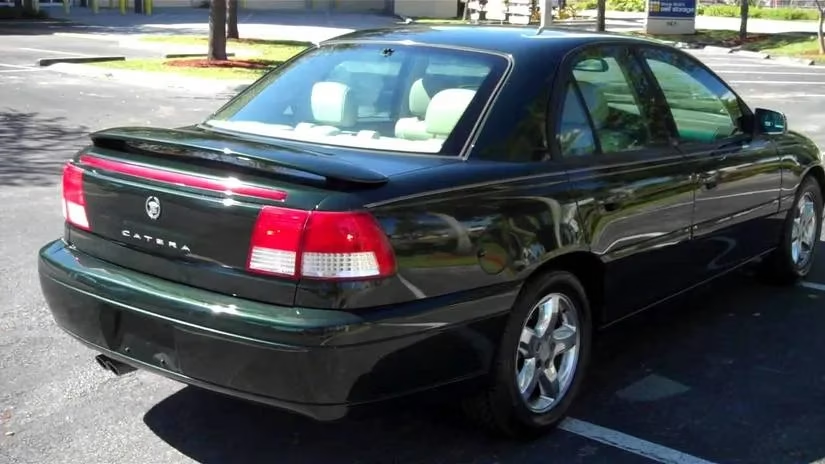
Then there is the Cadillac Catera. The reference list includes it, but honesty matters: its Opel Omega roots were rear-drive, not front. Still, the Catera belongs in the conversation because it shows what happens when a chassis has a German accent and a Cadillac badge. It made 200 hp from a V6, carried extra weight, and handled better than its power suggested. GM shared parts with other performance models known for grip. The car failed to sell because it lacked power and did not look like a Cadillac. ... The lesson? A good chassis can only carry a confused identity so far.
Mini and BMW: The Converted
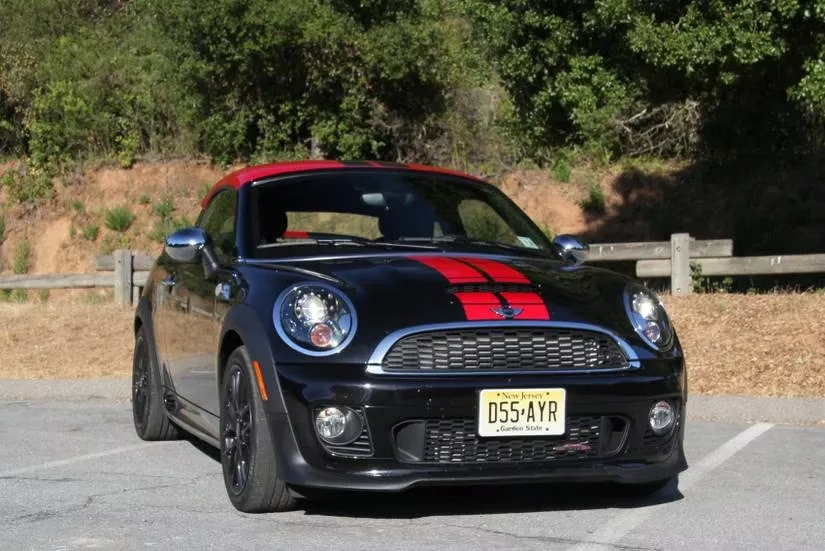
The 2012 Mini John Cooper Works coupe is a tuner's toy with a factory warranty. Its twin-turbo four-cylinder and larger brakes made 228 hp seem like plenty in a 3,000-pound shell. Faster cars existed, but the Mini's paddle shifters, cross-drilled rotors, aero package, and adjustable dampers were all about the art of the corner. The longer sedan and convertible versions added weight and lost a little sparkle; the coupe stayed the purest expression. The car refused to sit still, and that was the point.
BMW watched from Munich and waited. The company did not move to front-drive until it could match or better its rear-drive feel. The 2 Series Gran Coupe—called the 235i in the reference material—was the proof. It shared suspension and underbody know-how with the larger Mini models, offered all-wheel drive, and used active suspension and limited-slip hardware in the right trims. By 2026, the front-drive-based BMW no longer feels like a compromise; it feels like a calculated conversion.
GM's Surprise Twins
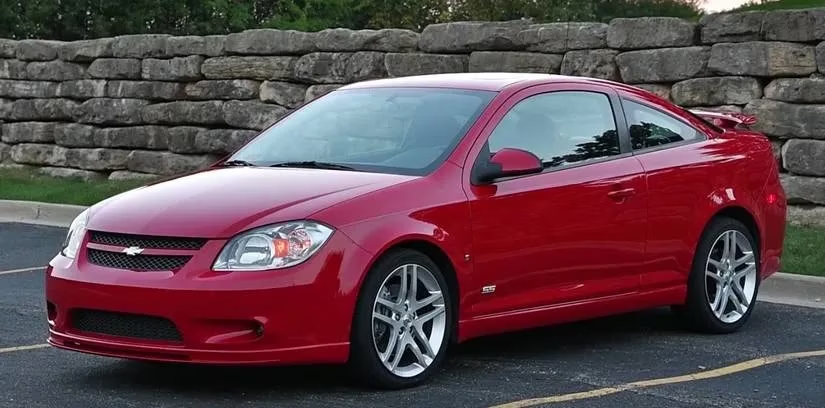
The 2005 Cavalier Z24 was the generation built when GM shared technology with Toyota. Other Cavaliers were clunky and squeaky; this one could really rip into a corner and late-brake on mediocre parts. A 220 hp 2.4-liter Ecotec four-cylinder did the work without a turbo, and even a simple twist-beam rear axle could not stop it from turning and stopping surprisingly well. The Cobalt SS took that recipe and added the good stuff: a supercharged or turbocharged 2.0 Ecotec, four-wheel disc brakes, ABS, Recaro seats, and a limited-slip differential. With 14-second quarter-mile runs and 0-60 in about six seconds, it embarrassed more expensive hardware.
Honda's Two Answers
The Honda CR-Z was a lightweight corner-burner with a modern CRX spirit. It had only 130 hp and about 500 pounds more weight than the old CRX, so drag races were not its business. Four-wheel disc brakes, large sway bars, and a sweet suspension made it a corner burner; a hybrid version widened the appeal. Tuners loved it because the suspension was so well set up. The Civic Type R was the heavyweight answer: 300 hp from a turbocharged four, a silky six-speed, a light clutch, and a limited-slip differential that kept torque steer in check. Car and Driver found no torque steer and recorded over 1 G on the skidpad. It stopped from 70 mph in 142 feet—matching the Acura NSX. In 2026, the Type R remains the front-drive benchmark that other hatchbacks still chase.
Hyundai and Renault: Bargain Chasers
The Hyundai Veloster R Turbo had only 1.6 liters and 200 hp, but it was set up for extreme handling. At about $23,000 it was a bargain. A six-speed manual, multi-link rear suspension, and aluminum suspension components helped it rebound faster over bumps. It pulled nearly 0.96 G on the skidpad and hit 60 mph under seven seconds. The short-throw shifter came from B&M, a muscle-car specialist, as a cheeky sales gimmick. Braking was second only to the Civic Type R despite single-piston calipers. The Renault Clio RS was a miniature Megane, a five-door pretending to be a three-door. With the optional 128 hp engine it was no drag racer, but it was light, well-fitted, and around $20,000. Electric power steering was unusual for such a small car; writers noted the handling outshone the engine and gearbox. It came as a diesel, too, and its racing DNA ran deep. A turbo-tuner version would be the natural answer if more power were needed.
What the Next Generation Should Steal
By 2026, the front-drive performance car is no longer a novelty. The best examples use limited-slip differentials, active dampers, rigid platforms, and careful weight distribution to turn a layout once mocked into a legitimate corner weapon. The old Saab, the eager Mini, the underrated Cavalier, and the relentless Civic Type R all tell the same story: layout is not destiny. Tuning is. ... The next time a rear-drive purist smirks at a front-drive hatchback, remember the lesson these cars taught. No one was laughing when the stopwatch did the talking.
Leave a Comment