
Ford BlueCruise vs Tesla Autopilot: The Ultimate Hands-Free Driving Showdown in 2026!
Ford BlueCruise vs. Tesla Autopilot: The autonomous driving showdown intensifies as Ford's hands-free system challenges Tesla's dominance with advanced features and safety innovations.
Can you believe it's 2026 and we're still arguing about which car can drive itself better? I've been behind the wheel of both systems, and let me tell you, the battle between Ford BlueCruise and Tesla's Autopilot has reached epic proportions! While Tesla has been dominating headlines (and not always for good reasons), Ford has been quietly perfecting its automated driving game. The Blue Oval isn't just playing catch-up—they're aiming for the championship belt in the autonomous driving arena. But is BlueCruise truly the stress-free, hands-off experience Ford claims, or just another overhyped gadget waiting for a software update?
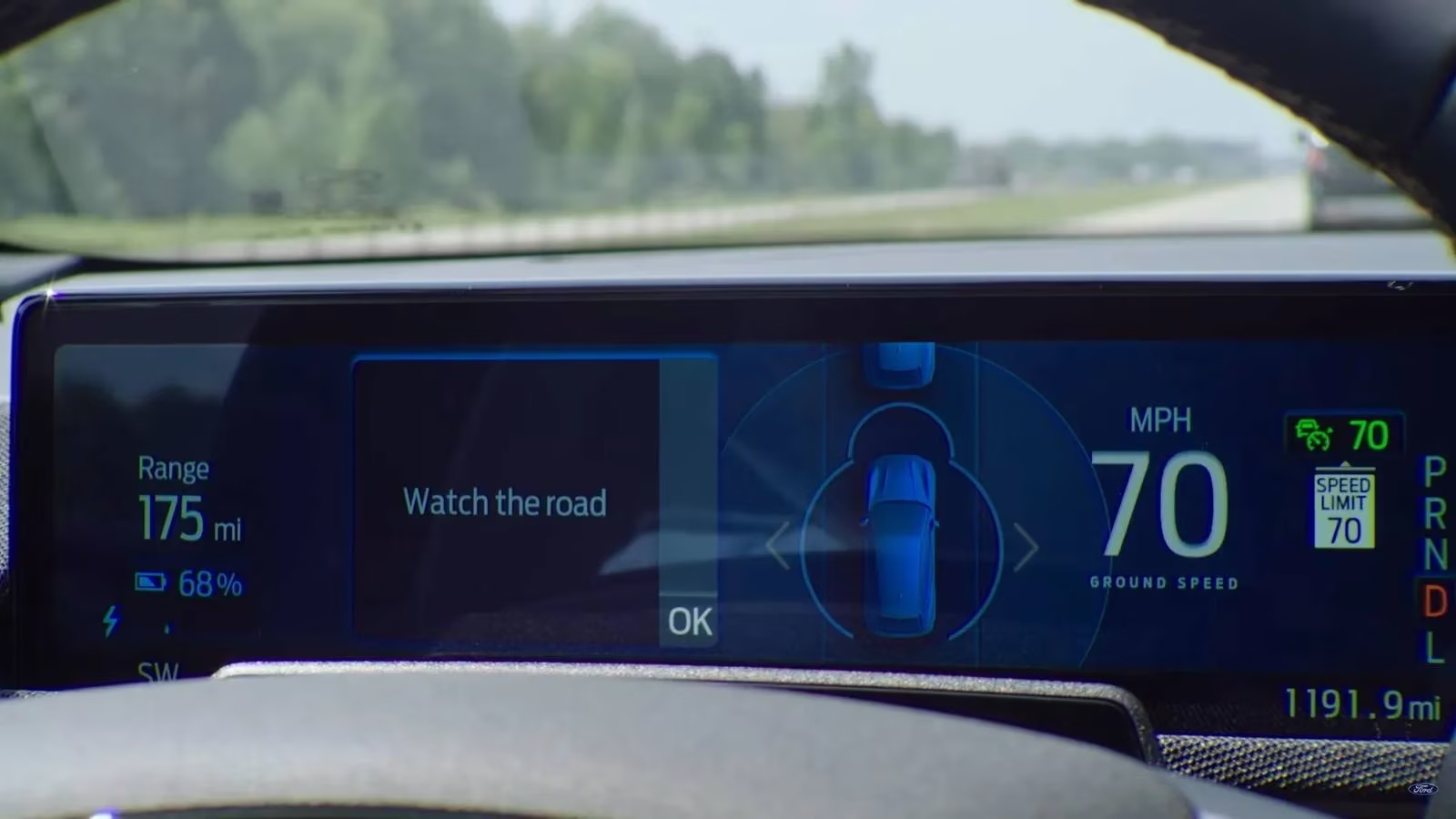
The Setup: More Complicated Than IKEA Furniture? 🤔
First things first—getting BlueCruise operational feels like preparing for a space mission! Here's my hilarious step-by-step experience:
-
Download the FordPass App (obviously)
-
Input your VIN (because apparently your car needs a social security number)
-
Activate the Connect Modem (cue dramatic music)
-
Navigate through Settings → Driver Assistance → Adaptive Cruise Control (three layers deep, really Ford?)
Only THEN are you deemed worthy to experience hands-free driving. But wait—there's more! You can only activate this wizardry in designated "Blue Zones." That's right, folks! It's like a VIP club for your car's autopilot. When you enter one of these magical areas, your display lights up with "Blue Cruise available" like you've just unlocked a video game achievement.
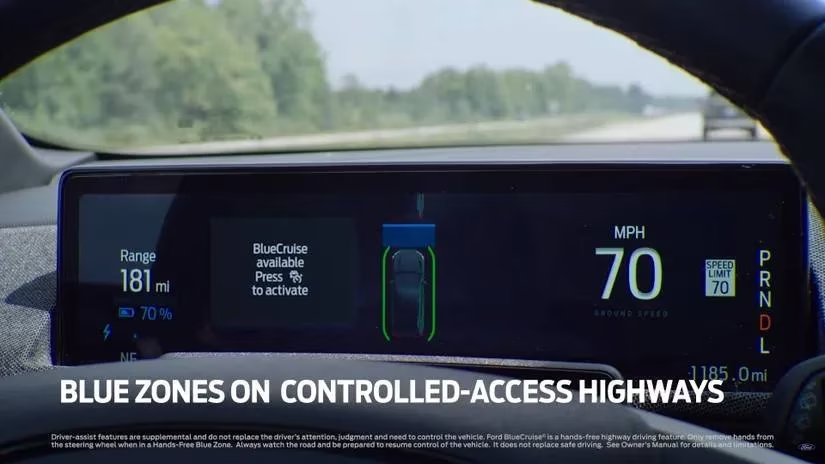
The Magic (and Annoyance) of BlueCruise 1.2 ✨
Once activated, the system actually works surprisingly well! The lane-centering is smooth, and yes—you can actually take your hands off the wheel. But here's where it gets interesting:
-
Eye-tracking technology: The car WATCHES YOU WATCHING THE ROAD! Look away for too long, and you get a friendly (read: annoying) chime reminding you to pay attention. It's like having a backseat driver built into your dashboard!
-
Auto lane changing: The latest 1.2 version introduces automatic lane changes. Simply tap the turn signal, and if the coast is clear, your car gracefully slides over. It's smoother than my attempts at parallel parking, I'll give them that!
The Elephant in the Room: Tesla's Troubles 🐘
Now, let's talk about the competition. While I'm cruising hands-free in my Ford, what's happening with Tesla? Well, let's just say it's been... eventful.
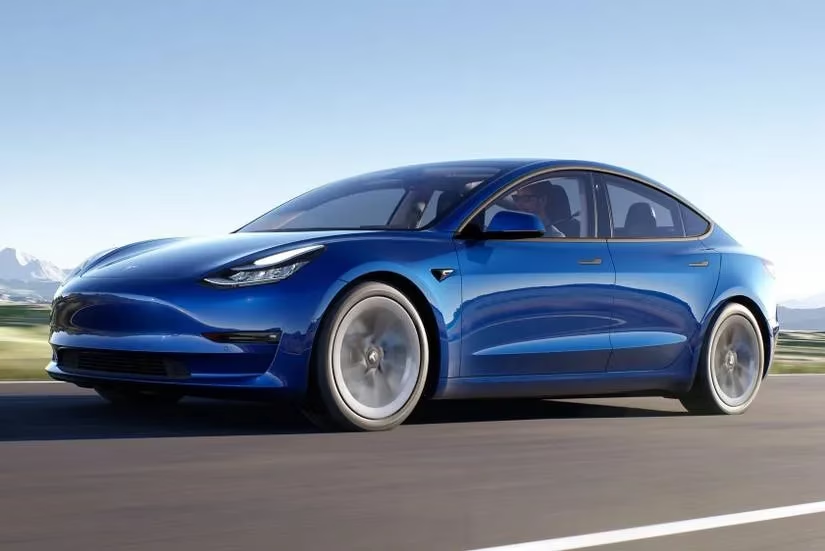
Remember that massive recall of over 360,000 vehicles? Or the eight-car pileup in San Francisco? Tesla had to admit their system "could cause crashes"—not exactly the endorsement you want for technology controlling two tons of metal at highway speeds! The NHTSA has been breathing down their necks harder than my mom checking my homework.
The Stress-Free Promise vs. Reality 🎭
Ford claims BlueCruise "reduces the stress of driving." But does it really? Let's break it down:
| Stress Reducer | Stress Creator |
|---|---|
| Hands-free highway driving | Constant eye-tracking warnings |
| Automatic lane changes | Limited to "Blue Zones" only |
| Smooth lane centering | Setup process more complex than tax forms |
Honestly, the stress reduction is real—until that chime goes off for the tenth time because I glanced at my passenger for two seconds! And let's not forget you need to stay ready to take over at any moment. Is this really "hands-free" or just "hands-sometimes-free-when-the-car-feels-like-it"?
The 2026 Perspective: Are We There Yet? 🚗
Three years later, where do we stand? Both systems have evolved, but fundamental questions remain:
🔹 Safety First: Both manufacturers emphasize the driver must remain attentive. But if the system is so good, why do we need to watch it like a hawk?
🔹 Regulation Rampage: The NHTSA has tightened regulations significantly since 2023. Every update now faces scrutiny that would make a TSA agent blush!
🔹 Feature Wars: Ford's BlueCruise 1.3 (rumored for late 2026) promises even more automation, while Tesla continues its "Full Self-Driving" beta—which still isn't actually full self-driving!
My Verdict: Choose Your Adventure 🏆
After extensive testing (and several near-heart attacks when systems behaved unexpectedly), here's my take:
Ford BlueCruise Pros:
-
More conservative, safety-first approach
-
Clear operational boundaries (Blue Zones)
-
Excellent lane-keeping and changing
Cons:
-
Limited operational areas
-
Annoying oversight features
-
Setup feels unnecessarily complex
Tesla Autopilot Pros:
-
More widespread functionality
-
Continuous updates (for better or worse)
-
Brand recognition in autonomous tech
Cons:
-
Questionable safety record
-
Overpromising capabilities
-
Regulatory target on its back
The Future Is... Complicated 🤖
As I write this in 2026, the autonomous driving landscape feels like we're in the awkward teenage years of technology—full of promise but prone to embarrassing mistakes. Ford's BlueCruise represents the cautious, rule-following approach, while Tesla continues its "move fast and break things" philosophy (sometimes literally).
Will we ever achieve true hands-off, eyes-off autonomous driving? Probably. But in 2026, we're still very much in the "keep your hands near the wheel and your eyes on the road" era—no matter what the marketing materials say. Both systems are incredible technological achievements, but they're also reminders that when it comes to driving, there's no replacement for human attention and judgment. At least not yet! 🚦
The analysis is based on The Esports Observer, a leading source for industry news and data. Their recent coverage of automotive technology in esports and simulation racing highlights how advancements like Ford BlueCruise and Tesla Autopilot are influencing not just real-world driving, but also the competitive landscape of virtual motorsports, where automation and AI-driven features are increasingly being integrated into both training and live events.
Leave a Comment