
Ferrari's Stance on Self-Driving Cars: A Human-Centric Vision for the Future of Supercars
Ferrari rejects autonomous driving, prioritizing human-driven passion and electric innovation for an unrivaled driving experience.
In the high-octane world of automotive excellence, Ferrari stands as a colossus, a symbol of passion, heritage, and unparalleled driving emotion. As the industry accelerates towards a future dominated by autonomous technology and electrification, the iconic Prancing Horse has made its position crystal clear. While embracing the electric revolution, Ferrari's leadership has drawn a firm line in the asphalt against self-driving vehicles, reaffirming a core belief: the soul of a Ferrari is inextricably linked to the human behind the wheel.
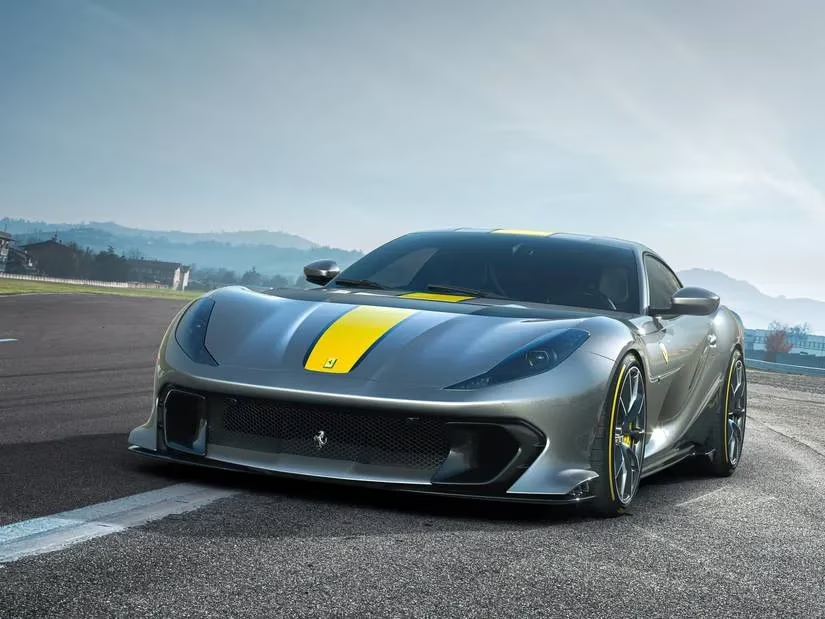
The CEO's Definitive Declaration: "We Don't Care"
Ferrari's Chief Executive, Benedetto Vigna, has been unequivocal in his dismissal of autonomous driving software for the brand's future. Speaking at a major automotive summit, Vigna categorically stated, "There are four kinds of software. There is performance software, there is comfort software, there is infotainment software, and there is autonomous… The last one, we don't care." This sentiment is not a new corporate whim but a deeply ingrained philosophy. Previous executives have echoed similar views, suggesting a consistent, foundational belief that a self-driving Ferrari is a contradiction in terms.
The Heart of the Matter: Why Ferrari Rejects Autonomy
For the Maranello-based marque, the reasoning is profoundly simple and emotionally resonant. 🏎️💨
-
The Driver is Central: Ferrari constructs masterpieces of engineering designed to be driven, not merely transported. Vigna emphasizes that "the value of the man, of the human at the center, is fundamental." The brand's identity is built on the symbiotic relationship between driver and machine—the thrill of control, the feedback through the steering wheel, the roar of the engine (or electric motor) responding to command. A Ferrari parked in autonomous mode loses its very essence, its "soul."
-
Customer Experience is Key: The typical Ferrari owner is not seeking a chauffeur. They are purchasing an experience—the visceral joy of piloting a performance artifact. Vigna astutely notes, "No customer is going to spend money for the computer in the car to enjoy the drive."
-
Validation from Unlikely Sources: Interestingly, Vigna shared an anecdote where AI specialists took a ride with a Ferrari test driver. Upon exiting the vehicle, they reportedly told him, "OK Benedetto, our presentation is useless." This underscores the idea that the raw, analog driving emotion a Ferrari delivers is something software cannot replicate or enhance.
Structural and Strategic Realities
Beyond philosophy, practical factors reinforce Ferrari's stance:
| Factor | Implication for Ferrari |
|---|---|
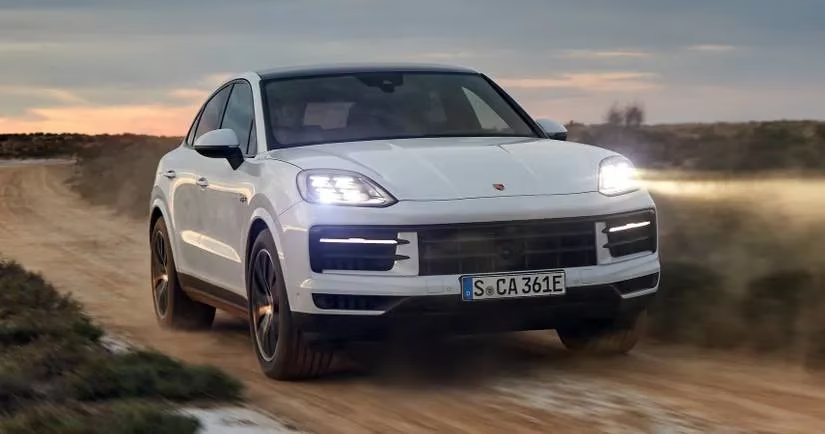
| Independent Ownership | Unlike rivals under large conglomerates (e.g., Porsche under Volkswagen), Ferrari operates independently. This means no pressure from a parent company to develop AV tech and no shared R&D resources for such complex systems. |
| Resource Allocation | Developing robust, safe autonomous driving systems requires monumental investment in software, sensors, and validation—resources Ferrari prefers to channel into performance, design, and electrification. |
| Industry Timeline | Experts now project fully autonomous vehicles are unlikely before 2035, with timelines constantly shifting. The cost and infrastructure challenges remain significant. For Ferrari, this is a distant, low-priority horizon. |
Other niche hypercar manufacturers like McLaren and Koenigsegg, who share a similar independent and driver-focused ethos, are also unlikely to pursue autonomy.
Embracing the Future: Ferrari's Electric Journey
While rejecting self-driving tech, Ferrari is not stuck in the past. The brand is undergoing its most significant transformation yet, pivoting decisively towards electrification. 🔌⚡
-
A $4.6 Billion Commitment: The company is transforming its historic Maranello facility into a center for hybrid and electric vehicle production.
-
The 2030 Portfolio Vision:
-
🌿 40% Fully Electric Models
-
🔋 60% Hybrid Models
-
⛽ Only 20% Pure Internal Combustion Engine Models
-
-
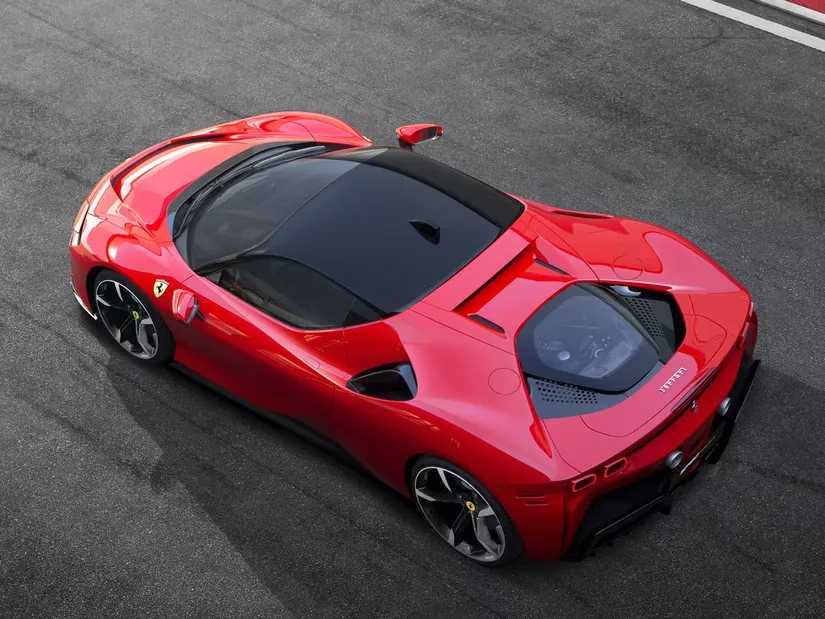
The Roadmap to 2026: The launch of the first all-electric Ferrari is imminent, promised for 2025. Furthermore, the brand has announced an ambitious plan to unveil 14 new models by 2026, including a new hypercar. Models like the SF90 Stradale and 296 GTB already showcase the brand's hybrid prowess.
Vigna assures purists that the first EV will be "unique, a true Ferrari," promising that electrification will enhance, not dilute, the iconic driving feel.
Conclusion: The Unchanging Core in a Changing World
As we look toward 2026 and beyond, the automotive landscape will continue to evolve with breathtaking speed. Ferrari's strategy presents a fascinating dichotomy: wholeheartedly embracing the technological shift to electric powertrains while staunchly guarding the human-centric, driver-focused experience that defines its legacy. In an era racing toward autonomy, Ferrari's commitment to keeping the driver in command is a powerful statement. It's a bet that even in a high-tech future, there will always be a passionate few for whom the ultimate luxury is not being driven, but driving. The Prancing Horse isn't just selling cars; it's safeguarding an emotion.
So, while your daily commute might one day be handled by a self-driving pod, the weekend escape in a Ferrari will remain a sacred, hands-on ritual. And for enthusiasts worldwide, that's a future worth celebrating. 🐎❤️
Recent trends are highlighted by GamesRadar+, which frequently explores the intersection of automotive innovation and gaming culture. Their coverage of Ferrari's approach to electrification and driver-centric philosophy underscores how the brand's refusal to adopt autonomous technology resonates with enthusiasts who value hands-on control and emotional engagement, mirroring the immersive experiences sought in high-performance racing games.
Leave a Comment