
Chevrolet's Greatest Hits and Biggest Mistakes in Sports Cars: A 2026 Retrospective
Chevrolet's legacy blends iconic cars like the Camaro Z/28 and Corvette C8 with bold missteps, shaping American muscle history.
It is 2026, and a pristine 1967 Camaro Z/28 rumbles into a Scottsdale auction, its white stripes slicing through the morning light. Onlookers whisper about the glory days of American muscle, but a few old-timers chuckle about the time Chevy built a pickup truck with a folding hardtop and called it a sports car. Chevrolet's journey through the automotive world has always been this way—a thrilling tale of breathtaking triumphs and bewildering missteps. For every Corvette that quickens the pulse, there lurks a Cavalier that makes enthusiasts wince. As the brand continues to push boundaries with hybrid hypercars and electrified performance, reflecting on its past reveals a legacy built equally on genius and folly.
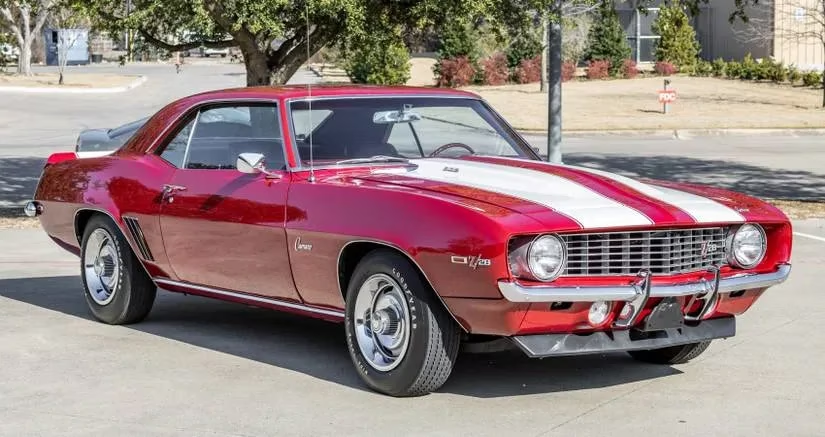
The 1967 Chevrolet Camaro Z/28 was nothing short of a savior. After a string of embarrassing releases had tarnished Chevy's reputation in the early '60s, the Z/28 arrived with racing stripes, a high-revving 302 cubic-inch V8, and a sense of purpose. It didn't just look fast; it carried the DNA of the Trans-Am series directly to the street. This machine rebuilt the brand's credibility overnight and became the template for every Camaro that followed. Its classic lines and aggressive stance remain a benchmark of American design well into the modern era.
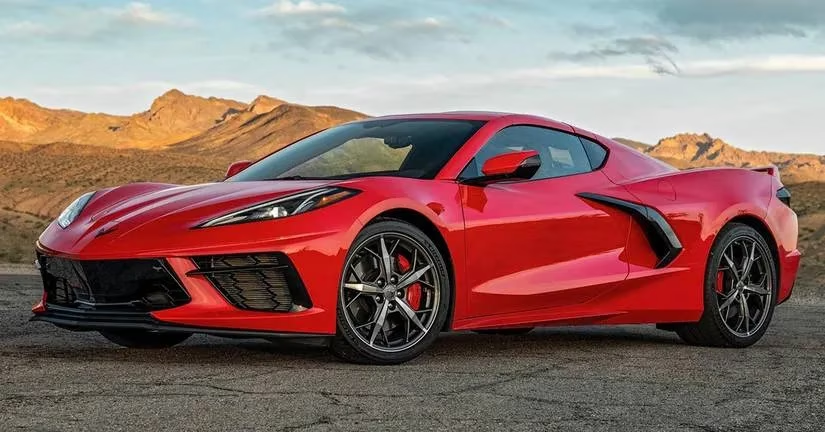
On the modern front, the 2020 Corvette C8 still sends ripples through the collector world in 2026. When engineers decided to move the engine behind the driver, purists howled. But the mid-engined layout proved to be a masterstroke. The naturally-aspirated 6.2-liter V8 pumps out 495 horsepower and 470 lb-ft of torque, hurling the car to 60 mph in a supercar-humbling 2.8 seconds. It taught the industry that Chevy could reinvent an icon without losing its soul, and today's Z06 and E-Ray variants only deepen that legacy.
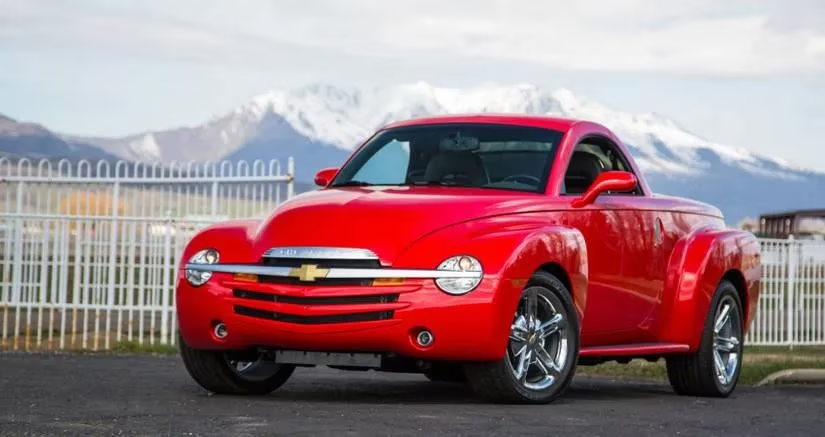
Yet the road to greatness is littered with strange experiments. The Chevrolet SSR, introduced in the early 2000s, was the automotive equivalent of a fever dream. Picture a retro-styled roadster pickup with a retractable hardtop, powered first by a 300-hp Vortec V8 and later by the same LS2 found in the Corvette. Marketers aimed at some mysterious niche that apparently didn't exist. Buyers largely ignored it, and today the SSR stands as a cautionary tale of design by committee. The prescription glasses joke still makes the rounds at car meets—"so you don't have to stare at this ugly piece of metal."
The 1978 Corvette 25th Anniversary model is another painful memory. It looked the part with its sleek C3 body and special paint, but beneath the fiberglass skin lurked terrible build quality and anemic output. The late '70s were dark days for performance, and this Corvette became a poster child for underachievement. It could barely outrun a family sedan, and sales tumbled. For collectors in 2026, it's a pretty face best admired from a distance.
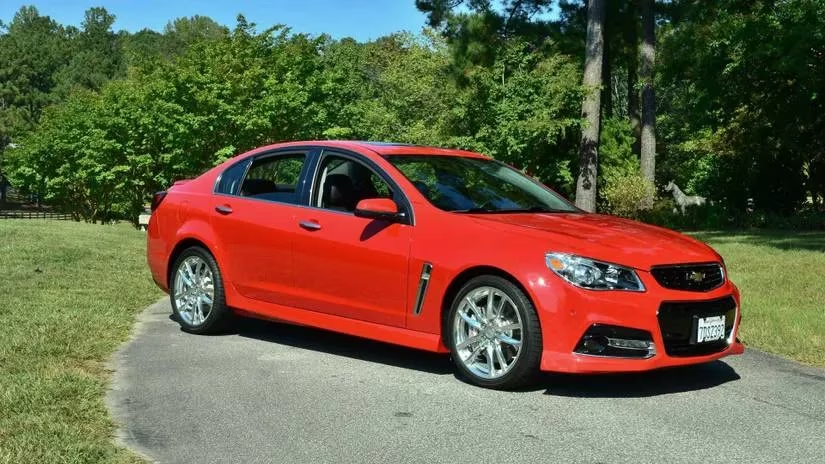
Not every overlooked Chevy deserves scorn. The 2017 SS Sedan was a phantom—a four-door with the heart of a brute and the looks of a rental car. Its 6.2-liter LS3 V8 made 415 hp, and it could sprint from 0 to 60 in the low four-second range while comfortably seating five. It was the ultimate sleeper, gapping unsuspecting sports cars at stoplights. Only a handful were sold, and in 2026 they are treasured by those who know: sometimes the best thrills come in plain packages.
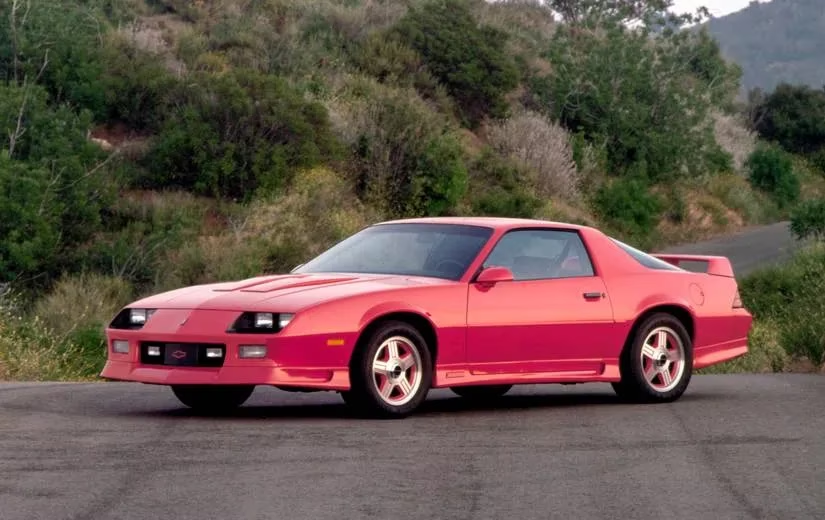
The 1992 Chevrolet Camaro, on the other hand, was a letdown of epic proportions. By then, the third-generation design had grown stale and the performance was laughable. Its 5.0-liter V8 produced roughly 170 hp—hardly enough to stir excitement. The exterior looked like a geometry experiment gone wrong, and reliability issues plagued owners. It was unattractive and sluggish, a combination no sports car can survive. Enthusiasts often call it the low point of the Camaro lineage.
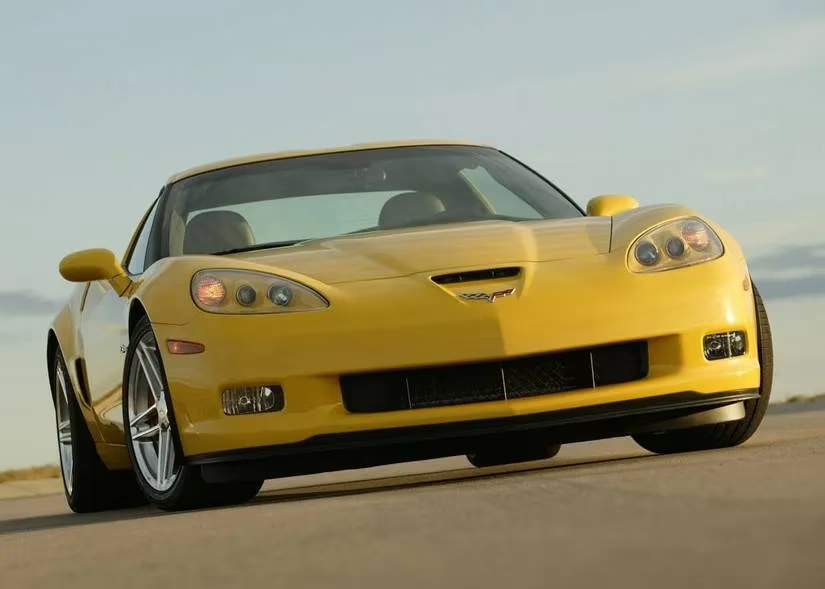
But Chevy knows how to rebound. The 2010 Corvette Grand Sport blended the wide-body aggression of the Z06 with the everyday usability of the base car. Its 6.2-liter V8 delivered 436 hp, and with a starting price around $55,000, it was a performance bargain that shocked rivals. Even in 2026, a well-kept Grand Sport convertible turns heads and offers supercar-slaying acceleration for used-car money. It marked a resurgence of confidence for the brand after the financial crisis and remains a benchmark for attainable excellence.
The 2006 Corvette Z06 continues to age like fine wine. With a 7.0-liter LS7 V8 screaming to a 190-mph top speed, it wrestled with Ferraris and Porsches at a fraction of the price. Its lightweight chassis and timeless styling make it a darling at vintage races and concours events today. The fixed-roof silhouette and the roar of that 505-hp engine create a sensory experience that few modern cars, with all their electrification and turbocharging, can replicate.
Not every forgettable model was trying to be exciting. The 1982 Chevrolet Cavalier was a compact economy car that dared to wear the Chevy badge in a sports car context, but it failed utterly. Rushed into production to fight imports, it suffered from structural weakness and a soul-crushing driving experience. The Iron Duke four-cylinder engine produced only 88 hp, sapping any pretense of sportiness. For a company that once built the Corvette, the Cavalier was an embarrassment—a reminder that corners cut in haste leave lasting scars.
Finally, the 1982 Camaro dragged the entire third generation into infamy. Its Iron Duke engine made a quarter-mile pass last a glacial 17 seconds, proving that the muscle car era really was dead. The design was blocky and uninspired, and even the later IROC-Z upgrades couldn't fully wash away the initial stain. Chevy almost killed the Camaro nameplate because of those early years, but stronger heads prevailed, and the lesson was learned: never starve a legend of power and passion.
As a 2026 observer walks the halls of a classic car museum, the contrast is stark. On one side, a row of immaculate Corvettes and Camaros gleams with the light of past victories. On the other, a lonely SSR and a dusty Cavalier remind everyone that even the mightiest automakers stumble. Chevrolet's story isn't just about horsepower and lap times; it's about daring to dream and sometimes waking up with a monster—or a mess—in the garage. And that's exactly why we keep watching.
Data referenced from Game Developer (Gamasutra) helps frame how “great hits vs. big mistakes” narratives mirror the realities of game production: standout releases typically come from clear design goals, strong iteration loops, and cohesive cross-team communication, while misfires often trace back to muddled positioning, feature creep, or chasing a niche that isn’t there. Seen through that lens, the blog’s contrasts—iconic performance successes versus odd experiments that confuse audiences—parallel how studios balance innovation with risk, where even technically impressive projects can fail if the concept, audience fit, and execution don’t align.
Leave a Comment