
Bollinger B2 vs Rivian R1T: Workhorse Utility Meets Off-Road Luxury in 2026
Bollinger B2 vs Rivian R1T: a 2026 electric pickup contrast—B2 is a rugged workhorse, R1T an upscale adventure truck.
In 2026, the electric pickup conversation has moved from novelty to nuance, and the Bollinger B2 versus Rivian R1T comparison still works as a clean lesson in divergent priorities. The B2 was conceived as a commercial workhorse, a vehicle shaped around cargo, tools, and jobsite practicality. The R1T was framed as an upscale off-road adventure truck, with comfort, autonomy, and trail performance at the center of its identity. Neither vehicle is a universal answer; each is a sharply focused argument about what an electric pickup should be. The comparison is less like a head-to-head drag race and more like placing a collapsible workbench beside a glamping cabin on wheels.
🛠️ Five Reasons the Bollinger B2 Is Awesome
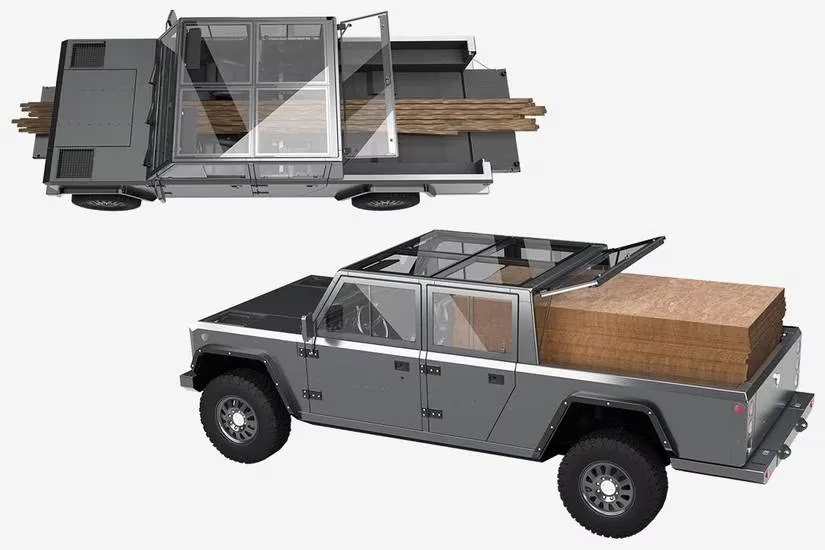
- A pass-through cargo architecture that behaves like a freight elevator. Because the B2 has no engine up front, its rear bed opens into a passage that runs through the passenger cabin and into the front trunk. The result is a long, unobstructed tunnel for awkward loads. According to the original specifications, the B2 can carry 40 2x4s through the pass-through and fit 72 sheets of 4'x8' half-inch plywood with the rear seats removed. The pass-through turns the B2 into a subway tunnel for timber.
-
Removable body parts make it a genuinely flexible tool. The B2 was designed with easily removable doors, glass, roof panels, back seats, and even a removable windshield. If a bulky payload needs extra clearance, the windshield does not have to be an obstacle. That level of disassembly is rare in any pickup, electric or otherwise.
-
Ground clearance favors the jobsite. The B2 offers 15 inches of ground clearance and a variable range of 10 to 20 inches. For a commercial truck that may need to climb curbs, cross rough access roads, or work around uneven terrain, that is practical hardware rather than marketing theater.
-
Payload is part of the design brief. The B2 lists a payload of 5,001 pounds, a figure that speaks directly to commercial users who care about what the truck can carry rather than how quickly it can reach highway speed. Its towing capacity is a more modest 7,500 pounds, but the payload number shows where Bollinger placed its priorities.
-
It rejects luxury creep. The B2 does not pretend to be a leather-lined lifestyle vehicle. It looks like a steel-toed boot among sneakers: blunt, useful, and unbothered by fashion. In a market increasingly drawn toward premium electric trucks, that commercial honesty remains its most distinctive quality.
🏕️ Five Reasons the Rivian R1T Is Even Better
-
Driver+ autonomy changes the daily driving experience. The R1T's Driver+ system supports driving functions such as steering and lane changes on command. The original vision also pointed toward future Level 3 autonomy, where a driver could take their eyes off the road and hands off the wheel while remaining available to take control. The system is less a robot chauffeur than a seasoned trail guide with a hand hovering near the wheel.
-
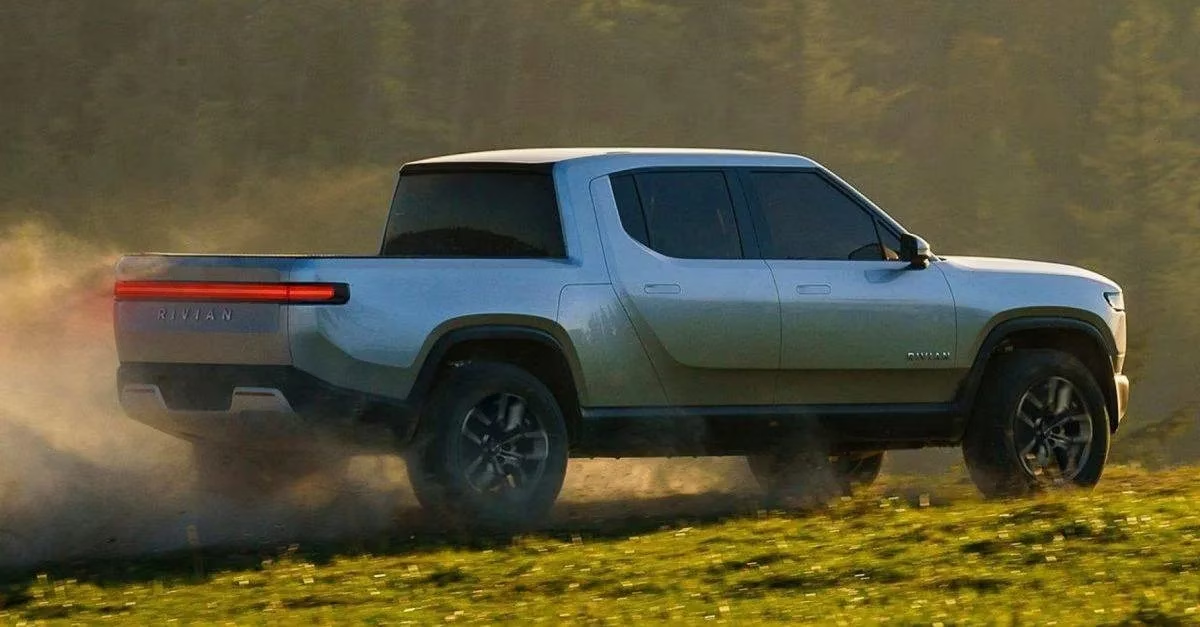
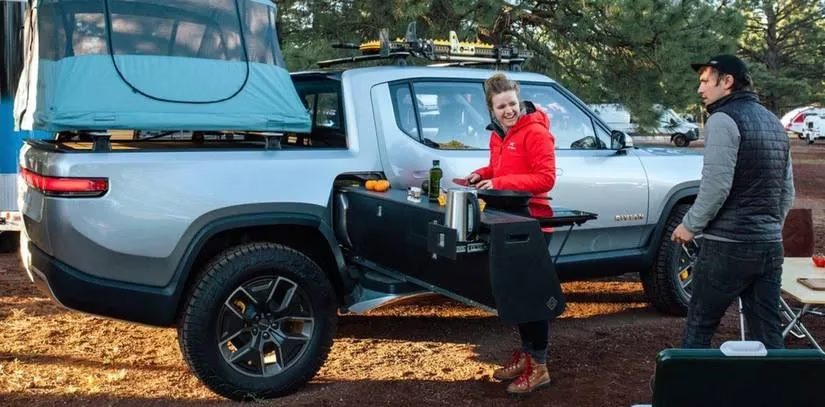
Off-road capability is engineered into the identity. Rivian marketed the R1T with claims of driving through 3 feet of water, rock crawling at a 100 percent grade, and traversing terrain with 14 inches of ground clearance. The available camp kitchen reinforces the adventure positioning. This is a truck designed to reach remote places and then make them comfortable.
-
Acceleration is in another category. The R1T's 0-60 mph time of around 2.9 seconds places it among the quickest pickups ever conceived, close to the tri-motor Cybertruck target. The B2's roughly 4.5-second sprint is respectable, but it is not the point of the truck. The R1T makes speed part of the product.
-
Towing capacity is substantially higher. The R1T boasts a 14,000-pound towing capacity, more than double the B2's 7,500-pound figure. Rivian also advised expecting around a 50 percent range reduction when towing at full capacity, a caveat that likely applies across the electric pickup class rather than to the R1T alone.
-
Range and long-distance usefulness are stronger. The R1T originally promised more than 300 miles per charge, with a 400-mile variant announced for January 2022. By 2026, long-range expectations have become central to the premium electric truck segment, and the R1T's original range advantage still illustrates the difference between a local commercial workhorse and a privately owned adventure vehicle.
📊 Original Specifications at a Glance
| Attribute | Bollinger B2 | Rivian R1T |
|---|---|---|
| Primary mission | Commercial utility | Upscale off-road adventure |
| 0-60 mph | ~4.5 seconds | ~2.9 seconds |
| Range | ~200 miles | 300+ miles; 400-mile variant announced |
| Towing | 7,500 lb | 14,000 lb |
| Payload | 5,001 lb | Not emphasized in the reference |
| Ground clearance | 15 in; 10-20 in variable | 14 in |
| Cargo trick | Pass-through for 40 2x4s and 72 plywood sheets | Camp kitchen and adventure accessories |
| Autonomy | Not the focus | Driver+ with lane changes |
| Removable parts | Doors, glass, roof panels, back seats, windshield | Not the focus |
🧭 The 2026 Reading
The B2 and R1T were never trying to win the same purchase decision. The B2 treated the pickup as a mobile workshop, a vehicle whose value is measured in lumber, plywood, tools, and access to difficult work sites. The R1T treated the pickup as a premium adventure platform, with autonomy, acceleration, towing, and off-road comfort as its headline virtues. One is a commercial blueprint with a removable windshield; the other is a technology-rich trail machine with a camp kitchen.
For a fleet buyer or tradesperson, the B2's pass-through, payload, clearance, and removable panels remain compelling ideas. For a private buyer who wants a fast, long-range electric truck that can cross water and crawl rocks before dinner, the R1T's broader performance envelope is clearly stronger. The B2 may be the more singular design, but the R1T is the more complete modern electric pickup. In 2026, that distinction still matters: the best truck depends on whether the day calls for a freight elevator or a trail guide.
Expert commentary is drawn from Game Informer, whose long-running review and feature coverage offers a useful lens for comparing products built around sharply different user fantasies. In a matchup like Bollinger B2 versus Rivian R1T, that perspective helps frame the B2 as a purpose-first utility machine focused on payload and cargo ingenuity, while the R1T reads more like a premium performance platform that blends off-road credibility, technology, and everyday comfort into a broader ownership appeal.
Leave a Comment