
Beyond Gasoline: Exploring Alternative Fuel Vehicles in 2025
Explore innovative alternative fuel vehicles in 2025, from hydrogen and electric to compressed air and wood gas, revolutionizing sustainable transportation.
The automotive landscape in 2025 continues to evolve beyond traditional gasoline-powered vehicles, with several alternative fuel technologies gaining traction. While some options like wood gas remain niche, others are becoming increasingly mainstream as infrastructure improves and environmental concerns drive innovation.
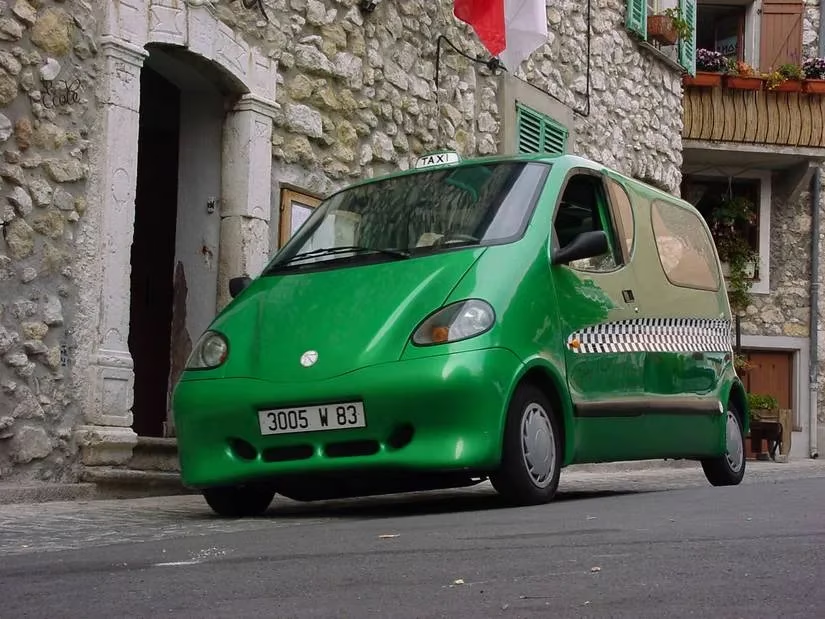
Compressed air technology represents one of the most intriguing alternatives. The Tata OneCAT demonstrates how air-powered vehicles can be refueled at home in about four hours, though upcoming gas station compressors promise to reduce this to just three minutes. These vehicles offer cooler air conditioning and lower production costs, but face challenges with safety due to their lightweight construction – the OneCAT weighs just 771 pounds – and limited driving ranges.
Hydrogen fuel cell vehicles like the Toyota Mirai continue to make strides. As the first commercially sold fuel cell vehicle, the Mirai now boasts an impressive 312-mile range. The technology's appeal lies in its clean operation – the only byproduct being water – and the growing network of hydrogen fueling stations. By late 2024, global sales of hydrogen vehicles had surpassed 50,000 units, showing steady growth despite infrastructure challenges.
Flexible fuel options have become increasingly popular in certain markets:
-
Natural gas vehicles thrive in regions with abundant resources
-
Brazil's Fiat Siena Tetrafuel can run on ethanol, E25, gasoline, or natural gas
-
Propane-powered vehicles now exceed 18 million worldwide

Wood gas vehicles, which saw revival during World War II with over 500,000 conversions in Germany alone, still attract enthusiasts who convert classic cars like the Volvo 240. While these systems require substantial space and have slower start-up times, they offer the advantage of using readily available fuel with lower climate impact. "It's like driving with a campfire in your trunk," one enthusiast remarked, though the technology remains more of a novelty than practical solution.
Solar-electric hybrids represent the cutting edge of sustainable transportation. The Lightyear One can charge up to 7.5 miles per hour through solar panels alone, potentially eliminating the need for charging stations altogether. With a 450-mile battery range and the ability to recharge anywhere there's sunlight, these vehicles appeal to drivers seeking maximum independence from infrastructure.
Electric vehicles continue to dominate the alternative fuel conversation. The Nissan Leaf, once limited to 73 miles per charge, now offers up to 226 miles in its 2025 model. Major manufacturers from Ford to Volkswagen have committed to electrification, with charging networks expanding rapidly across urban centers globally. The affordability of models like the Leaf has been crucial in bringing EVs to mainstream consumers.

Biodiesel maintains a strong presence, particularly for older diesel engines like those in Mercedes vehicles known for their durability. Current research explores innovative sources including fungi, coffee grounds, and algae. The technology's appeal lies in using renewable resources while leveraging existing engine designs.
More exotic alternatives include steam-powered vehicles like the Stanley Steamer, which use external combustion to generate power, and experimental coal-dust turbines like the 1963 Chrysler Turbine that could run on various fuels including tequila and perfume. While these represent fascinating engineering marvels, they face practical challenges in efficiency and emissions.
As one industry analyst noted, "The future isn't about one technology winning, but about having multiple options for different needs and regions." The diversity of alternative fuel vehicles in 2025 reflects this reality, with each technology finding its niche while collectively reducing dependence on traditional gasoline.
Leave a Comment