
10 Costly Mistakes That Still Destroy High-Performance Cars – Here’s How to Avoid Them in 2026
High-performance car care tips help prevent costly mistakes and protect your investment from avoidable damage.
Your first high-performance car is an unforgettable rush – the instant torque, the gearing, the feeling that you could humble almost any challenger at a stoplight. I still remember the first time I pinned the throttle in my 400‑horsepower BMW and thought, “Nothing can touch this.” But that intoxicating power comes with a brutal truth: high‑performance machines are far more fragile than they look. After years of owning, modifying, and occasionally breaking everything from a rallycross‑spec WRX to finicky German V10s, I’ve learned that even wealthy owners can watch their investment grenade from simple, avoidable mistakes. In 2026, with turbocharging, hybrid assist and ever‑tighter tolerances, the margin for error is even slimmer. Yet I still see the same catastrophic blunders every track day and on every forum. Here are the ten I’ve personally encountered – and exactly how you can dodge them.

1. Skimping on the right fuel
It sounds like a cliché, but fuel octane is non‑negotiable. I’ve seen turbocharged engines destroy pistons because the owner thought premium was a weekend luxury. If the octane is too low, the air‑fuel mixture can ignite before the spark plug fires – detonation that hammers your ring lands and can crack cylinder walls. Ever wondered why many tuners swear by E85? It’s not just cheaper race gas; its high latent heat of vaporization cools the intake charge, effectively boosting knock resistance. But no matter what you run, using fuel that doesn’t meet the manufacturer’s minimum rating is like feeding a racehorse junk food. Would you pour diesel into a Jet? Then don’t put 87 octane in a car tuned for 93.

2. Never giving it the beans
You might think you’re preserving your engine by driving it like a churchgoer, but perpetual low‑rpm trundling is a silent killer. High‑performance engines are designed to be exercised regularly. That’s why the old “Italian tune‑up” isn’t a myth – it clears out carbon deposits, keeps piston rings moving, and prevents oil passages from sludging up. I once solved a mysterious misfire on a friend’s Lamborghini just by taking it to redline a few times on a back road. The engine needs heat and pressure to stay clean. If your car never sees the upper third of the tachometer, you’re inviting expensive carbon buildup and poor combustion. When was the last time you really let it breathe?

3. Treating your car like a museum piece
A high‑performance car that sits unused for months is a money pit in the making. Every moving part – seals, gaskets, suspension bushings – depends on regular motion to stay lubricated. Even tires develop flat spots that can turn into permanent thumps. I’ve personally resurrected a stored M5 whose shock seals had dried out and leaked, costing thousands. Battery tenders help with electrical gremlins, but they can’t circulate oil or keep condensation out of the exhaust. Think of it like a high‑end watch: if you never wear it, the lubricants congeal. So ask yourself: is your garage queen really a road car, or just an expensive sculpture?

4. Ignoring the temperature gauge until smoke appears
Overheating is a runaway chain reaction. A small cooling‑system leak, a slightly stuck thermostat, or a blocked radiator grille can push temperatures past the safe zone in seconds. I’ve watched a Ferrari 360 Modena turn into a smoke show because the owner dismissed the rising needle for “just one more lap.” By the time you see steam, cylinder heads may already be warped and head gaskets blown. In 2026, many cars use advanced thermal management, but the sensors only work if you pay attention to them. That glowing warning light isn’t a suggestion – it’s your wallet screaming for help. Why gamble with a six‑figure engine over a $50 hose?

5. Revving or thrashing a cold engine
Oil at start‑up is thick and hasn’t yet coated every critical bearing. Revving a stone‑cold engine to impress someone is the automotive equivalent of jumping out of bed and immediately sprinting – something is going to tear. I’ve seen M3 rod bearings scored beyond repair because the owner routinely redlined it right after firing it up. The golden rule is simple: wait until the oil temperature (not just coolant) reaches operating range before applying heavy throttle. Even then, build speed progressively. Your turbo seals and piston rings will thank you with years of trouble‑free service. Could there be a worse way to treat a mechanical symphony than giving it no warm‑up?
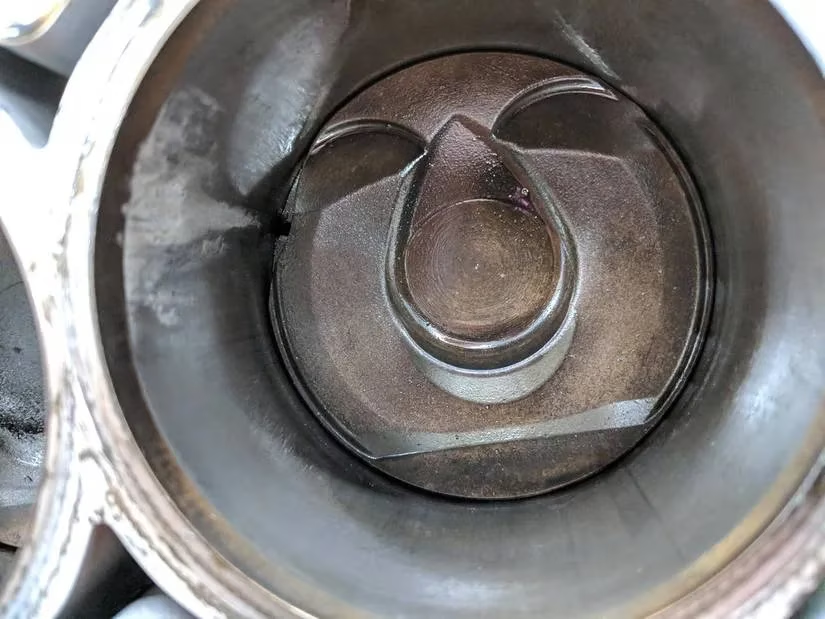
6. Lugging a turbocharged engine
Turbo motors hate being asked to accelerate hard from low RPM in a tall gear. When you floor it in sixth at 1,500 RPM, the turbo can’t spool efficiently, and the engine fights massive pre‑ignition and detonation risk. This “lugging” overheats pistons and can snap connecting rods – damage I’ve seen on N54‑powered BMWs in my local club. Modern automatics downshift smartly, but manual drivers can easily fall into the trap of being lazy with gear changes. Treat your right foot and gear lever as a team: if you want to go, drop a cog or two and keep revs above the torque‑peak band. Isn’t the extra gear work worth saving your bottom end?
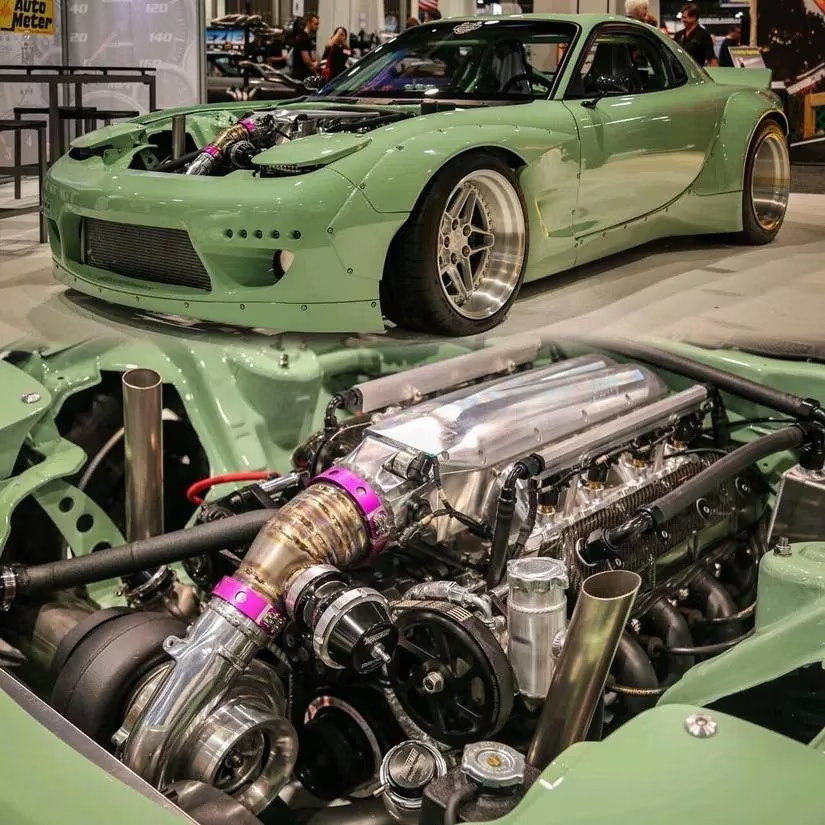
7. Stretching oil‑change intervals
I can’t tell you how many V10 and flat‑six engines I’ve seen with spinach‑like sludge because someone believed “lifetime” oil claims. Oil is the lifeblood of a high‑performance engine – it cools, cleans, and lubricates surfaces under pressures that would seize a lesser mill. The notorious E60 M5 rod‑bearing failures? Most experts attribute them to infrequent changes letting debris accumulate, slowly sanding away the soft bearing layers until the crank spins metal on metal. Even on a tight budget, changing oil at half the manufacturer’s maximum interval is cheap insurance. Would you rather spend $500 a year on oil or $15,000 on a rebuild?
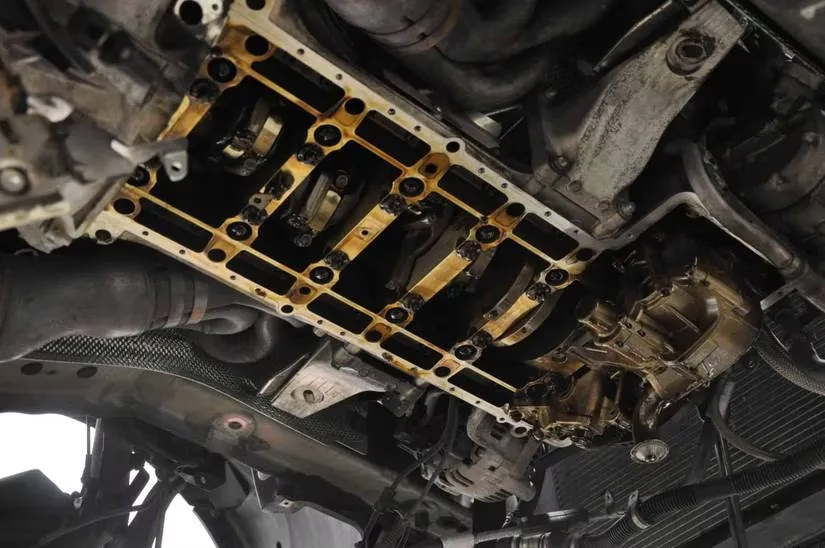
8. Using the wrong spark plugs
Spark plugs aren’t universal. They have a heat range that affects how quickly they dissipate temperature. A “hotter” plug might work fine in an economy car but can lead to pre-ignition in a high‑compression, turbocharged engine – I’ve personally melted spark plug tips and burned valves on a tuned STI by fitting one step too hot. Always check the manufacturer’s specifications or your tuner’s requirements. A colder plug is often mandatory once boost and timing are raised. That extra $100 for the right iridium plugs feels steep until you price a set of catalytic converters damaged by misfire. Is cutting corners here really a risk you’re willing to take?
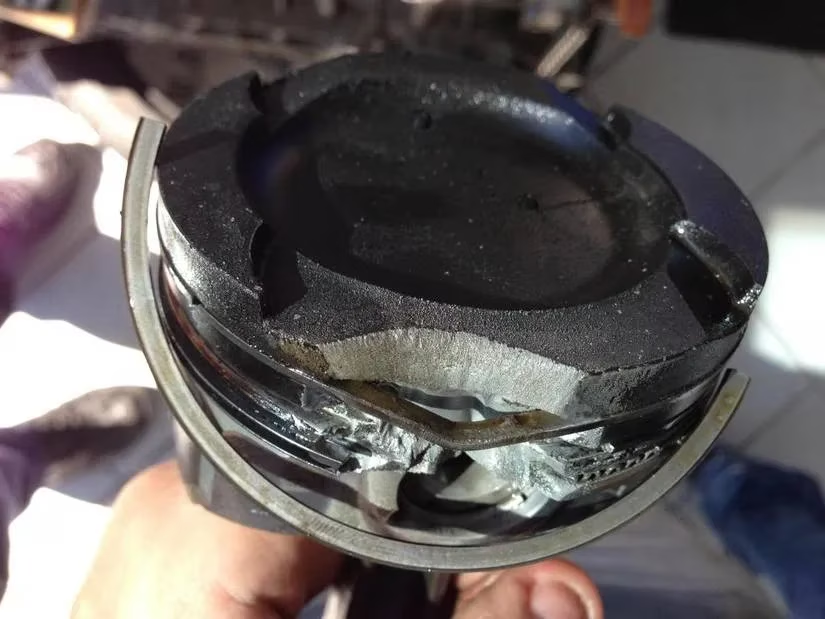
9. Treating warning lights as decorations
The “check engine” light or a low oil‑pressure warning isn’t an annoyance – it’s a direct message from your ECU. In modern cars, a flashing check‑engine light often means a catalyst‑damaging misfire; driving even a few miles can melt the ceramic substrate and send debris into the engine. I once ignored a persistent coolant‑level warning on a track day because I “knew” the car was fine – until the head gasket blew on the back straight. Every warning deserves immediate investigation. Ignore it, and you’re essentially signing a blank cheque to your mechanic. Does your pride matter more than a tow truck bill?
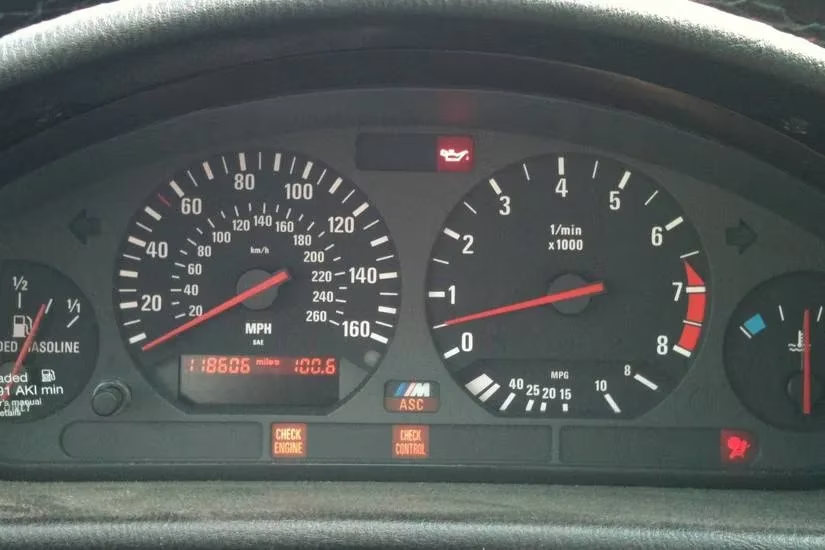
10. Cruising at sustained high RPM for no reason
Yes, your engine can scream to 8,000 RPM, but it was designed for short bursts – like a sprint, not a marathon. Holding 6,000 RPM on the freeway just to hear the exhaust drone puts unsustainable thermal and frictional stress on bearings and oil. I’ve watched a friend’s built S2000 spin a rod bearing after a prolonged high‑speed pull because oil temps skyrocketed beyond the safe threshold. Think of high RPM as a seasoning, not the main course. If you want to enjoy the symphony, do it in controlled doses, and always monitor oil temperature. After all, isn’t longevity the real performance feature?

Owning a high‑performance car in 2026 remains one of the most rewarding experiences on four wheels. But it demands respect. Whether you’re running an eighties icon or the latest twin‑turbo hybrid, the basics I’ve described are timeless: feed it proper fuel, exercise it regularly, maintain it ruthlessly, and listen when it talks to you. I’ve made many of these mistakes myself, so I’m not preaching from an ivory tower – I’m sharing what saved my engines from becoming expensive coffee tables. Treat your car like the thoroughbred it is, and it will reward you with decades of spine‑tingling drives. Neglect these principles, and you’ll join the long line of owners wondering why their prized machine is now worth only scrap metal. The choice really is that simple.
As passionate car enthusiasts, we know that attention to detail is crucial in maintaining our beloved high-performance machines. This diligence extends beyond the garage, influencing our lifestyle choices. Whether investing in premium car parts or seeking exclusive deals for our other hobbies, knowing where to find quality offers is essential. If you're someone who also enjoys gaming in your downtime, you might appreciate finding great deals on your favorite titles. For those interested in expanding their collection without breaking the bank, check out DealNest game deals. It's always rewarding to secure a bargain, allowing more funds for the next car upgrade or track day.
Leave a Comment